
Study Links Cascadia and San Andreas Quake Risk

Study Links Cascadia and San Andreas Quake Risk
CORVALLIS, Ore. - A new peer-reviewed study says two of the West Coast's most dangerous fault systems may sometimes rupture close together, raising a planning question for cities from San Francisco to Seattle.
The study, published in Geosphere and led by Oregon State University marine geologist Chris Goldfinger, examined deep-sea sediment cores from the Cascadia subduction zone and the northern San Andreas fault. The authors said the record points to cases where Cascadia appears to have ruptured first and the northern San Andreas followed close enough in time to leave a paired signature in the seafloor.
What Happened
Goldfinger and his co-authors analyzed turbidites, which are layers of underwater landslide sediment that can be triggered by major earthquakes. According to Oregon State University, the research team studied cores covering about 3,100 years of geologic history and compared deposits from southern Cascadia with deposits in Noyo Channel along the northern San Andreas system.

The paper reported 18 likely earthquake-generated turbidite beds in southern Cascadia and 19 likely beds in Noyo Channel over the same period. Ten Cascadia beds had what the authors called a close temporal association with likely earthquake-generated beds in Noyo Channel, according to the Geosphere study.
The key evidence is not just age matching. The paper said eight of the 10 associated beds with substantial temporal overlap had a thick, inverted "doublet" structure in Noyo Channel. In plain English, the researchers found a lower silty layer and an upper sandy layer in a pattern they said fits two closely spaced ruptures better than a single earthquake sequence or ordinary ocean disturbance.
"We infer that the stratigraphy is best explained by earthquakes on both systems spaced closely in time, beginning with the Cascadia subduction zone, as opposed to aftershock sequences, hydrodynamic generation, or other causes." - Goldfinger et al., Geosphere, DOI 10.1130/GES02857.1
The Explainer
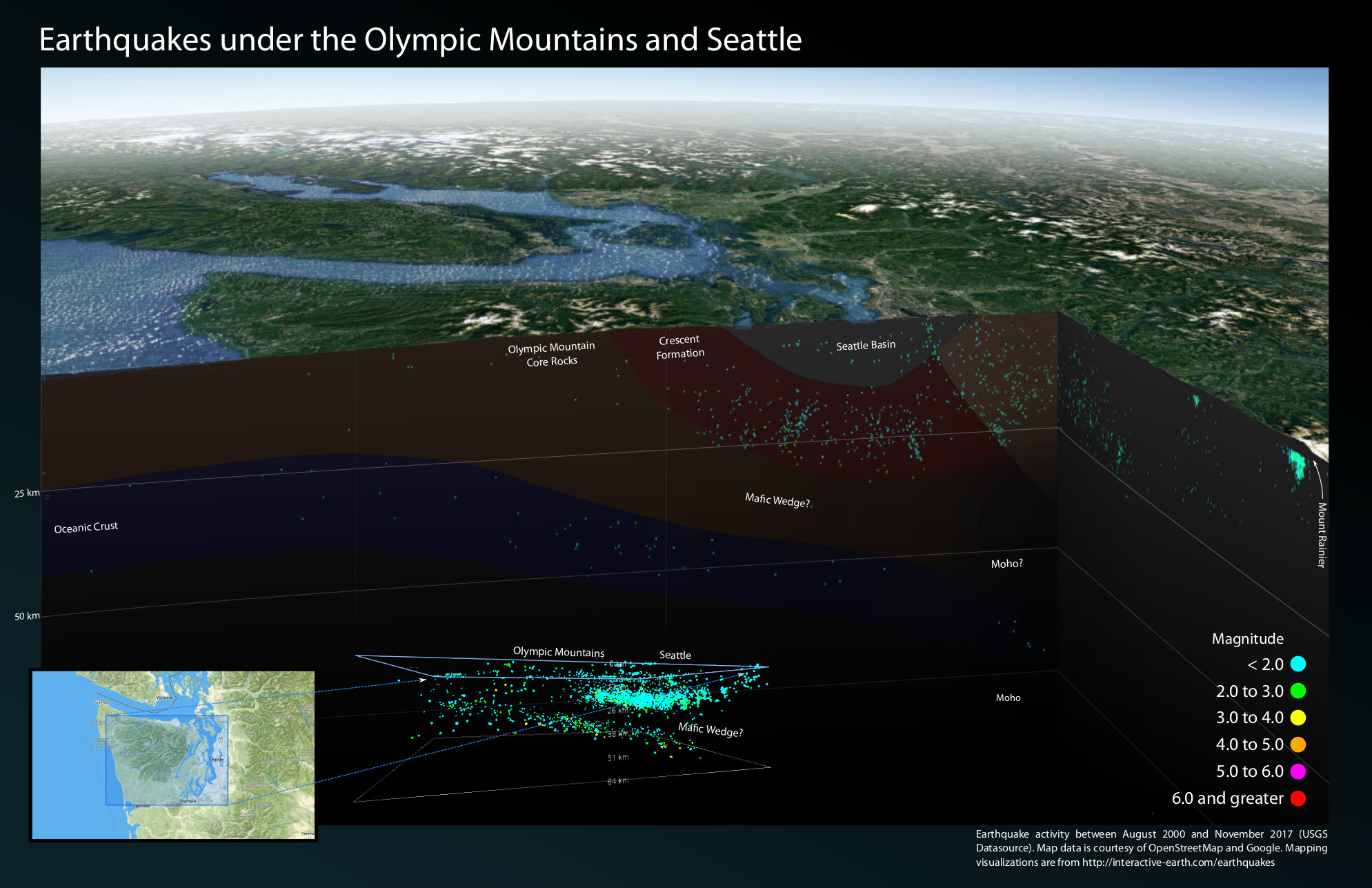
Cascadia is a subduction zone, where one tectonic plate dives beneath another offshore from Northern California, Oregon, Washington and British Columbia. The U.S. Geological Survey says Cascadia has produced magnitude 8.0 or larger megathrust earthquakes in the geologic past and that a future earthquake could severely damage the region.
The San Andreas is a transform fault system, where the Pacific and North American plates slide past each other. USGS says the San Andreas Fault Zone began moving about 28 million to 30 million years ago and has slipped about 186 to 220 miles since then. In northern California, USGS says the broader fault zone includes the Hayward, Calaveras, northern San Andreas and other faults.
That distinction matters because the new paper does not say the two faults are the same system. It says past earthquake deposits may show partial synchronization, meaning a major rupture on one system may have helped load or trigger the other in some cases.
Oregon State's release said Goldfinger identified three instances in the past 1,500 years, including the 1700 event, when the two ruptures may have been minutes to hours apart. The same release noted that geologists have discussed fault synchronization for decades, but the observed modern example it cited was Sumatra, where two large earthquakes struck three months apart in 2004 and 2005.
The Limits
The study is a geological reconstruction, not an earthquake forecast. The authors worked from marine sediment cores and radiocarbon dating, not instrument-recorded shaking from the past events.
The paper said radiocarbon age medians for the 10 associated beds differed by an average of 63 years, with a 51-year standard deviation. That means the minutes-to-hours interpretation depends on the physical structure and correlation of the layers, especially the doublets, rather than calendar precision across every event.
USGS also warns against treating faults like clocks. In a San Andreas hazard background page, the agency says many places along the fault are past the average time between large earthquakes, but that the term "overdue" is more complicated because earthquake intervals vary from one segment to another.
 Map by Davezelenka, via Wikimedia Commons (CC BY 4.0)
The Preparedness Stakes
The practical issue is emergency capacity. Oregon State quoted Goldfinger saying a single major Cascadia or San Andreas earthquake would strain national response resources. A paired scenario would widen the geography and compress the timeline.
"We could expect that an earthquake on one of the faults alone would draw down the resources of the whole country to respond to it. And if they both went off together, then you've got potentially San Francisco. Portland, Seattle and Vancouver all in an emergency situation in a compressed timeframe." - Chris Goldfinger, marine geologist at Oregon State University
FEMA has treated Cascadia as a catastrophic planning problem for years. The agency's Cascadia Rising exercise materials described a regional effort involving more than 20,000 emergency managers and partners across Idaho, Oregon, Washington and tribal, local, state and federal agencies.
For West Coast households, the finding does not change the basic advice from emergency managers: secure homes, know evacuation routes in tsunami zones and prepare for utility outages. For governments, the study adds a harder scenario to test. It asks whether mutual aid plans designed for one regional disaster can hold if Northern California and the Pacific Northwest need major support at roughly the same time.
What People Are Saying
"We're used to hearing the 'Big One' - Cascadia - being this catastrophic huge thing. It turns out it's not the worst case scenario." - Chris Goldfinger, marine geologist at Oregon State University and lead author of the study
"The Cascadia Subduction Zone, located in the U.S. Pacific Northwest and southwestern British Columbia has hosted magnitude 8.0 or larger megathrust earthquakes in the geologic past; a future earthquake is imminent, and the potential impacts could cripple the region." - U.S. Geological Survey hazard description
"We infer that the stratigraphy is best explained by earthquakes on both systems spaced closely in time, beginning with the Cascadia subduction zone, as opposed to aftershock sequences, hydrodynamic generation, or other causes." - Goldfinger et al., Geosphere, DOI 10.1130/GES02857.1
The Big Picture
The study does not predict a near-term double disaster. It gives emergency planners a reason to treat linked fault behavior as a scenario worth testing, especially because the affected population centers and ports sit along the same West Coast response corridor.
The next question is how the finding holds up as other geologists compare additional cores, refine dating and test the triggering mechanism. The paper's clearest finding is narrower than a forecast but large enough for planning: one major West Coast earthquake may not always be the whole event.