CDC Says U.S. Measles Cases Hit 1,814

ATLANTA, Georgia - The Centers for Disease Control and Prevention says 1,814 confirmed measles cases have been reported in the United States this year, putting a disease declared eliminated in the country in 2000 back at the center of a widening public health response.
The agency's latest national count, updated May 1 with data through April 30, includes resident cases in 37 jurisdictions and 11 cases among international visitors. CDC says 24 new outbreaks have been reported in 2026, and 93% of confirmed cases are tied to outbreaks.
The numbers show a national problem with local roots. CDC says kindergarten MMR coverage has fallen below the level generally needed for community immunity, while travel-linked exposures continue to seed chains of infection that can spread fast in pockets of under-vaccination.
The Story So Far
CDC says measles was declared eliminated from the United States in 2000, meaning endemic transmission had been stopped for at least 12 months in the presence of a working surveillance system. The agency says cases still occur because travelers can bring measles into the country from places where the virus continues to circulate.
The 2026 count is not a clean reset from last year. CDC says 1,688 of the 1,814 confirmed cases are outbreak-associated, with 415 tied to outbreaks that started in 2026 and 1,273 tied to outbreaks that started in 2025.
That carryover matters because measles spreads through air and infectious droplets, according to CDC's clinical overview. CDC says up to 9 out of 10 susceptible people with close contact to a measles patient will develop measles, and the virus can remain infectious in the air for up to two hours after an infected person leaves an area.
What's Happening Now
The CDC national page says 1,803 resident cases have been reported by Alaska, Arizona, California, Colorado, Florida, Georgia, Idaho, Illinois, Kentucky, Louisiana, Maine, Maryland, Massachusetts, Michigan, Minnesota, Missouri, Montana, Nebraska, New Jersey, New Mexico, New York City, New York State, North Carolina, North Dakota, Ohio, Oklahoma, Oregon, Pennsylvania, Rhode Island, South Carolina, South Dakota, Texas, Utah, Vermont, Virginia, Washington, and Wisconsin.
CDC says another 11 cases were reported among international visitors to the United States. The agency cautions that state, local, tribal, and territorial health departments lead investigations, and that states may have more current local counts because state and federal reporting schedules differ.
The vaccination-status breakdown is stark. CDC's data table for 2026 lists 92% of cases as unvaccinated or vaccination status unknown, 4% as having one MMR dose, and 4% as having two MMR doses. The same data list 105 hospitalizations among 1,814 confirmed cases, or 6%, and zero confirmed deaths so far in 2026.
 Chart: Julius Senegal, via Wikimedia Commons (CC BY-SA 4.0)
CDC's symptoms page says measles usually begins 7 to 14 days after infection with high fever, cough, runny nose, and red, watery eyes. A rash usually appears three to five days after the first symptoms, and the agency says measles can be dangerous for babies, young children, adults over 20, pregnant women, and people with weakened immune systems.
The Public Health View
Public health officials frame the outbreak count around community immunity. CDC says, "When more than 95% of people in a community are vaccinated (coverage >95%), most people are protected through community immunity (herd immunity)."
The current national kindergarten figure is below that threshold. CDC SchoolVaxView says, "During the 2024-2025 school year, vaccination coverage among kindergartners in the U.S. decreased for all reported vaccines from the year before, ranging from 92.1% for diphtheria, tetanus, and acellular pertussis vaccine (DTaP) to 92.5% for measles, mumps, and rubella vaccine (MMR) and polio vaccine."
CDC says about 286,000 kindergartners attended school during the 2024-2025 school year without documentation of completing the MMR vaccine series. The agency also says local coverage can vary widely, so pockets of unvaccinated people can exist even in states with high average coverage.
That is the mechanism behind the outbreak risk. A statewide average can look close to the target while specific schools, neighborhoods, religious communities, or travel networks have enough unprotected people to sustain transmission once the virus arrives.
The Parent And Patient View
Families weighing vaccination decisions face a different set of questions: how serious the disease is, what the vaccine does, and what risks come with vaccination. CDC's vaccine guidance says two doses of MMR are recommended by doctors as the best way to protect against measles, mumps, and rubella.
CDC says two MMR vaccines, M-M-R II and PRIORIX, are available for use in the United States and are recommended similarly and considered interchangeable. For children, CDC says the first MMR dose is recommended at 12 through 15 months and the second at 4 through 6 years. Teens and adults without evidence of immunity should also be up to date, according to the agency.
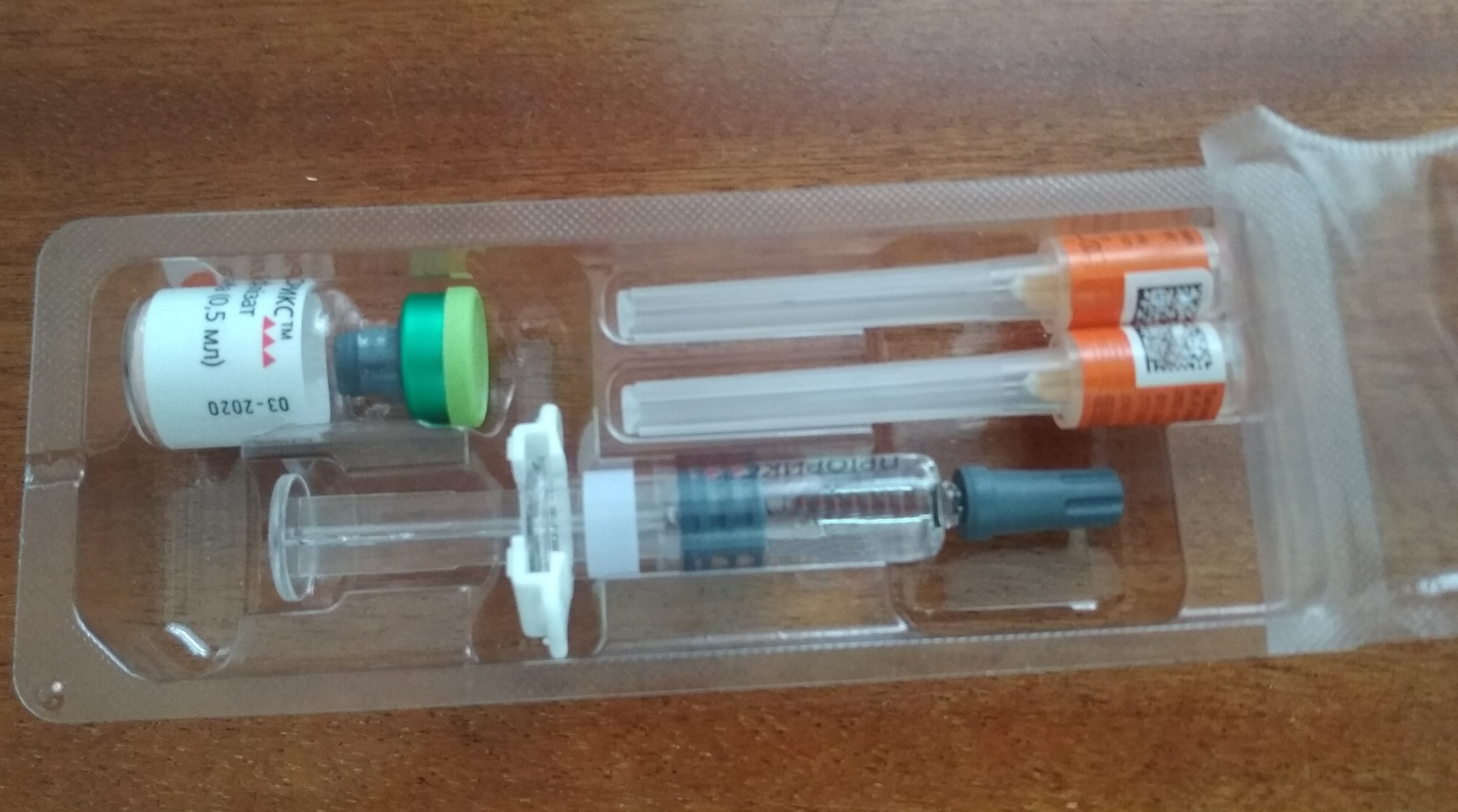 Photo: Whispyhistory, via Wikimedia Commons (CC BY-SA 4.0)
CDC's MMR vaccine safety page says common side effects include a sore arm, fever, mild rash, and temporary joint pain or stiffness, mostly in teenage or adult women who did not already have immunity to rubella. The agency says serious problems are rare, and that getting MMR vaccine is much safer than getting measles, mumps, or rubella.
The same CDC safety page says the FDA approved M-M-R II in 1971 and PRIORIX in 2022 for use in people 12 months of age and older. CDC says vaccines, like any medicine, can have side effects, and it advises patients with questions about allergies, pregnancy, immune problems, or recent blood products to check with a healthcare provider.
Other Perspectives
Schools and local health departments are caught between disease control and daily operations. CDC SchoolVaxView says data collection methodology differs by state, which means state-to-state comparisons can be misleading without checking local rules and reporting systems.
Healthcare providers face a separate burden. CDC's clinical overview says infected patients should be isolated for four days after rash onset, airborne precautions should be used in healthcare settings, and suspected cases should be reported to local health departments. The agency says laboratory confirmation is essential for sporadic cases and outbreaks.
Travelers are another risk group. CDC travel guidance says U.S. measles cases often originate from unvaccinated international travelers. The agency says anyone who is not already vaccinated or does not know their status should be vaccinated against measles at least two weeks before international travel.
A recent CDC Morbidity and Mortality Weekly Report shows how one exposure can spread across places quickly. The report says an infectious traveler who had acquired measles in the United States passed through Denver International Airport in May 2025, after which nine secondary cases and one tertiary case were confirmed among Colorado residents, with seven additional cases reported by other jurisdictions.
Public Health Implications
The immediate capacity question is not just how many cases have been confirmed. It is how many linked exposures local health departments, clinics, schools, and hospitals can trace before more chains form.
CDC says people with measles are considered contagious from four days before to four days after rash onset. That creates a difficult window for health departments because people can expose others before they know the rash is measles.
The Colorado MMWR report illustrates the strain. CDC and Colorado officials traced airplane contacts, airport exposures, and later household transmission. The report says four of the nine secondary Colorado patients were hospitalized, and all recovered.
By The Numbers
CDC says 1,814 confirmed measles cases were reported in the United States in 2026 as of April 30.
CDC says 37 jurisdictions reported resident cases, and 11 cases were reported among international visitors.
CDC says 24 new outbreaks have been reported in 2026, with 93% of confirmed cases tied to outbreaks.
CDC's 2026 data table lists 92% of cases as unvaccinated or vaccination status unknown.
CDC SchoolVaxView says national kindergarten MMR coverage was 92.5% in the 2024-2025 school year, below the agency's 95% community-immunity target.
What People Are Saying
"As of April 30, 2026, 1,814 confirmed* measles cases were reported in the United States in 2026," CDC said on its national measles cases page.
"There have been 24 new outbreaks** reported in 2026, and 93% of confirmed cases (1,688 of 1,814) are outbreak-associated (415 from outbreaks starting in 2026 and 1,273 from outbreaks that started in 2025)," CDC said.
"When more than 95% of people in a community are vaccinated (coverage >95%), most people are protected through community immunity (herd immunity)," CDC said.
"Measles is a highly contagious vaccine-preventable disease. Two measles, mumps, and rubella (MMR) vaccine doses are 97% effective in preventing measles," the CDC Morbidity and Mortality Weekly Report said.
The Big Picture
The CDC data point to a familiar but hard problem: measles can be nationally rare and locally explosive at the same time. When coverage falls below the level needed for community immunity, the risk shifts from isolated importations to sustained outbreak clusters.
The next numbers to watch are not only the national case count. State updates, the share of outbreak-associated cases, hospitalization rates, and kindergarten MMR coverage will show whether health departments are closing chains of transmission or chasing new ones.
For now, CDC's guidance remains practical and direct. People who are unsure of their vaccination status, planning international travel, or living near an outbreak are told to contact a healthcare provider or local health department, and suspected exposures should be reported before walking into a clinic or emergency room.