
Trump Floats Cuba Takeover Line After Iran Operations
Trump Floats Cuba Takeover Line After Iran Operations
The remark came as the White House widened Cuba sanctions and Congress considered language warning that U.S. force against Havana has not been authorized.
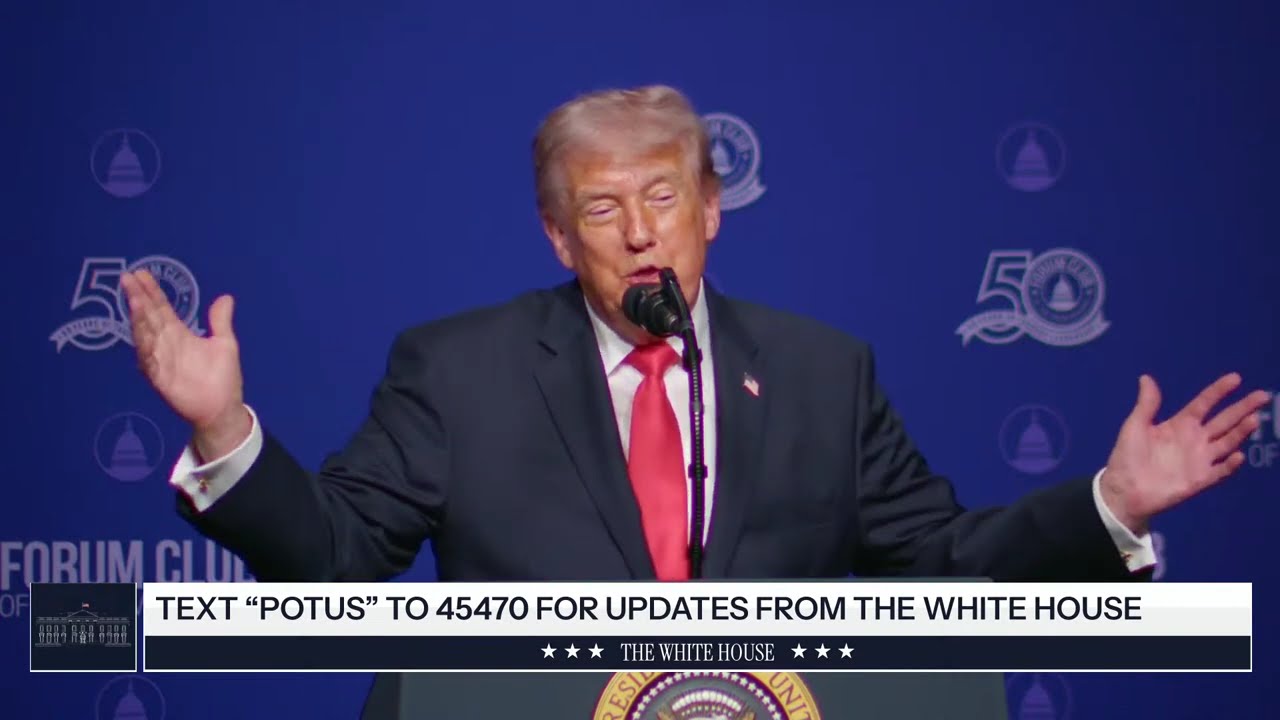
West Palm Beach, Florida - President Donald Trump told a Forum Club of the Palm Beaches audience that Cuba could be taken over "almost immediately" after the United States finished with Iran, joking in the same passage that the USS Abraham Lincoln could stop offshore and prompt Havana to surrender.
The line does not amount to a formal invasion order. The White House video page identifies the event as Trump participating in the Forum Club of the Palm Beaches dinner, and the local video-intake transcript preserves the Cuba passage. But the remark landed inside a real policy fight: one day earlier, the White House issued a Cuba sanctions order that described Havana's government as an unusual and extraordinary threat to U.S. national security and foreign policy.
The Story So Far
Trump moved into the Cuba line while discussing a person from Cuba during the Forum Club speech, according to the local intake transcript. "He comes from originally a place called Cuba, which we will be taking over almost immediately," Trump said. "Now, Cuba's got problems. We'll finish one first. I like to finish a job."
He then connected the remark to Iran operations. "On the way back from Iran, we'll have one of our big, maybe the USS Abraham Lincoln aircraft carrier, the biggest in the world," Trump said, according to the transcript. "We'll have that come in. Stop about 100 yards off shore. And they'll say, thank you very much. We give up."
The White House posted the full event video under the title "President Trump Participates in The Forum Club of the Palm Beaches Dinner." The page identifies West Palm Beach, Florida, and embeds the full video of the dinner.
The safest reading is that Trump made a dramatic, joking line in a public speech, not that the administration announced an operation against Cuba. No White House, Pentagon, State Department, or congressional source in the research brief states that U.S. forces have received an order to attack Cuba.
What's Happening Now
The timing gives the comment weight. On May 1, the White House issued an executive order expanding sanctions authority against people and entities tied to Cuba's government, security apparatus, corruption, serious human rights abuse, and key sectors of the Cuban economy.
The order says the Cuban government's policies and actions "continue to constitute an unusual and extraordinary threat" to U.S. national security and foreign policy. The White House fact sheet says Cuba provides "a permissive environment for hostile foreign intelligence, military, and terrorist operations less than 100 miles from the American homeland."
The State Department lists Cuba as one of four current state sponsors of terrorism, alongside North Korea, Iran, and Syria. The department says that designation can trigger restrictions on U.S. foreign assistance, defense exports and sales, dual-use exports, and other financial restrictions.
Human rights claims also sit behind the administration's case. The State Department's 2024 Cuba report cited credible reports of arbitrary or unlawful killings, disappearances, torture or cruel treatment by the government, arbitrary detention, transnational repression, serious restrictions on expression and media freedom, religious freedom restrictions, trafficking in persons, state-sponsored forced labor, and restrictions on independent unions.
The Iran Link
Trump's Cuba aside was framed as something that could happen after Iran. That matters because primary U.S. sources show the Iran operation was not hypothetical.
U.S. Central Command said forces would begin implementing a blockade of maritime traffic entering and exiting Iranian ports on April 13, while not impeding navigation to and from non-Iranian ports through the Strait of Hormuz. CENTCOM also said U.S. Navy destroyers had begun setting conditions for mine clearance in the Strait of Hormuz on April 11.
Treasury's Office of Foreign Assets Control posted Iran-related actions on May 1, including an alert on sanctions risks tied to Iranian demands for Strait of Hormuz passage. That timing shows the administration was tightening both military and financial pressure around Iran while also expanding sanctions pressure on Cuba.

The Abraham Lincoln reference is also grounded in recent military imagery. Wikimedia Commons lists a U.S. Navy photo from March 2 showing the Nimitz-class aircraft carrier USS Abraham Lincoln conducting flight operations in support of Operation Epic Fury. Trump's claim that it is "the biggest in the world" should be treated as his phrase, not an independently verified specification.
The Conservative View
Conservative supporters of a harder Cuba line argue that Havana is not only a human rights problem, but a security problem close to Florida. The White House fact sheet says Cuba maintains ties with hostile states and provides space for intelligence, military, and terrorist operations near the United States.
That argument gives the administration a national-security frame for sanctions and military signaling. If Cuba is treated as part of a broader hostile network involving Iran, hostile intelligence activity, and regional instability, supporters can argue that pressure on Havana is a defensive measure aimed at protecting Americans.
The strongest version of that case is not that a carrier should force surrender tomorrow. It is that Washington should make the costs of regime support higher for Cuban officials, foreign banks, security entities, and outside actors that help Havana resist U.S. pressure.
The Progressive View
Progressive critics and war-powers advocates see a different risk. They can accept that Cuba's government represses political opponents while still warning that military threats could bypass Congress and worsen civilian hardship.
H.J.Res.153, introduced March 24, states that Congress has not declared war on Cuba or enacted a specific authorization for the use of force within or against Cuba. The resolution says a blockade or quarantine of Cuba would constitute the introduction of U.S. forces into hostilities under the War Powers Resolution.
The progressive concern is institutional as much as ideological. A president can impose sanctions under delegated emergency powers, but military action against Cuba would raise constitutional questions that Congress has already placed in writing.
Other Perspectives
Libertarian critics are likely to focus on executive power and the danger of mission creep. The Cuba sanctions order relies on emergency authorities, immigration law, and Treasury enforcement power. A military threat layered on top of that sanctions framework would widen the role of the executive branch even further.
Cuban dissidents and Cuban-American hard-liners may divide over tactics. Some will welcome pressure on a government the State Department accuses of torture, arbitrary detention, transnational repression, censorship, and forced labor. Others may fear that invasion talk lets Havana portray domestic repression as resistance to U.S. aggression.
International observers will watch whether Havana, U.S. allies, or regional governments treat the remark as campaign-style rhetoric or as a signal of policy. The practical test will come from official channels: White House clarification, State Department language, Pentagon posture, congressional statements, and any Cuban government response.
Economic Implications
The direct economic story is sanctions, not invasion. The May 1 order authorizes the blocking of property and property interests for foreign persons linked to Cuba's government, key sectors, serious human rights abuse, corruption, material support, or adult family ties to designated targets.
The larger pressure point is banking access. The order gives Treasury authority to restrict or block U.S. correspondent and payable-through accounts for foreign financial institutions that conduct or facilitate significant transactions for people blocked under the order. For foreign banks, access to dollar clearing can matter more than any single Cuba-related client.
A military confrontation would be a different economic event. It could affect insurance, shipping, migration flows, Florida ports, remittances, and regional risk pricing. But no primary source reviewed for this article shows that such an operation has been ordered, so the concrete economic effect remains the sanctions framework that already exists.
By the Numbers
- Less than 100 miles: The White House's stated distance between Cuba and the American homeland.
- Four: The number of countries the State Department currently lists as state sponsors of terrorism, Cuba, North Korea, Iran, and Syria.
- March 24, 2026: The date H.J.Res.153 was introduced in the House.
- April 13, 2026: The date CENTCOM said the blockade of maritime traffic entering and exiting Iranian ports would begin.
- May 1, 2026: The date of the White House Cuba sanctions order and Treasury's Iran-related OFAC action.
What People Are Saying
"Cuba, which we will be taking over almost immediately." - President Donald Trump, according to the local video-intake transcript
"On the way back from Iran, we'll have one of our big, maybe the USS Abraham Lincoln aircraft carrier... Stop about 100 yards off shore." - President Donald Trump, according to the local video-intake transcript
"The policies, practices, and actions of the Government of Cuba, as described in Executive Order 14380, continue to constitute an unusual and extraordinary threat." - White House executive order, May 1, 2026
"Cuba provides a permissive environment for hostile foreign intelligence, military, and terrorist operations less than 100 miles from the American homeland." - White House fact sheet, May 1, 2026
"Congress has not declared war upon Cuba or upon any person or organization within Cuba, nor enacted a specific statutory authorization for the use of military force within or against Cuba." - H.J.Res.153, introduced March 24, 2026
The Big Picture
Trump's remark gives the Cuba debate a sharper edge because it links three real tracks: a public presidential video, a live sanctions order, and ongoing U.S. military operations around Iran. The line itself sounded rhetorical, but the surrounding policy architecture is concrete.
The next signals matter more than the clip alone. Watch for White House clarification, Pentagon posture, State Department language, OFAC designation lists, Cuban government response, and congressional movement on H.J.Res.153.
For Americans, the question is whether Cuba policy stays in the sanctions lane or moves toward military signaling that Congress has not authorized. The answer will shape Florida politics, regional diplomacy, military risk, and the scope of presidential power in the weeks ahead.