
Carlson Attacks Republicans After Haiti TPS Vote
WASHINGTON - Tucker Carlson criticized Republican lawmakers who joined Democrats to pass a House bill requiring the Department of Homeland Security to designate Haiti for Temporary Protected Status, turning an immigration vote into a fight over the direction of the Republican Party.
The Office of the Clerk of the U.S. House says H.R. 1689 passed on April 16 by a 224 to 204 vote. The Clerk's roll call shows 10 Republicans voted yes, 204 Republicans voted no, 213 Democrats voted yes and one independent voted yes.
What Happened
Carlson used a video excerpt from The Tucker Carlson Show to frame the vote as part of a broader replacement argument. According to the local transcript, Carlson said, "They don't like the people who live here and they would like to see them replaced."
Carlson also said the lawmakers' motives were "not only impure" and "not simply disloyal," but "malicious," according to the transcript. He then introduced clips of Republican members of Congress, saying viewers should "watch them deflect questions about why they voted to extend temporary protection to Haitian illegal aliens."
The underlying bill is narrower than Carlson's political framing. GovInfo's engrossed House text says H.R. 1689 would require the Homeland Security secretary to designate Haiti for Temporary Protected Status "until the date that is 3 months after January 20, 2029."
Rep. Laura Gillen, Democrat of New York and the bill's sponsor, said in an official statement that the measure would extend TPS for Haitian nationals until April 20, 2029 and now awaits Senate action. Gillen's office said the House vote followed a discharge petition led by Rep. Ayanna Pressley, Democrat of Massachusetts, that forced consideration of the measure.

The Clerk's XML record identifies the Republican yes votes as Don Bacon of Nebraska, Mike Carey of Ohio, Mario Diaz-Balart of Florida, Brian Fitzpatrick of Pennsylvania, Carlos Gimenez of Florida, Mike Lawler of New York, Nicole Malliotakis of New York, Rich McCormick of Georgia, Maria Elvira Salazar of Florida and Mike Turner of Ohio.
The Florida Republican split drew special attention because Carlson's excerpt highlighted Salazar. The Clerk's roll call shows Diaz-Balart, Gimenez and Salazar voted yes, while other Florida Republicans listed in the visible roll call, including Byron Donalds, Aaron Bean, Gus Bilirakis, Vern Buchanan, Kat Cammack, Neal Dunn, Randy Fine, Scott Franklin and Mike Haridopolos, voted no.
The TPS Fight Behind The Vote
Temporary Protected Status allows eligible nationals of designated countries to remain and work in the United States when DHS finds that conditions such as armed conflict, environmental disaster or other extraordinary circumstances prevent safe return.
DHS announced on June 27, 2025 that Secretary Kristi Noem was terminating Haiti TPS. DHS said the designation expired on Aug. 3, 2025 and that termination would take effect on Sept. 2, 2025.
A later Federal Register notice, document 2025-21379, said the Haiti TPS designation would terminate at 11:59 p.m. local time on Feb. 3, 2026. The notice said the decision superseded the earlier July 2025 termination notice after federal court action affected the timing.
USCIS currently says employment authorization documents issued under Haiti TPS with several listed expiration dates are extended per court order in Miot et al. v. Trump et al., No. 25-cv-02471-ACR in the U.S. District Court for the District of Columbia.
That sequence matters because the House did not merely cast a symbolic vote on an existing agency policy. The House passed legislation that would direct DHS to make a new statutory TPS designation for Haiti after the Trump administration moved to end the designation.
The Response
Salazar defended her vote in an official statement, saying Haiti was not safe for returns and that Haitian TPS holders are part of South Florida's workforce. "Haiti is not in a place where people can safely return," Salazar said. "Gangs control nearly all of the capital city and families are living under constant threat."
Salazar said South Florida is home to more than 100,000 Haitian TPS holders and said they work in critical sectors including health care. Her statement said more than 330,000 Haitians nationwide could face deportation if TPS protections are not extended.
Gillen framed the vote as a bipartisan rebuke of the administration's TPS termination. "I was proud to lead the bipartisan effort to extend TPS for law-abiding and tax-paying Haitians who would face horrific conditions if forced back to Haiti," Gillen said in her official statement.
DHS took the opposite view when it announced termination. "This decision restores integrity in our immigration system and ensures that Temporary Protective Status is actually temporary," a DHS spokesperson said in the June 2025 statement.
For restrictionist conservatives, the House vote exposed a familiar concern: temporary immigration programs often become long-term legal and political commitments. Carlson's argument pushed that concern further, presenting the vote as evidence that Republican immigration rhetoric differs from Republican governing behavior.
For supporters of the bill, Haiti's security collapse makes return unsafe and gives Congress a humanitarian and local economic reason to intervene. Salazar and Gillen both argued that the measure protects people already living and working in U.S. communities while Haiti remains unstable.
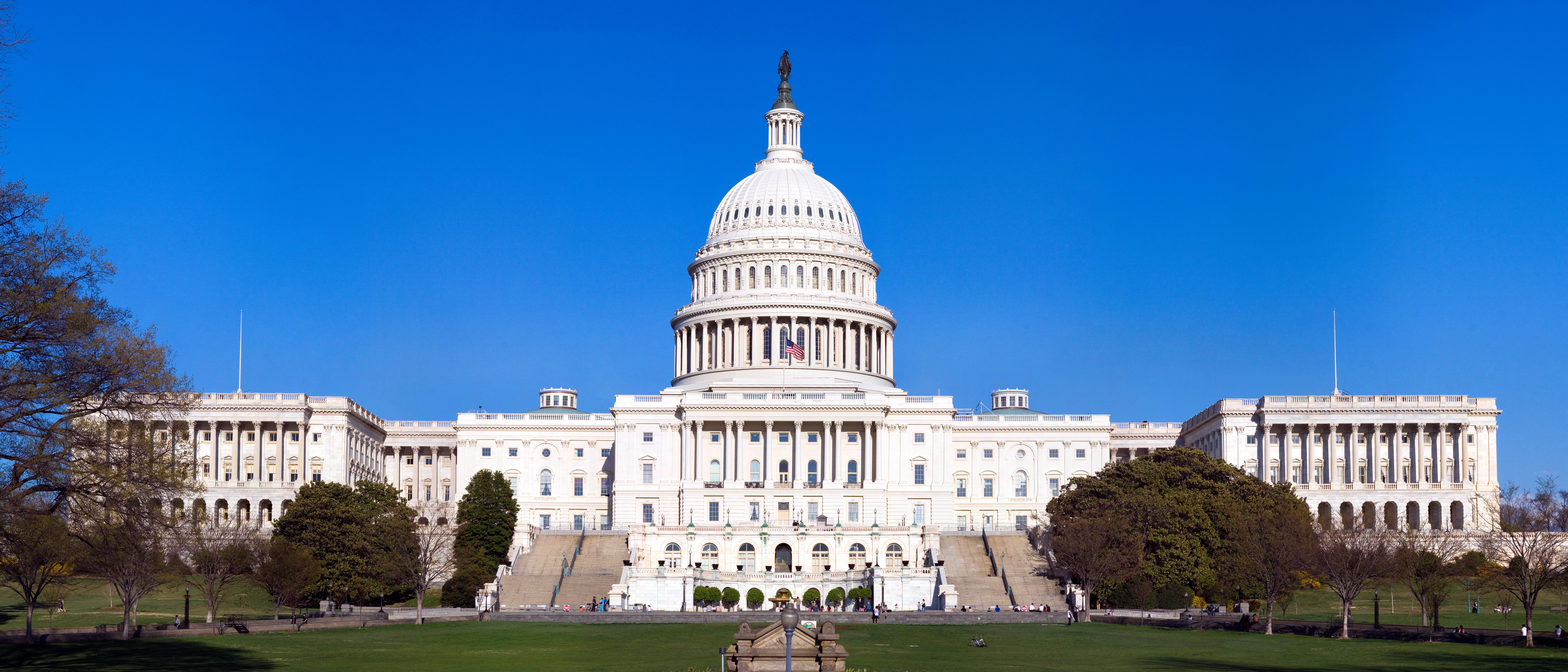 Photo: U.S. Capitol, Wikimedia Commons, public domain.
What People Are Saying
"They don't like the people who live here and they would like to see them replaced," Carlson said in the transcript.
"Now we're giving them dignity, not citizenship," Salazar said in the clip embedded in Carlson's segment, according to the transcript. "So we're not racist."
"Haiti is not in a place where people can safely return," Salazar said in her official statement.
"The bill now awaits passage in the Senate," Gillen's office said in its official statement.
"This decision restores integrity in our immigration system and ensures that Temporary Protective Status is actually temporary," a DHS spokesperson said when DHS announced the Haiti TPS termination.
The Big Picture
The Senate has not yet passed H.R. 1689, according to Gillen's official statement, and the bill would need Senate approval and presidential signature before becoming law. Until then, the dispute remains split among DHS termination notices, federal court orders affecting work authorization and a House-passed bill seeking to force a new Haiti TPS designation.
The political fight is larger than one roll call. The vote gave immigration restrictionists a Republican target list, gave TPS supporters a bipartisan House win and put South Florida Republicans in the center of a national argument over whether humanitarian immigration protections should yield to the Trump administration's enforcement agenda.
Pipeline: [[article-engine]]


