
Tucker Carlson Says Trump Failed To Press Netanyahu
WASHINGTON - Tucker Carlson sharpened his criticism of President Donald Trump's Iran war decision in a recorded interview clip, arguing that Trump could have pressured Israeli Prime Minister Benjamin Netanyahu through U.S. aid but did not.
Carlson framed the dispute as an American national interest question. The local transcript shows he argued that Israel depends on U.S. support, while official U.S. records show Washington has pledged $38 billion in military aid to Israel for fiscal years 2019 through 2028.
What Happened
Carlson said the United States was not an equal partner with Israel because of the difference in size, resources, and military support. The transcript records Carlson saying the United States is a country of about 350 million people while Israel has about 9 million people and depends heavily on American backing.
"You are wholly dependent on us." - Tucker Carlson, recorded interview transcript
Carlson then moved from the aid relationship to Trump's handling of Netanyahu during the Iran conflict. He said Trump wanted a negotiated settlement, argued that Israel opposed that path, and faulted Trump for not publicly criticizing Netanyahu.
"Trump could not restrain Netanyahu." - Tucker Carlson, recorded interview transcript
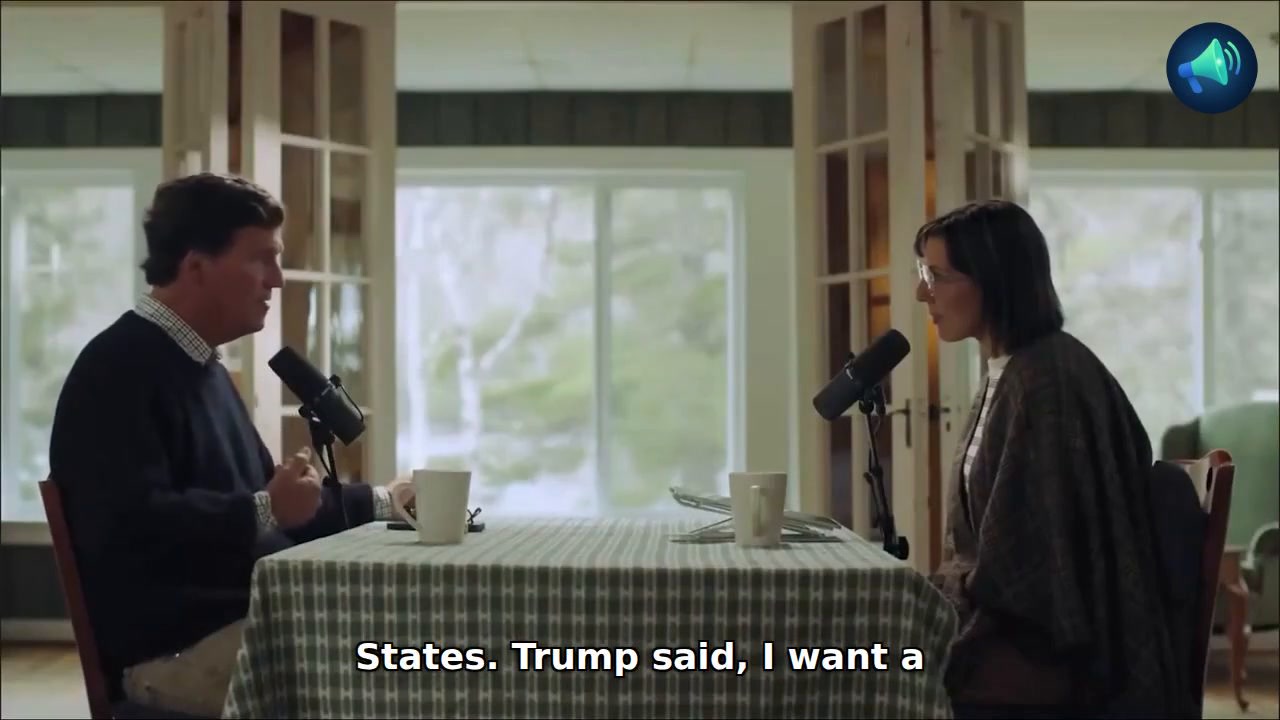
The sharpest line in the clip was Carlson's claim that Trump could have threatened U.S. funding. Carlson said Trump could have told Netanyahu to settle down or risk losing American support. The transcript records Carlson using the phrase "collapse in about 10 minutes," but that was Carlson's political argument, not an official finding about Israel's defense capacity.
"We'll just defund you and your country will collapse in about 10 minutes." - Tucker Carlson, recorded interview transcript
Carlson also said his argument was not aimed at Israel as a country. He described it as criticism of American leadership, saying the issue was whether an elected president acted to protect U.S. interests, the U.S. economy, and the American public.
The Official Record
The White House has described Operation Epic Fury as a Trump authorized U.S. military campaign against Iran. In a March release, the White House said Trump authorized the operation to eliminate what it called an imminent Iranian nuclear threat, destroy ballistic missile capabilities, degrade proxy networks, and cripple Iranian naval forces.
In an April review of the operation, the White House said the campaign lasted 38 days and that the joint force achieved three military objectives defined by the president: destroying Iran's ballistic missile and drone capabilities, destroying the Iranian navy, and destroying Iran's defense industrial base so it could not project power outside its borders.
That official account matters because Carlson's criticism is narrower than a claim that Washington lacked power in the region. He argued that Trump had pressure available against an ally and failed to use it. The White House account, by contrast, presents the operation as a display of American military strength that brought Iran to a ceasefire and opened the door to negotiations.
The State Department also described continued U.S. support for Israel's security in an April statement on U.S., Lebanese, and Israeli talks. The department said the United States supported Israel's right to defend itself from Hizballah attacks.
Why The Aid Fight Matters
U.S. aid to Israel gives Carlson's claim a concrete policy hook. A 2016 White House fact sheet on the U.S.-Israel Memorandum of Understanding said the United States pledged the largest single package of military assistance in U.S. history at the time.
"The total value of the new MOU, which covers FY2019- FY2028, is $38 billion ($3.8 billion per year)." - White House fact sheet, September 14, 2016

The same fact sheet said the package includes $33 billion in Foreign Military Financing and $5 billion in missile defense assistance, including support for advanced U.S. capabilities such as F-35 aircraft.
Congress has also treated arms flow to Israel as a live policy dispute. The Israel Security Assistance Support Act, introduced in 2024, said U.S. aid under the 2016 understanding remained subject to congressional approval and criticized a pause in certain arms transfers.
"Under the terms of a 2016 Memorandum of Understanding, the United States provides Israel with $3.8 billion per year in security assistance and missile defense funding from fiscal years 2019 through 2028, which is subject to the approval of Congress." - H.R. 8369, Israel Security Assistance Support Act
That bill came from Republican sponsors who argued approved arms transfers should proceed quickly so Israel could defend itself from Iran and its proxies. The legislation shows one side of the Washington debate: pro-Israel lawmakers treat steady arms deliveries as a strategic commitment.
Carlson's position represents the opposite America First argument inside the right. His claim is that U.S. aid and military power should give Washington the ability to say no to an ally when American interests, troops, and taxpayers are exposed.
The Response
The administration's public statements defend the Iran campaign as a U.S. victory. The April White House review quoted Secretary of War Pete Hegseth saying Trump had shown resolve from the strike that killed Qasem Soleimani through Operation Epic Fury.
"President Trump forged this moment. Iran begged for this ceasefire." - Pete Hegseth, Secretary of War, quoted in a White House release
The same White House release quoted Press Secretary Karoline Leavitt saying the United States achieved and exceeded its military objectives in 38 days. That framing casts the war as a controlled U.S. operation with defined military goals, not as a conflict driven by a foreign leader.
Carlson's clip challenges that account from a different angle. He does not dispute in the excerpt that the United States had military power. He argues that Trump refused to use American political and financial power against Netanyahu when, in Carlson's view, U.S. interests required it.
What People Are Saying
"Israel can't defend itself without the United States." - Tucker Carlson, recorded interview transcript
"This is a victory for the United States of America that the President and our incredible military made happen." - Karoline Leavitt, White House press secretary, quoted in a White House release
"The United States expressed its support for Israel's right to defend itself from Hizballah's continued attacks." - U.S. Department of State statement, April 14, 2026
The Big Picture
The dispute puts a hard question inside the broader America First split over the Iran war. Carlson is arguing about presidential judgment, U.S. aid, and whether a close ally should face American pressure when U.S. interests are at stake. The White House is arguing that the operation served U.S. security objectives and ended with Iran accepting a ceasefire.
The next point to watch is whether Congress takes up Carlson's framing in debates over military aid, arms transfers, or war powers. Existing records show Congress has a formal role in approving Israel aid. Carlson's clip turns that power into a political test for Trump and for the Republican coalition that backed the Iran operation.
Pipeline: [[article-engine]]


