
US and Poland Deepen Defense, LNG and Critical Minerals Ties in Warsaw Dialogue

US and Poland Deepen Defense, LNG and Critical Minerals Ties in Warsaw Dialogue
A 16th round of the U.S.-Poland Strategic Dialogue turned a NATO frontline alliance into a test case for shifting European security costs to allies while opening Central European markets to American energy, nuclear and defense firms.
WASHINGTON - The United States and Poland used a strategic dialogue in Warsaw on April 30 to deepen cooperation on defense production, liquefied natural gas, civil nuclear energy and critical minerals, according to a joint statement released by the Department of State. The agreement gives American companies a wider lane into Central European energy and industrial markets while pushing more of the deterrence burden against Russia onto a frontline NATO ally.
The American stake is direct. U.S. LNG exporters gain a buyer that wants to be a regional hub. U.S. nuclear vendors gain a partner that signed a large-scale civil nuclear deal. U.S. defense contractors gain interoperability work tied to Poland's military buildout. And U.S. taxpayers gain an ally that has already crossed NATO's 2 percent of GDP defense spending floor, reducing the marginal cost of deterring Russian aggression on Europe's eastern flank.
The Story So Far
The U.S.-Poland Strategic Dialogue is a recurring senior-level mechanism that the State Department uses to organize cooperation with one of NATO's most exposed eastern members. The April 30 session was the 16th round, led by U.S. Under Secretary of State for Political Affairs Allison Hooker and Polish Deputy Foreign Minister Robert Kupiecki.
Poland sits on NATO's eastern flank, sharing borders with Belarus, Russia's Kaliningrad exclave, and Ukraine. NATO has stated that its increased military presence in the eastern part of the alliance "is a direct result of Russia's behaviour, which reflects a pattern of aggressive actions against its neighbours and the wider transatlantic community." That posture has put Poland at the center of allied logistics, training and deterrence missions for more than a decade.

Photo by Pfc. Jason Klaer, U.S. Army, via Wikimedia Commons (public domain)
Poland has matched its geography with spending. NATO Secretary General Mark Rutte's annual report, released March 26, 2026, said all 32 allies met or exceeded the 2014 target of 2 percent of GDP on defense for the first time. European allies and Canada increased defense spending by 20 percent from 2024. Poland is among the highest spenders in the alliance as a share of GDP, well above the 2 percent floor.
The economic side of the relationship has tracked the security side. Poland imports U.S. LNG through its Swinoujscie terminal on the Baltic coast and has been working to expand regasification, storage and pipeline links into Central Europe. Polish utilities and the Polish government have also signed cooperation agreements with U.S. nuclear companies on planned reactors, the most advanced of which sits on the Baltic coast at Lubiatowo-Kopalino.
What's Happening Now
The April 30 joint statement covered five concrete areas: security and defense cooperation, regional energy security, economic growth, the Russia-Ukraine war, and what the State Department called "international efforts to bring a durable peace to Ukraine."
On defense, the statement said Washington and Warsaw "reaffirmed their commitment to enhance security cooperation, including on mutual self-defense and deterrence, and committed to exploring new opportunities to deepen transatlantic defense industrial cooperation that will strengthen interoperability, enhance Poland's defense capabilities, and create economic opportunities in both countries." That language opens the door to U.S. defense firms negotiating co-production, sustainment and component work with Polish counterparts, alongside the existing flow of finished U.S. systems such as Abrams tanks, HIMARS launchers, F-35 fighters and Patriot batteries that Poland has already purchased.
On energy, the two governments agreed to expand U.S. LNG delivery to the region and to support civil nuclear projects with U.S. companies aimed at increasing power generation in Poland. The statement said the United States "expressed support for Poland's ambitions to become a regional LNG hub that will replace the historically vulnerable east-west dependency model with a diversified north-south system." That phrasing identifies the Druzhba-era Russian supply architecture as the dependency to be replaced.

Photo by Matti Blume, via Wikimedia Commons (CC BY-SA 4.0)
On supply chains, the two countries signed a Critical Minerals Framework. The statement said both sides "agreed to collaborate on securing critical minerals supply chains" and to reduce dependency on what it called "high-risk vendors in sensitive sectors," along with protecting critical technology infrastructure from foreign interference. The text did not name specific minerals or vendors, but the U.S.-Poland framework follows similar bilateral agreements Washington has reached with Australia, Canada, Japan and several European partners that target rare earths, lithium, cobalt, nickel, graphite and processing capacity.
The United States also expressed strong support for Poland's accession to the G20 as a permanent member, a long-standing Polish foreign-policy goal that would give Warsaw a seat at the table where global financial and trade rules are negotiated.
Energy Secretary Chris Wright, speaking the same day at the Three Seas Business Forum in Warsaw, framed the energy track in alliance terms. Wright said U.S.-Poland cooperation includes "growing cooperation in LNG and our large-scale partnership in nuclear energy that was highlighted earlier today with a signing ceremony and press conference."
The Conservative View
Conservative observers tend to read the dialogue as the model for what the post-2024 American posture in Europe should look like: allies who pay for their own defense, buy American hardware, host American troops on their own dime, and align with American energy producers rather than Russian or Chinese suppliers. Poland, by that measure, is a showcase ally. It exceeds the NATO spending floor, hosts a permanent U.S. Army garrison at Camp Kosciuszko in Poznan, and is moving its energy mix toward U.S. LNG and U.S.-built nuclear reactors.
The defense-industrial cooperation language is the part conservatives are watching most closely. Co-production deals can sustain American factory jobs while spreading sustainment work to Polish firms, which keeps the alliance economically interlocked rather than dependent on one-way U.S. transfers. Critical minerals cooperation has the same logic: shifting processing and supply away from Chinese-controlled chains lowers strategic risk for U.S. manufacturers and defense programs.
The Progressive View
Progressive observers tend to focus on two questions: what the dialogue means for the trajectory of the Russia-Ukraine war, and whether the energy and minerals tracks lock in fossil-fuel and extractive dependencies that complicate climate goals.
On Ukraine, the joint statement's reference to "international efforts to bring a durable peace" suggests both governments see a negotiated outcome as live. Progressive analysts will want to see whether the strategic dialogue produces additional military aid, sanctions enforcement, or reconstruction commitments rather than only diplomatic framing. On energy, the LNG hub language commits Poland to long-lived gas infrastructure at a moment when the European Union's climate framework calls for fossil-fuel demand to decline. The civil nuclear partnership cuts the other way, supplying carbon-free baseload power, but the projects will not deliver electrons until the 2030s.
Other Perspectives
European partners not at the table will read the dialogue as a signal about how Washington wants the eastern flank organized. Germany, France and the United Kingdom have their own defense-industrial relationships with Poland, and the U.S.-Poland framework does not displace them, but it does set a template. The Three Seas Initiative, which links 13 Central and Eastern European states on infrastructure, energy and digital projects, treats Poland as a hub. Wright's appearance at the Three Seas Business Forum signaled that U.S. energy diplomacy will continue to flow through that grouping.
Russia was not quoted in the joint statement and has not yet issued a public response. Moscow has historically described eastern-flank reinforcement as provocation, a framing that NATO rejects on the basis that the buildout responded to Russian aggression in Georgia in 2008, Crimea in 2014 and Ukraine in 2022.
Economic Implications
The dialogue carries four distinct American economic stakes.
LNG export demand. Poland's Swinoujscie terminal and planned floating storage and regasification unit at Gdansk give the country regasification capacity that will exceed domestic demand within the decade. Hub ambitions imply re-exports through pipelines to Czechia, Slovakia, Ukraine and the Baltic states, which means American producers selling cargoes at Swinoujscie can reach customers far beyond Poland itself. Cheniere, Venture Global, Sempra and other U.S. exporters have existing supply contracts with Polish state energy company ORLEN; the dialogue creates political support for additional long-term contracts.
Civil nuclear awards. Westinghouse Electric Company is the lead vendor for Poland's first commercial nuclear plant at Lubiatowo-Kopalino, a three-reactor AP1000 project. Bechtel is the engineering, procurement and construction contractor. The dialogue's reference to a "large-scale partnership in nuclear energy" and an April 30 signing ceremony points to additional contractual milestones on that program. Each AP1000 unit represents several billion dollars of U.S. engineering, equipment and labor content.
Defense-industrial cooperation. Poland is in the middle of a multi-year military modernization that has already produced large U.S. arms sales: 96 AH-64E Apache helicopters, 250 M1A2 Abrams tanks, 486 HIMARS launchers, 32 F-35A fighters and additional Patriot batteries. The April 30 statement points beyond finished-system sales toward co-production, maintenance hubs and component manufacturing inside Poland, which can extend the revenue tail for U.S. primes such as Lockheed Martin, RTX, General Dynamics and Boeing while building European capacity that the U.S. can draw on in a contingency.
Critical minerals supply chains. The signed framework targets supply-chain security and reduced dependence on what the joint statement called "high-risk vendors in sensitive sectors." Poland has copper, silver, zinc and coking-coal reserves through state miner KGHM, and it is positioning to participate in European processing of lithium, cobalt and rare earths. For U.S. manufacturers in electric vehicles, batteries, semiconductors and defense, additional non-Chinese processing capacity reduces single-source risk and supports compliance with U.S. industrial policy rules under the Inflation Reduction Act and the CHIPS and Science Act.
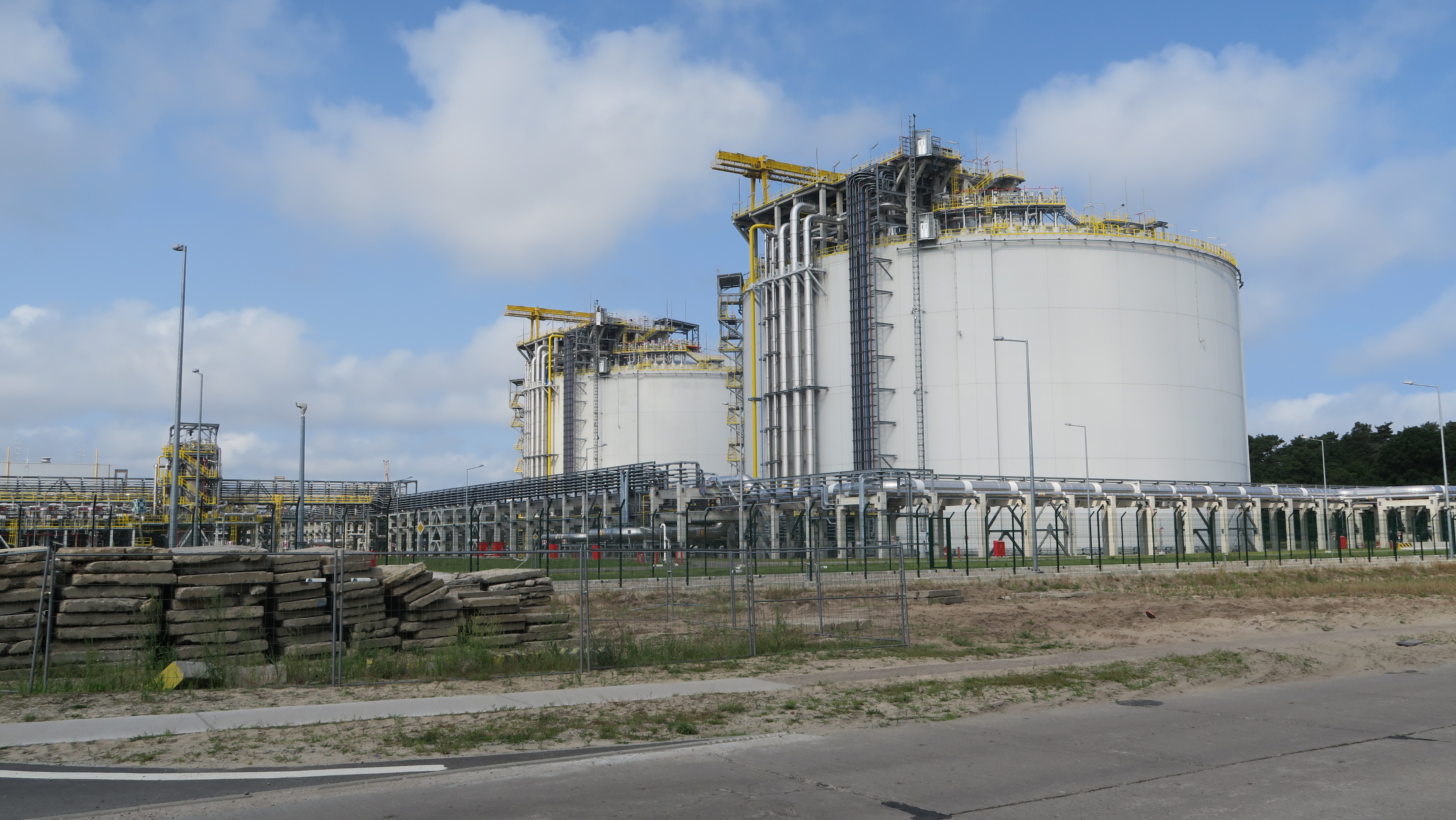
Photo by Maciek Kwiatkowski, via Wikimedia Commons (CC BY-SA 4.0)
By the Numbers
- 16: Number of rounds of the U.S.-Poland Strategic Dialogue completed, with the latest on April 30, 2026.
- 32: NATO allies that met or exceeded the 2 percent of GDP defense spending target in 2025, the first year all members hit the floor, according to the NATO Secretary General's annual report.
- 20 percent: Increase in defense spending by European allies and Canada from 2024 to 2025, per the same NATO report.
- 2 percent: NATO defense spending floor as a share of GDP, set at the 2014 Wales Summit.
- 3: AP1000 reactors planned for Poland's first commercial nuclear plant at Lubiatowo-Kopalino, with Westinghouse as the reactor vendor.
- 250: M1A2 Abrams tanks Poland has contracted from the United States.
- 32: F-35A fighters Poland has contracted from the United States.
What People Are Saying
"The United States of America and the Republic of Poland held the 16th round of the U.S.-Poland Strategic Dialogue April 30 in Warsaw."
U.S. Department of State, Joint Statement on the Strategic Dialogue Between the United States and Poland
"Both sides reaffirmed their commitment to enhance security cooperation, including on mutual self-defense and deterrence, and committed to exploring new opportunities to deepen transatlantic defense industrial cooperation that will strengthen interoperability, enhance Poland's defense capabilities, and create economic opportunities in both countries."
U.S. Department of State, Joint Statement on the Strategic Dialogue Between the United States and Poland
"The United States expressed support for Poland's ambitions to become a regional LNG hub that will replace the historically vulnerable east-west dependency model with a diversified north-south system."
U.S. Department of State, Joint Statement on the Strategic Dialogue Between the United States and Poland
"I thank Poland and its people for its steadfast alliance with the United States that began with our Revolutionary War and continues today, as evidenced by our growing cooperation in LNG and our large-scale partnership in nuclear energy that was highlighted earlier today with a signing ceremony and press conference."
Chris Wright, U.S. Secretary of Energy, keynote remarks at the Three Seas Business Forum in Warsaw
"For the first time, all Allies reported defence expenditure that met or exceeded the 2014 target of 2% of GDP."
NATO Secretary General's Annual Report 2025
"NATO has increased its military presence in the eastern part of the Alliance as a direct result of Russia's behaviour, which reflects a pattern of aggressive actions against its neighbours and the wider transatlantic community."
NATO, Strengthening NATO's Eastern Flank
The Big Picture
The Warsaw dialogue is a working example of what the United States is asking of its allies in 2026: spend more on defense, buy American energy, partner with American nuclear and minerals companies, and screen out high-risk vendors in sensitive technology. Poland is willing to do all four, which is why the relationship is moving faster than most other transatlantic tracks.
For American readers, the practical question is whether the framework converts into contracts. LNG hub language, nuclear partnership language and critical minerals language are political enabling acts. Cargoes, reactor pours, mineral offtake agreements and co-production lines are the test. The next twelve months should produce that evidence, in the form of long-term LNG contracts at Swinoujscie, contractual milestones on the Lubiatowo-Kopalino reactors, named minerals projects under the new framework, and additional defense-industrial agreements. If those follow, the U.S.-Poland template will become a benchmark Washington uses to measure other allies. If they do not, the April 30 statement will read as another diplomatic communique on a long shelf of them.
More from People's Voice

Walmart Prices $4.25 Billion Five-Tranche Bond Sale, Locks In 4.00% to 4.75% Coupons Through 2036
April 30, 2026 at 5:37 PM

Stryker says March cyberattack materially hit first-quarter operations
April 30, 2026 at 5:36 PM

Supreme Court narrows Voting Rights Act in Louisiana map ruling
April 30, 2026 at 5:36 PM