
Oil Slides From Spike as Tech Keeps Indexes Green After Fed Hold

Oil Slides From Spike as Tech Keeps Indexes Green After Fed Hold
NEW YORK - U.S. stocks were higher late Friday morning as technology shares carried the major indexes, while crude oil gave back part of this week's surge even after Energy Information Administration data showed another tight inventory picture.
The split matters for American households and traders because the Federal Reserve just held rates at 3.50% to 3.75% and said inflation remains elevated partly because of global energy prices. That leaves equities leaning on earnings support while energy prices keep the inflation channel open.
U.S. Tape
At 11:00 a.m. ET, the S&P 500 traded at 7,249.28, up 0.56%, while the Nasdaq Composite rose 0.93% to 25,124.44. The Dow Jones Industrial Average gained 0.24% to 49,769.36, and the Russell 2000 added 0.16% to 2,804.28.
Technology was the clean leader. The Technology Select Sector SPDR Fund rose 1.00%, consumer discretionary gained 0.80%, consumer staples added 0.58%, and financials rose 0.57%. Energy lagged as the Energy Select Sector SPDR Fund fell 1.06%, tracking the pullback in crude.
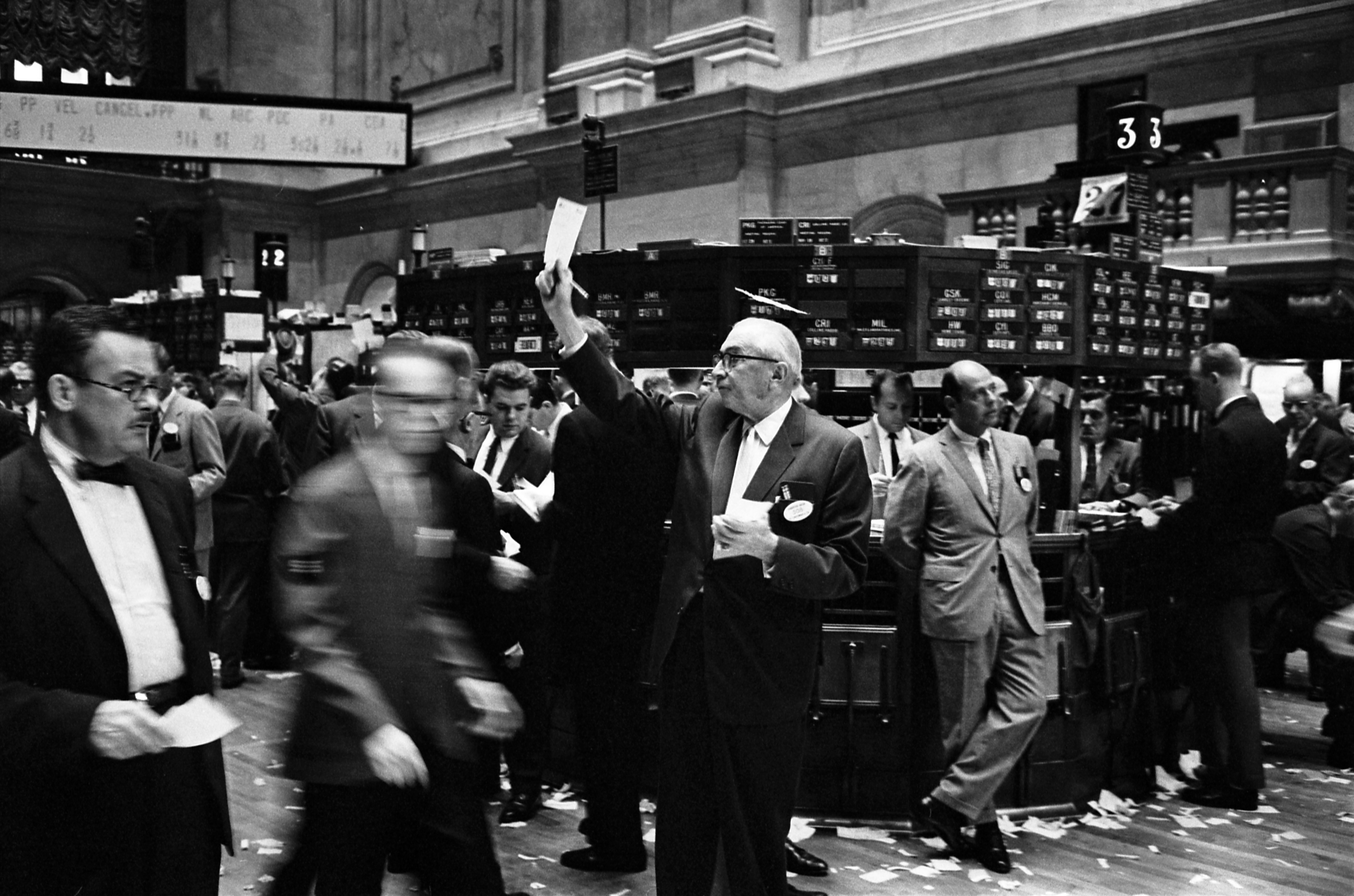
The late morning setup was not a broad melt-up. It was narrower: megacap and technology strength outweighed energy weakness, while small caps barely moved. That mix usually tells traders that index gains are being driven by companies with large weights rather than by a full market rotation.
Company releases gave that trade something concrete to lean on. Amazon said first quarter net sales rose 17% to $181.5 billion from $155.7 billion a year earlier. Apple directed investors to quarterly results and business updates for the quarter ended March 28, keeping megacap earnings in focus as traders weighed the next leg for the Nasdaq.
Overnight
Asia traded lower before the U.S. open. Japan's Nikkei 225 fell 1.06% to 59,284.92, Hong Kong's Hang Seng lost 1.28% to 25,776.53, and South Korea's KOSPI dropped 1.38% to 6,598.87. The Shanghai Composite was the exception, up 0.11% at 4,112.16.
Europe was mixed. The FTSE 100 slipped 0.13% to 10,365.20, while Germany's DAX rose 1.41% to 24,292.38 and France's CAC 40 gained 0.53% to 8,114.84. The Stoxx 600 was flat in the late morning data pull.
Currency markets showed the biggest overnight move in the yen. The dollar index slipped 0.22% to 97.861, EUR/USD rose 0.73% to 1.1770, and USD/JPY fell 2.20% to 156.664. The yen move stood out because the rest of the cross-asset board was calmer, with the VIX down 1.12% at 16.70.
Futures and U.S. Setup
Equity futures also pointed higher in the 11:00 a.m. pull. S&P 500 futures rose 0.48% to 7,278.25, Nasdaq 100 futures gained 0.72% to 27,793.75, and Dow futures added 0.26% to 49,963.
The rate backdrop stayed steady. The 10-year Treasury yield was 4.37%, down 0.2 basis point. The three-month bill proxy sat near 3.57%, keeping the front end close to the Federal Reserve's current target range.
The Federal Reserve said Wednesday that it maintained the target range for the federal funds rate at 3.50% to 3.75%. The statement said, "Inflation is elevated, in part reflecting the recent increase in global energy prices," and added that Middle East developments were contributing to uncertainty about the outlook.
That language helps explain why the 10-year yield did not fall sharply as oil retreated Friday. Traders can mark down the immediate oil spike and still keep a premium on inflation risk if gasoline inventories remain tight and the Fed is naming energy as part of the inflation problem.
By the Numbers
Bitcoin traded at $78,313.65, up 2.63% over 24 hours, while Ethereum rose 2.27% to $2,307.38. The crypto move added another pro-growth signal to a tape already being carried by technology.
WTI crude fell 3.24% to $101.67, and Brent crude dropped 4.78% to $108.56. Gold rose 0.53% to $4,639.00, silver climbed 3.76% to $76.30, copper added 1.13% to $5.993, and natural gas rose 0.40% to $2.778.
The EIA's weekly petroleum table showed U.S. commercial crude inventories fell 6.233 million barrels to 459.495 million for the week ended April 24. Total motor gasoline stocks fell 6.075 million barrels to 222.299 million.
That is the key oil distinction today. The price decline is not an oversupply print. It is a retracement from the geopolitical spike, while the physical U.S. inventory data still points to tight crude and gasoline supply.
Today's Calendar
The Bureau of Labor Statistics calendar shows no Employment Situation release today. The April jobs report is scheduled for Friday, May 8 at 8:30 a.m. ET.
The next labor-market release on the BLS schedule is the March Job Openings and Labor Turnover Survey, due Tuesday, May 5 at 10:00 a.m. ET. April CPI is scheduled for Tuesday, May 12 at 8:30 a.m. ET.
The Federal Reserve's April 28 to 29 meeting is now behind traders. The next scheduled FOMC meeting is June 16 to 17, according to the Fed's calendar.
Energy earnings remain part of the Friday watchlist, with Exxon Mobil, Chevron, and Linde among the companies due around the first quarter reporting window. Traders should anchor any numbers to company releases or SEC filings once those reports are posted.

Why It Moved
The day's main mechanism is a tug of war between earnings support and energy inflation risk. Amazon's reported 17% sales growth gave traders a current-company reason to keep bidding megacap technology and consumer names. At the same time, the Fed's statement kept oil in the macro frame by tying elevated inflation partly to global energy prices.
Crude's decline works through a different channel. WTI and Brent are giving back part of a prior spike, but EIA data showed crude and gasoline inventories fell on the week. For U.S. consumers, that means the retreat in futures prices has not yet erased the risk that tight product stocks keep pump prices elevated.
The bond market is absorbing both signals. A 4.37% 10-year yield says rates traders are not pricing an immediate growth scare from the oil move. A lower VIX and higher Nasdaq say equity traders are still rewarding earnings visibility, especially in large technology names.
The next test is data. If JOLTS and CPI confirm softer labor demand and cooler inflation, the Fed's June meeting becomes the next live policy checkpoint. If energy prices feed into gasoline and inflation expectations, the central bank's own statement has already identified the channel traders will watch.


