Fishback Makes H-1B A Florida GOP Donor Fight
The Florida Republican candidate is tying skilled-worker visas to donor influence, but the public record proves campaign money more clearly than it proves his donor-specific accusation.
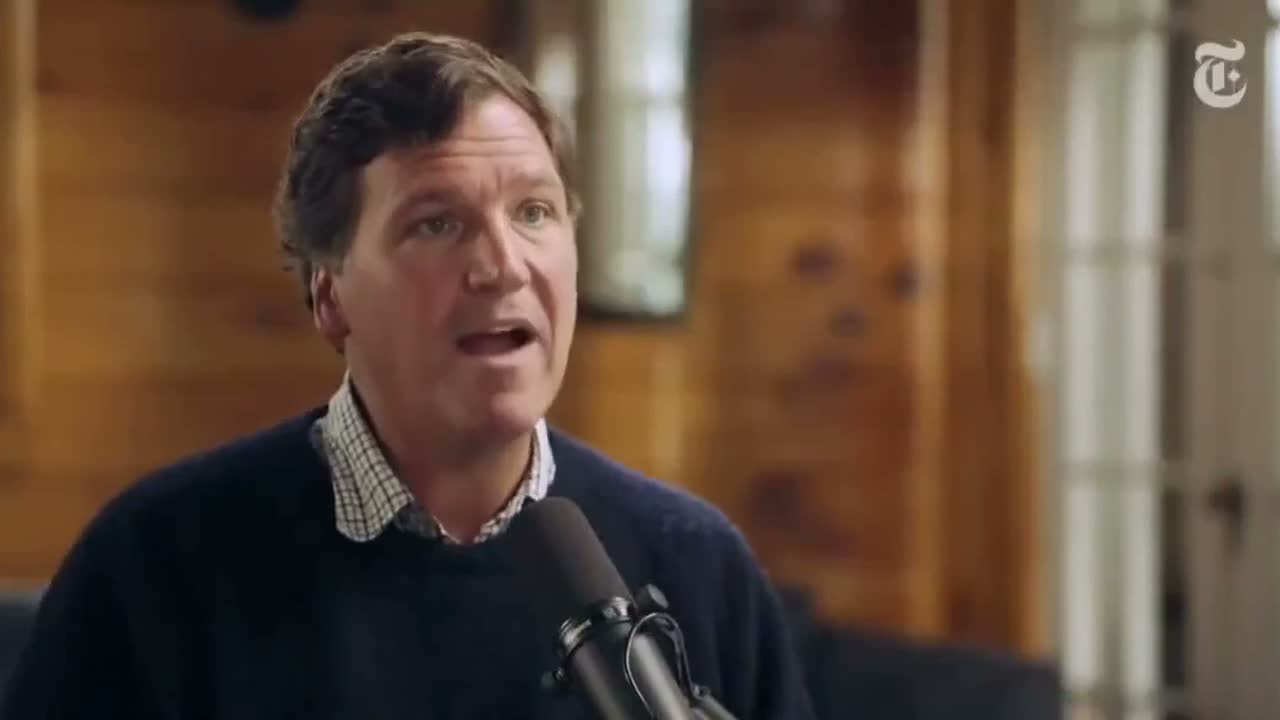
Tallahassee, Florida - James Fishback is turning the H-1B visa fight into a donor-pressure test inside Florida's Republican governor race, using a campaign clip to accuse unnamed Tallahassee Republicans of refusing to confront large contributors over foreign-worker hiring.
Florida Division of Elections records list Fishback as an active Republican candidate for governor in the 2026 general election, filed Nov. 24, 2025. His campaign website says he is running to succeed Gov. Ron DeSantis as Florida's next Republican governor.
The political charge is clear. The proof is narrower. A local transcript of Fishback's campaign clip verifies his accusation, federal records explain how H-1B hiring works, and Florida campaign-finance records verify major money flowing into the governor race. Those records do not independently prove that specific donors exploited H-1B hiring or caused Republican officials to avoid the issue.
That distinction matters because Fishback is trying to turn a national immigration fight into a state-level test of Republican loyalty, with workers on one side and donors on the other.
The Story So Far
Fishback's clip takes aim at the business wing of Republican politics. In the transcript, he said some Republicans in Tallahassee have been "unwilling to stand up to their largest donors who exploit the H-1B program and fire or even worse, never hire our people."
He framed the issue as a labor-market fight. Fishback said affected workers lose opportunities "not because they're unqualified, not because they don't have the skills," but because employers can find someone abroad for less. The transcript appears clipped at the end of that line, so the article does not rewrite it into a cleaner quote.

Fishback also put a legal caveat into the pitch. "As governor, I will always come up with a creative solution that respects the Constitution to protect our jobs, your kids' jobs, and your grandkids' jobs here in Florida," he said in the transcript.
That caveat is important. USCIS says H-1B is a federal nonimmigrant classification for specialty occupations that require highly specialized knowledge and generally a bachelor's degree or equivalent. Federal rules under 20 CFR Part 655 require employers to file a Labor Condition Application with the Department of Labor before the immigration process proceeds through DHS and USCIS.
Because H-1B admission is a federal immigration mechanism, a Florida governor could not simply abolish the visa category by state order. A governor could test indirect tools, including state contracting rules, state-agency hiring policies, incentive conditions, enforcement referrals, or procurement standards. Each route would carry legal and political limits.
What Is Verified
The cleanest verified records establish the race, the candidates, and the federal program at the center of the dispute.
Florida Division of Elections records list Fishback as an active candidate. The same state database lists Rep. Byron Donalds as an active Republican candidate for governor, filed Feb. 26, 2025. State committee records list Friends of Byron Donalds PAC as an active political committee with Bradley T. Crate as treasurer.
Donalds' campaign website describes him as a Trump-endorsed candidate and quotes President Donald Trump saying, "Byron Donalds would be a TRULY GREAT and POWERFUL Governor for Florida and, should he run, will have my complete and total endorsement. RUN, BYRON, RUN!"
The donor record is also visible in state filings. Florida's campaign-finance database says campaigns and committees must disclose detailed financial records. A 2026 query for Friends of Byron Donalds PAC returned major contributions including $5 million from Jeff Yass on March 28, 2025, $2.5 million from Club for Growth Action Florida on March 30, 2026, $1 million from Thomas Peterffy on May 2, 2025, and multiple $1 million contributions from the Seminole Tribe of Florida across 2025 and 2026.
Those filings establish the money. They do not establish the causal chain Fishback is alleging.
What Remains Unproven
Fishback did not name the donors in the clip. The Florida records reviewed for the brief verify large contributions to Donalds' political committee, but they do not show that any named donor exploited H-1B hiring or pressured Tallahassee Republicans over the issue.
That does not make Fishback's claim irrelevant. It makes it a campaign allegation that needs evidence before it becomes a reported conclusion.
USCIS maintains an H-1B Employer Data Hub covering fiscal year 2009 through fiscal year 2026 quarter one data on employers that submitted petitions to employ H-1B workers. The Labor Department also says H-1B employers must make public access records available within one working day of filing an LCA, including the LCA, the rate of pay, the actual wage system, the prevailing wage rate and source, and a benefits summary.
Those databases are the likely place to test any donor-specific claim. A valid link would need a named donor, a specific employer, petition or LCA data, and evidence connecting the company practice to the political allegation. Without that, the public record supports a story about Fishback's message, not a definitive finding against unnamed donors.
The H-1B Fight Inside The GOP
Fishback's argument lands in a Republican Party that is still divided over high-skilled immigration.
Populist conservatives argue that H-1B lets large employers pass over American graduates, reduce wage pressure, and import dependence into sectors that should train domestic workers. Fishback is using that frame and adding a donor-pressure claim, saying the party's elected class will not confront the contributors who benefit from the current system.
Business-aligned Republicans and many technology employers usually make the opposite case. They argue that skilled immigration helps companies fill specialized jobs when domestic supply falls short and keeps U.S. firms from moving work abroad. Their argument is economic: if companies cannot hire needed workers in the United States, investment and innovation may shift elsewhere.
Progressive labor critics often approach the program from a different angle. They argue that weak enforcement can harm both U.S. workers and visa workers if employers use immigration status to reduce bargaining power. In that view, the policy question is not only whether foreign workers enter the labor market, but whether employers face enough scrutiny when they set wages, assign work, or replace domestic staff.
Libertarian and pro-market voices tend to object to state-level crackdowns. They often argue that labor markets should remain open, that firms should be free to recruit globally, and that state governments should not use contracting power to punish lawful federal hiring practices.
Fishback's clip tries to force those factions into a binary choice. Either Florida Republicans challenge donor-aligned employers on H-1B, or they risk looking detached from workers who believe the party promised an America First labor policy.
Economic Implications
The economic stakes are larger than one campaign clip because H-1B sits at the intersection of immigration law, wage policy, and corporate hiring.
USCIS says H-1B applies to specialty occupations requiring advanced knowledge, which means the program is concentrated in higher-skill labor markets rather than seasonal or low-wage temporary work. Department of Labor rules require wage and public-access records, but critics argue that compliance paperwork does not always capture whether domestic workers were displaced or deterred from applying.
For Florida, the state-policy question is narrower. A governor who wants to challenge H-1B use would likely have to focus on state leverage rather than federal immigration control. State contracts, tax incentives, public universities, workforce grants, and procurement rules could become pressure points if written to favor domestic hiring or require additional disclosure from companies seeking state money.
That approach would invite pushback. Employers could argue that extra state conditions interfere with lawful federal hiring and reduce Florida's appeal to high-growth firms. Worker advocates could counter that taxpayer-backed contracts should come with stronger labor protections and clearer disclosure when companies rely on foreign-worker pipelines.
The result would be a fight over who gets to define economic development: the companies promising investment, the workers asking for preference in hiring, or the politicians trying to satisfy both.
What People Are Saying
"For as much respect as I have for some of these Republicans in Tallahassee, they have been unwilling to stand up to their largest donors who exploit the H-1B program and fire or even worse, never hire our people."
James Fishback, in the campaign clip transcript
"As governor, I will always come up with a creative solution that respects the Constitution to protect our jobs, your kids' jobs, and your grandkids' jobs here in Florida."
James Fishback, in the campaign clip transcript
"My name is James Fishback, and I am running to succeed Ron DeSantis as Florida's next Republican Governor."
Fishback campaign website
"The H-1B program allows employers in the United States to temporarily employ foreign workers in occupations that require the theoretical and practical application of a body of highly specialized knowledge and a bachelor's degree or higher in the specific specialty, or its equivalent."
U.S. Citizenship and Immigration Services

Why It Matters In Florida
The governor race is becoming a test of how far Republican candidates will go in applying national populist arguments to state power.
Fishback's position asks Florida voters to see H-1B not only as a Washington immigration program, but as a local jobs issue shaped by campaign donors and state economic incentives. Donalds' campaign, by contrast, enters the race with Trump's endorsement displayed on its website and a political committee backed by major contributors in state filings.
Those facts give Fishback an opening. They also create an evidentiary burden. If he wants the donor claim to carry beyond the campaign clip, he will need to identify the donors, connect them to employers, and show how those employers used H-1B in ways that support his charge.
The Big Picture
Fishback is trying to make H-1B a test of who Florida Republicans serve: donors, employers, or workers. The strongest version of his argument is political and economic, not just immigration-focused.
The unresolved question is proof. The campaign clip verifies Fishback's charge. Federal records verify the H-1B framework. State records verify major money in the race. But unless Fishback names donors or produces employer-specific evidence, the donor allegation remains a campaign claim rather than a documented conclusion.