
Khanna Presses Hegseth on Iran War Costs in Budget Hearing

Khanna Presses Hegseth on Iran War Costs in Budget Hearing
The exchange put gas prices, food costs, and the Strait of Hormuz at the center of the Pentagon budget fight.
WASHINGTON, D.C. - Defense Secretary Pete Hegseth did not provide a household cost estimate for the Iran war when Rep. Ro Khanna pressed him during a House Armed Services Committee budget hearing Wednesday, according to the committee video and local transcript of the exchange.
Khanna, a California Democrat, cited a $631 billion estimate that he said would equal about $5,000 per household. Hegseth answered by arguing that the cost question had to be weighed against the risk of Iran acquiring a nuclear weapon.
The clash turned a Pentagon budget hearing into a fight over how the war is reaching American households. Federal energy data shows why the question is not theoretical: the U.S. Energy Information Administration says the Strait of Hormuz handled about 20 million barrels per day in 2024, equal to about 20% of global petroleum liquids consumption, and the Federal Reserve Bank of Dallas has estimated that an Iran war oil disruption could add 0.6 percentage points to headline PCE inflation in 2026 under its current scenario.
The Story So Far
The House Armed Services Committee convened the April 29 hearing to receive testimony on the Department of Defense fiscal 2027 budget request, according to the committee's hearing page. The listed witnesses were Hegseth and Gen. Dan Caine, chairman of the Joint Chiefs of Staff.
Hegseth's written testimony framed the budget around military readiness, deterrence, and the department's war posture. The hearing page identified the setting as Rayburn 2118 and listed Chairman Mike Rogers' opening statement along with testimony from Hegseth and Caine.
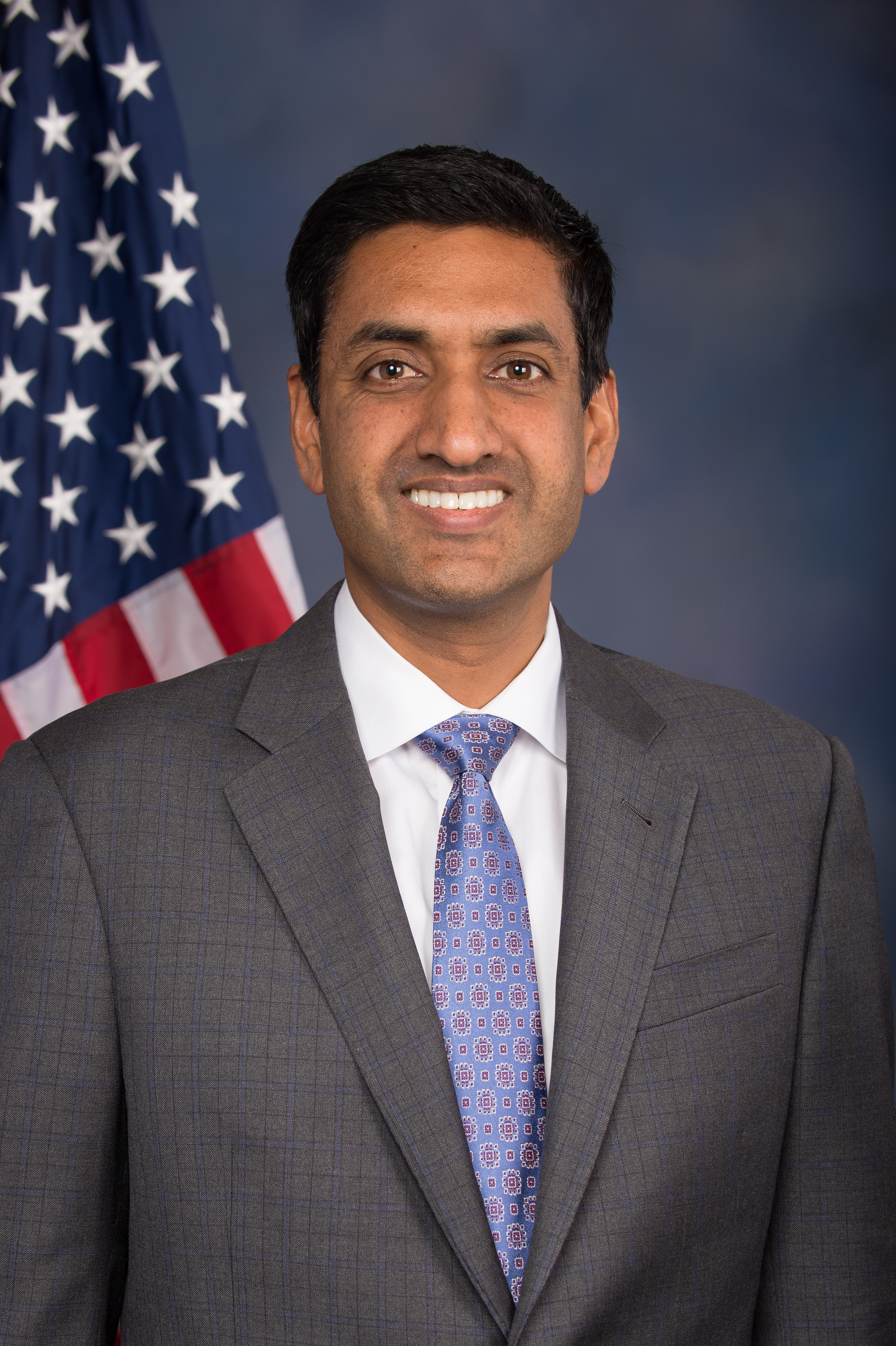
Khanna used his questioning time to move from defense toplines to household costs. According to the hearing transcript, he asked Hegseth whether the administration knew how much Americans would pay in higher gas and food costs over the next year because of the Iran war.
Hegseth did not give a dollar figure in response. According to the transcript, he asked Khanna what it would cost to prevent Iran from getting a nuclear bomb, then asked what Americans would pay to ensure Iran did not obtain one.
What's Happening Now
Khanna's central claim was that the administration had defended the war without publicly showing that it had measured the household burden. He cited a $631 billion estimate, saying it meant an increase of $5,000 a year for American households.
That figure should be treated as Khanna's claim. The research brief for this story found no public primary methodology from the Congressional Budget Office, Khanna's office, the House Budget Committee, or a major public cost-of-war project for the exact $631 billion estimate. The transcript supports that Khanna said it, but it does not independently establish the number.
Hegseth's answer relied on a security-cost frame. According to the transcript, he asked, "Why won't you ask what it costs to prevent Iran from getting a nuclear bomb?" When Khanna asked whether Hegseth would acknowledge an economic cost to Americans, Hegseth said the administration had "an incredible economic team" managing the issue better than the previous administration.
Khanna then argued that acknowledging costs was separate from deciding whether the war was justified. According to the transcript, he said officials should be able to tell Americans what they are paying, even if the administration believes the policy is worth it.
The Conservative View
Hegseth's answer reflects the administration's strongest argument: the economic cost of military action must be compared with the security cost of allowing Iran to get a nuclear weapon. That argument places the household burden inside a larger deterrence calculation rather than treating gas and food prices as the only measure.
Conservative defense hawks have long argued that Iran's nuclear program, missile force, and regional proxies create costs that do not appear in household inflation data. In that view, avoiding or delaying action can also carry a price, including greater risk to U.S. forces, allies, shipping lanes, and energy infrastructure.
The EIA data cuts both ways for that argument. Because the Strait of Hormuz is so central to world oil flows, officials who support military action can argue that keeping the waterway open is itself an economic interest for American drivers, freight operators, farmers, and manufacturers.
The Progressive View
Khanna's argument was that the administration owes Americans a direct accounting. He did not merely ask whether Hegseth believed the war was justified. He asked whether officials had analyzed higher gas and food costs and whether Hegseth would acknowledge an economic cost to the American people.
That critique fits a broader progressive case against open-ended war funding. War-cost skeptics argue that Congress cannot make an informed budget decision if the administration highlights security benefits while leaving household, fuel, food, missile, and borrowing costs unclear.
Khanna's sharpest line was aimed at competence, not only ideology. According to the transcript, he told Hegseth, "You don't even know what the average American is paying," then challenged the department's $25 billion figure discussed elsewhere in the hearing.
Other Perspectives
Libertarian and noninterventionist critics would likely press a different question: whether U.S. taxpayers should bear an expanding war cost unless the administration can show a clear, direct national interest. That frame puts constitutional war powers, debt, and opportunity cost ahead of the tactical case for military operations.
Independent voters may judge the dispute less by party labels than by prices. AAA said April 30 that the national gasoline average had risen 27 cents in one week and was $1.12 higher than a year earlier as oil prices moved above $100 a barrel with no indication of when the Strait of Hormuz would reopen.
Energy analysts would focus on duration. The EIA says Saudi Arabia and the United Arab Emirates have some pipeline capacity that can bypass Hormuz, but the agency estimates only about 2.6 million barrels per day of available bypass capacity from Saudi and UAE pipelines in a disruption scenario. That is far below the 20 million barrels per day that moved through the strait in 2024.
Economic Implications
The first mechanism is crude oil pass-through. The EIA says retail gasoline prices are mainly affected by crude oil prices and available gasoline supply. When a chokepoint shock lifts crude and tightens refined-product flows, commuters see the effect at the pump before the broader inflation data fully catches up.

The second mechanism is freight and food. Higher diesel and gasoline prices raise transportation costs for truckers, farmers, distributors, and retailers. The article does not assign a precise food-price increase because the available primary sources in this review did not provide one, but Khanna's question correctly identified fuel as a channel into grocery bills.
The third mechanism is inflation policy. Dallas Fed researchers wrote April 17 that the Iran war had disrupted oil and refined product exports from the Middle East and that a current-disruption scenario would lift 2026 fourth-quarter-over-fourth-quarter headline PCE inflation by 0.6 percentage points and core PCE inflation by 0.2 percentage points. The Dallas Fed also said a complete halt to Persian Gulf exports through a Hormuz closure would correspond to a 20% disruption of global oil supplies.
For Congress, the budget issue is not only the Pentagon's direct spending. It is also the indirect cost borne by households and businesses if energy prices keep feeding into inflation, freight rates, and Federal Reserve decisions.
By the Numbers
- $631 billion: the cost estimate Khanna cited during the hearing, which he said equaled about $5,000 per household.
- 20 million barrels per day: average 2024 oil flow through the Strait of Hormuz, according to the EIA.
- 20%: share of global petroleum liquids consumption that moved through the strait in 2024, according to the EIA.
- 27 cents: one-week increase in the national gasoline average reported by AAA on April 30.
- 0.6 percentage points: Dallas Fed estimate for the current scenario's increase in 2026 headline PCE inflation, measured fourth quarter over fourth quarter.
What People Are Saying
"Do you know how much it will cost Americans in terms of their increased cost in gas and food over the next year because of the Iran war?"
Rep. Ro Khanna, House Armed Services Committee hearing
"Why won't you ask what it costs to prevent Iran from getting a nuclear bomb?"
Defense Secretary Pete Hegseth, House Armed Services Committee hearing
"It's $631 billion, which means it's an increase of $5,000 a year for American households."
Rep. Ro Khanna, House Armed Services Committee hearing
"We have an incredible economic team that's managing this better than what the previous administration did."
Defense Secretary Pete Hegseth, House Armed Services Committee hearing
"Under this current scenario, 2026 fourth-quarter-over-fourth quarter headline PCE inflation increases by 0.6 percentage points, while core PCE inflation increases by 0.2 percentage points."
Federal Reserve Bank of Dallas researchers, April 17 analysis
The Big Picture
The next test is whether the administration or Khanna's office produces a public cost methodology. If the $631 billion figure remains unattributed beyond the hearing exchange, the number will stay politically powerful but analytically incomplete.
The larger budget fight will turn on whether Congress treats household energy and inflation costs as part of war oversight. The House Armed Services Committee can press the Pentagon through follow-up questions for the record, amendments, or reporting requirements tied to FY27 defense funding.
The data to watch now comes from fuel prices, EIA energy flows, Federal Reserve inflation readings, and any updated Defense Department estimate of direct war spending. Those sources will show whether the exchange was a one-day clash or the start of a broader fight over how much the Iran war costs Americans.


