Greene Says Presidents Make Deals To Back Israel
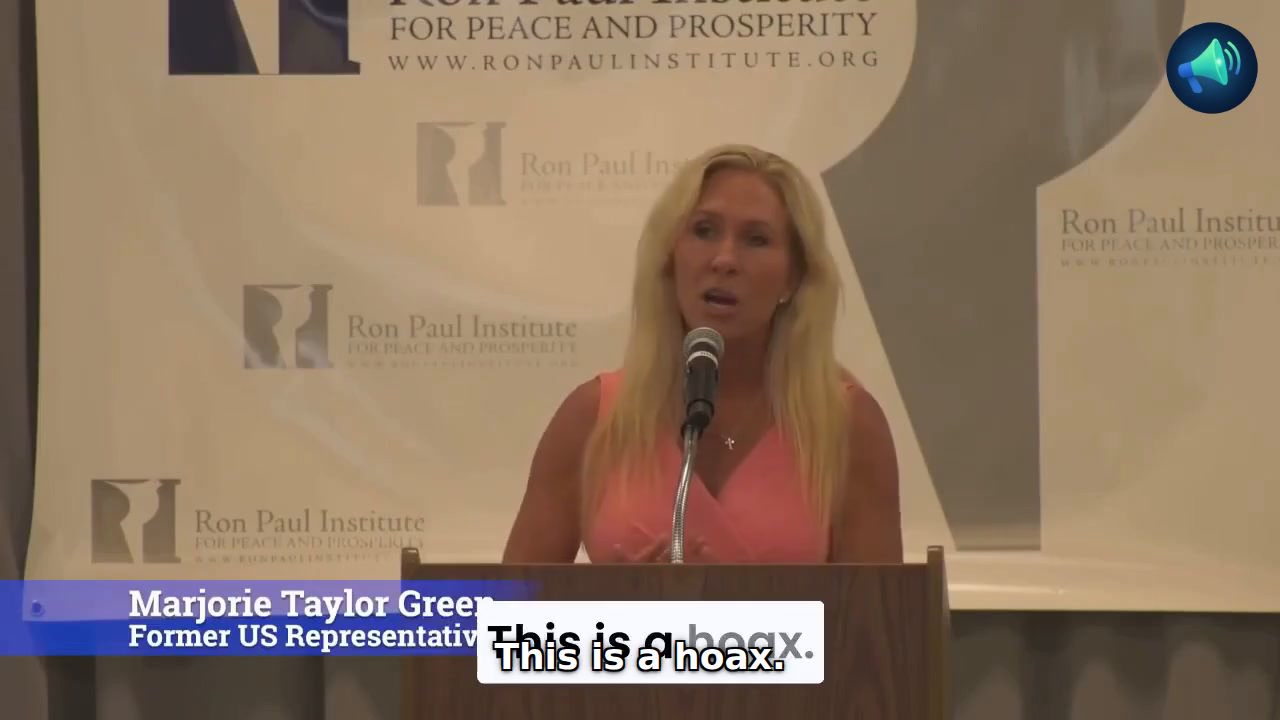
WASHINGTON , Former Rep. Marjorie Taylor Greene told Tucker Carlson that U.S. presidents and lawmakers make political deals to support Israel, escalating an America First fight over whether Washington's Israel policy serves U.S. interests or entrenched foreign policy commitments.
Greene framed the claim as her own conclusion in a local video transcript. Public records do not prove her allegation of private political bargains. They do show a formal U.S. security aid structure for Israel, congressional fights over weapons transfers, and open advocacy by pro-Israel groups seeking to shape U.S. policy.
The Story So Far
Greene is no longer a member of Congress. The Office of the Clerk of the House says Greene resigned on January 5, 2026, and that her former Georgia district office is operating under Clerk supervision until a successor is elected.
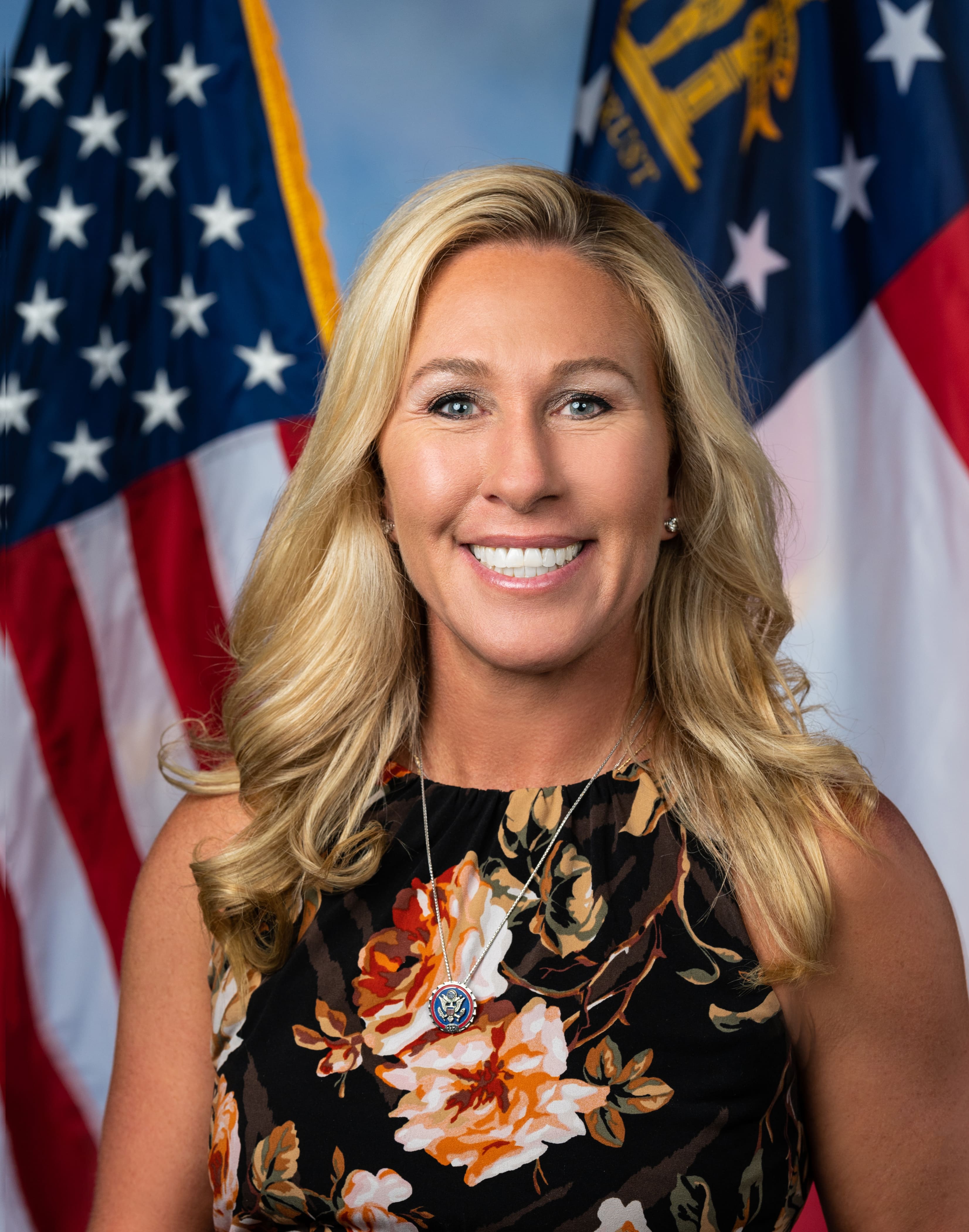
The Congressional Record shows Greene notified House Speaker Mike Johnson and Georgia Gov. Brian Kemp that she would leave the House effective January 5 at 11:59 p.m. Eastern. Greene wrote that serving Georgia's 14th Congressional District had been her "honor and privilege," according to the record.
Her comments to Carlson landed inside a broader Republican debate over Israel, Iran, and whether the America First movement should continue the bipartisan pro-Israel consensus that has shaped U.S. policy for decades. The White House has described President Donald Trump's foreign policy as "peace through strength" and cited his actions against Iran, the Houthis, the International Criminal Court, and UNRWA as evidence of strong support for Israel and U.S. security priorities.
What Greene Said
In one transcript, Greene said, "To become president of the United States, there's deals that have to be made. Otherwise, you aren't allowed to have that power."
Greene then broadened the claim from presidents to lawmakers and state officials. "They made their deal to support Israel at all times," Greene said, according to the transcript. "Why does the United States of America do that for one foreign country?"
A second clip added a sharper charge about organized pro-Israel influence. Greene said she was no longer in Congress because she "did not bow in obedience to AIPAC" and to "the Zionists" who she claimed "literally fully control Washington DC," according to the transcript.
Those statements are allegations. The record reviewed for this article supports the narrower facts that the United States has a long-term aid commitment to Israel, members of Congress have fought over whether arms transfers should be delayed, and AIPAC openly seeks to persuade the U.S. government to support Israel. The record does not establish Greene's claim that presidents must make private deals to gain power.
The Public Record On Aid
The clearest official record is the 2016 U.S.-Israel security assistance memorandum. A White House fact sheet from the Obama administration says the agreement covers fiscal years 2019 to 2028 and totals $38 billion, or $3.8 billion per year.
The same fact sheet says the package includes $33 billion in Foreign Military Financing and $5 billion in missile defense assistance. It says the funding allows Israel to acquire advanced U.S. military capabilities, including F-35 aircraft, and to plan missile defense purchases on a longer timeline.
Congress has treated those commitments as politically important but still subject to legislative approval. The text of H.R. 8369, the Israel Security Assistance Support Act introduced in 2024, says the United States provides Israel with $3.8 billion per year in security assistance and missile defense funding under the 2016 memorandum, "which is subject to the approval of Congress."
The bill text also says Congress "plays a vital role in oversight and approval" of foreign military sales and direct commercial sales to partners, including Israel. Its Republican sponsors argued that the Biden administration should not pause previously approved arms transfers while Israel faced threats from Iran and its proxies.
 Photo: Official White House photo by Dan Scavino, via Wikimedia Commons (public domain).
AIPAC's Role
AIPAC describes its work as advocacy, not hidden control. Its public resources page says the current memorandum commits the United States to $3.3 billion per year in security assistance and $500 million for cooperative missile defense programs from fiscal year 2019 through fiscal year 2028.
AIPAC also argues that Israel benefits the United States. In one public resource, AIPAC says Israel is a "model ally" that helps strengthen U.S. national security, supports the U.S. economy through defense purchases, and shares technology with American troops.
That is evidence of organized lobbying and persuasion around U.S. policy. It is not evidence, by itself, that elected officials are secretly required to pledge allegiance to Israel. Greene's critics are likely to focus on that distinction, while her supporters are likely to argue that formal lobbying, campaign pressure, and bipartisan aid votes are the visible part of a deeper political problem.
The Conservative View
Greene's argument draws on a growing split on the right. One camp says U.S. support for Israel is a strategic alliance that helps deter Iran, protect American interests in the Middle East, and strengthen a democratic partner with advanced military technology. AIPAC's own materials make that case by describing Israel as a partner that shares defense knowledge and invests heavily in U.S. equipment.
The other camp, including parts of the America First movement, says unconditional support for any foreign government can conflict with U.S. priorities. Greene used that frame directly when she asked why the United States does "that for one foreign country" and said policy should be judged by whether it helps America.
The fight is not only about Israel. It is about who gets to define America First foreign policy after years of Republican arguments over Ukraine aid, Iran policy, Gaza, and the role of defense hawks inside the party.
The Progressive View
Progressive critics of U.S. Israel policy have long argued that military assistance should face human rights conditions. Their critique differs from Greene's language, but it overlaps with her demand for a harder look at whether U.S. taxpayers should fund weapons or military operations without stricter limits.
The congressional record on H.R. 8369 shows the opposite pressure point. The bill's sponsors sought to speed delivery of defense articles and services to Israel and criticized the Biden administration for pausing some weapons. That fight shows how Israel policy can divide Congress not only by party, but by views on executive power, congressional oversight, and conditions on arms transfers.
Progressive lawmakers and advocacy groups are likely to reject Greene's claim about hidden presidential deals while still arguing that the public aid structure gives Israel exceptional treatment. Pro-Israel Democrats are likely to argue that aid protects a key ally and supports U.S. security interests.
Other Perspectives
Libertarian critics often focus on taxpayer exposure and the risk that foreign commitments pull the United States into conflicts that do not directly defend Americans. Greene's comments about defunding American tax dollars going to Israel fit that fiscal and noninterventionist critique, though her broader allegation goes further than the public record.
Israeli officials and pro-Israel advocates generally frame U.S. assistance as mutually beneficial. AIPAC says Israel's defense technology, intelligence cooperation, and purchases from U.S. companies strengthen American security and industry.
International observers may read the dispute as evidence that U.S. support for Israel is becoming more politically contested. That matters because Israeli security planning, Iranian deterrence, Arab state diplomacy, and U.S. congressional budgeting all depend on assumptions about Washington's reliability.
Economic Implications
The economic mechanism is straightforward: the aid commitment converts a foreign policy choice into annual federal spending, defense procurement, and congressional oversight fights. The White House MOU fact sheet says the agreement provides $3.8 billion per year, with $3.3 billion in Foreign Military Financing and $500 million for missile defense.
The Obama White House said changes to the agreement meant Israel would spend more of the aid, as much as $1.2 billion per year, on advanced capabilities that only the United States can provide. That means the policy does not operate only as foreign aid. It also feeds demand for U.S.-made aircraft, missile defense systems, parts, and services.
For taxpayers, the key question is whether that spending produces enough strategic benefit to justify the cost and risk. For defense firms and workers tied to U.S. military production, the same policy can mean stable demand. For lawmakers, it means Israel policy is both a foreign policy vote and a domestic spending vote.
 Photo: IDF Spokesperson's Unit via Wikimedia Commons (CC BY-SA 3.0).
By The Numbers
- $38 billion: total value of the 2016 U.S.-Israel security assistance memorandum for fiscal years 2019 to 2028, according to the Obama White House.
- $3.8 billion: annual total under the memorandum, including security assistance and missile defense, according to the White House and H.R. 8369.
- $33 billion: Foreign Military Financing portion of the agreement, according to the White House fact sheet.
- $5 billion: missile defense assistance portion of the agreement, according to the same fact sheet.
- January 5, 2026: the date Greene resigned from the House, according to the House Clerk and Congressional Record.
What People Are Saying
"To become president of the United States, there's deals that have to be made," Greene said in the interview transcript. "Otherwise, you aren't allowed to have that power."
"They made their deal to support Israel at all times," Greene said. "Why does the United States of America do that for one foreign country?"
"I did not bow in obedience to AIPAC," Greene said in a second clip, before claiming that pro-Israel forces control Washington. That is Greene's allegation, not an established fact.
"The total value of the new MOU, which covers FY2019 to FY2028, is $38 billion," the Obama White House said in its 2016 fact sheet.
AIPAC says the U.S.-Israel relationship is mutually beneficial, arguing in a public resource that Israel helps strengthen America's defenses and shares technology with U.S. troops.
The Big Picture
Greene's comments are politically explosive because they turn a long-running policy dispute into a direct challenge to how presidents and members of Congress gain and keep power. The factual record shows deep U.S.-Israel commitments and major advocacy around them. It does not prove the hidden bargain she alleged.
What comes next depends on whether Republicans treat Greene's comments as a fringe attack, a legitimate America First challenge, or a warning sign that the party's old foreign policy consensus is weakening. Congress will keep facing votes on Israel aid, weapons transfers, Iran policy, and oversight. Those votes will show whether the public record starts moving closer to the political revolt Greene described.