
Greene Says Shutdown Blocked Epstein Files Vote
WASHINGTON - Marjorie Taylor Greene told a Ron Paul Institute audience that an eight-week government shutdown was aimed at stopping a House vote on legislation to release Jeffrey Epstein records.
Greene's claim, captured in a transcript-verified video clip, goes beyond what public records prove. Congressional documents confirm the shutdown ended, a new Democratic member was sworn in, a discharge petition reached the 218-signature threshold, and the House passed the Epstein Files Transparency Act 427 to 1. They do not independently establish why the shutdown began or whether leaders prolonged it to delay the vote.
What Happened
Greene was describing her split with President Donald Trump and House Republican leadership over the Epstein files when she shifted to the shutdown timeline.
"We spent eight weeks shut down," Greene said in the clip. "By the way, that was to stop the Epstein resolution from getting a House vote. That's what that shutdown was about."
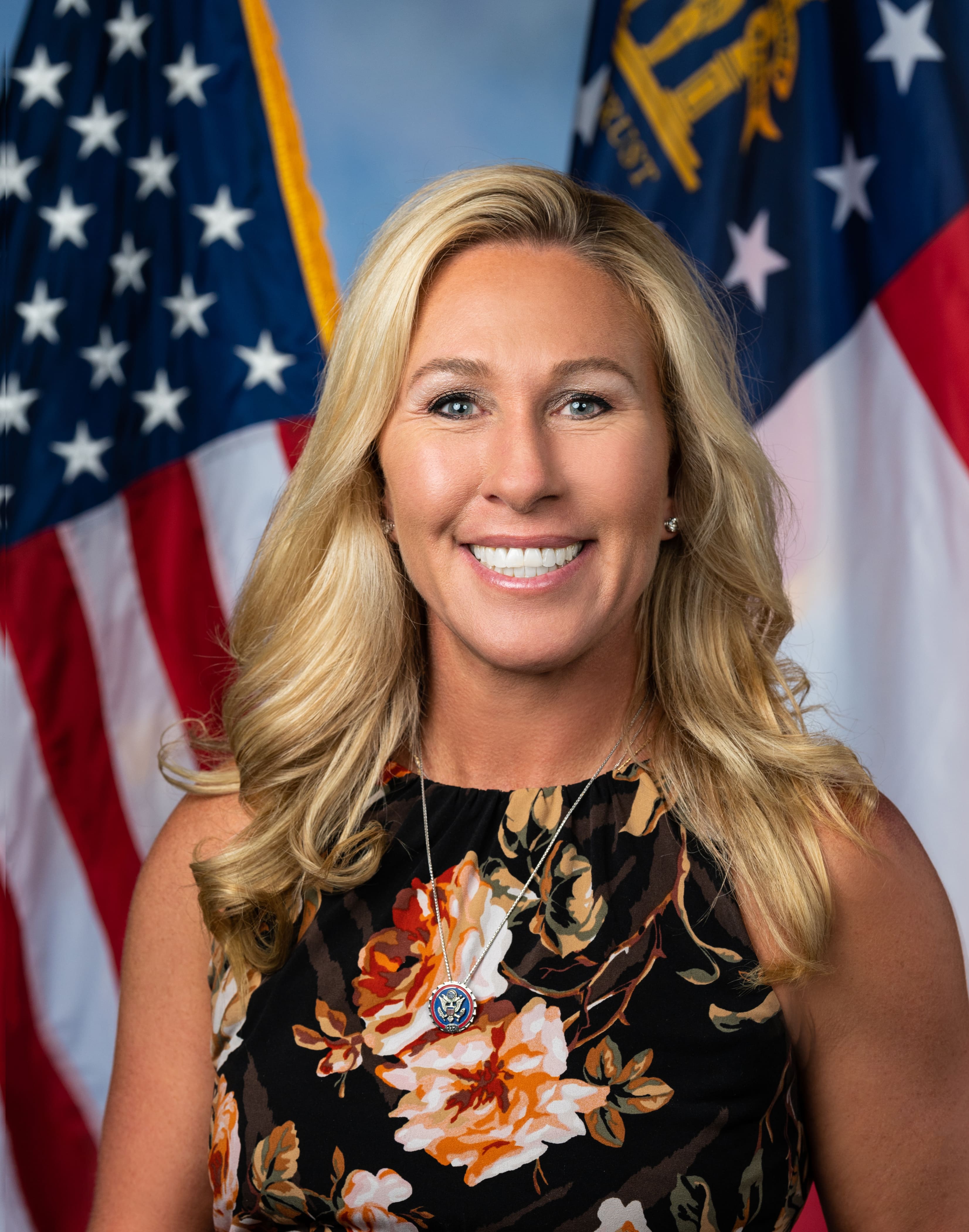
The verified transcript does not show Greene saying Trump personally created the shutdown. The X post that surfaced the clip used that framing, but the spoken words in the transcript were narrower: Greene said the shutdown was meant to block the Epstein resolution from reaching the House floor.
Greene then tied the reopening to the discharge petition. "Finally, they reopened the government and a brand new Democrat member of Congress was sworn in," she said. "And we got the 218 signature, released the resolution, passed it overwhelmingly."
The timeline in official records matches the sequence Greene described, while leaving her motive allegation unproven. The White House said Trump signed H.R. 5371, a continuing appropriations law, on November 12, 2025. GovInfo identifies the measure as the Continuing Appropriations, Agriculture, Legislative Branch, Military Construction and Veterans Affairs, and Extensions Act, 2026.
What The Records Show
GovInfo records show Rep. Thomas Massie, for himself and Rep. Ro Khanna, submitted H.Res. 581 on July 15, 2025. The resolution was referred to the House Rules Committee.
The House Clerk's Discharge Petition No. 9 page shows Massie moved on September 2 to discharge the Rules Committee from consideration of H.Res. 581. Under House rules, a discharge petition can force a measure toward floor consideration if it reaches 218 signatures.
Rep. Adelita Grijalva's office said she was sworn in on November 12 after fifty days without House representation. Her office said she immediately signed the discharge petition to release Jeffrey Epstein files, becoming the 218th and decisive signature.
House floor documents show H.R. 4405, the Epstein Files Transparency Act, was added to the November 17 schedule at 6:32 p.m. The House Clerk's Roll Call 289 shows the bill passed on November 18 by a 427 to 1 vote, with 216 Republicans and 211 Democrats voting yes.
The enrolled bill text required the attorney general to make unclassified DOJ, FBI and U.S. Attorney records related to Epstein publicly available in searchable and downloadable form within 30 days of enactment. The bill allowed redactions for victim privacy, child sexual abuse material, active investigations, certain injury or death imagery, and classified national security material.
The Response
Greene framed the episode as evidence that Republican leaders resisted a transparency vote before most Republicans eventually supported the bill on the floor. In the same clip, she criticized members who voted for release after the petition forced action.
Massie's office gave a different emphasis, presenting the vote as the result of a procedural victory by members who forced the bill out of committee. "EFTA received a vote after Rep. Massie successfully gathered 218 signatures on a discharge petition to force the legislation onto the House floor for consideration," Massie's office said after passage.

Grijalva's office accused Speaker Mike Johnson of delaying the outcome. "That is why the discharge petition crossed 218 signatures, despite Speaker Johnson doing everything in his power to prevent this from happening, including calling an early summer recess, and delaying my swearing in for seven weeks," Grijalva said after the bill passed.
The White House's public position before passage was support for release. In a November 17 statement quoted in the previously published source record, Trump said House Republicans should vote to release the Epstein files because "we have nothing to hide" and because it was time to move on from what he called a "Democrat Hoax." The White House later said Trump signed H.R. 4405 into law.
What People Are Saying
"We spent eight weeks shut down," Greene said in the transcript-verified clip. "By the way, that was to stop the Epstein resolution from getting a House vote. That's what that shutdown was about."
"Finally, they reopened the government and a brand new Democrat member of Congress was sworn in," Greene said. "And we got the 218 signature, released the resolution, passed it overwhelmingly."
"EFTA received a vote after Rep. Massie successfully gathered 218 signatures on a discharge petition to force the legislation onto the House floor for consideration," Massie's office said.
"Immediately after being sworn in, Grijalva signed the discharge petition to release the Jeffrey Epstein files, becoming the 218th and decisive signature to force a floor vote," Grijalva's office said.
"That is why the discharge petition crossed 218 signatures, despite Speaker Johnson doing everything in his power to prevent this from happening," Grijalva said after the bill passed.
The Big Picture
The dispute turns on the difference between a documented procedural timeline and an allegation about motive. Official records show the shutdown ended on November 12, Grijalva was sworn in the same day, the discharge petition reached the decisive signature, and the House voted less than a week later.
Greene says that sequence reveals why the shutdown happened. The records reviewed for this article verify the sequence but not the purpose she assigns to it.
The next stage is implementation. H.R. 4405 required the Justice Department to release unclassified Epstein-related records while applying exceptions Congress wrote into the law. The political fight now moves from forcing a vote to judging what the government releases, what it withholds, and how lawmakers respond.