
Apple And Google Begin Encrypted RCS Rollout For Android-IPhone Chats
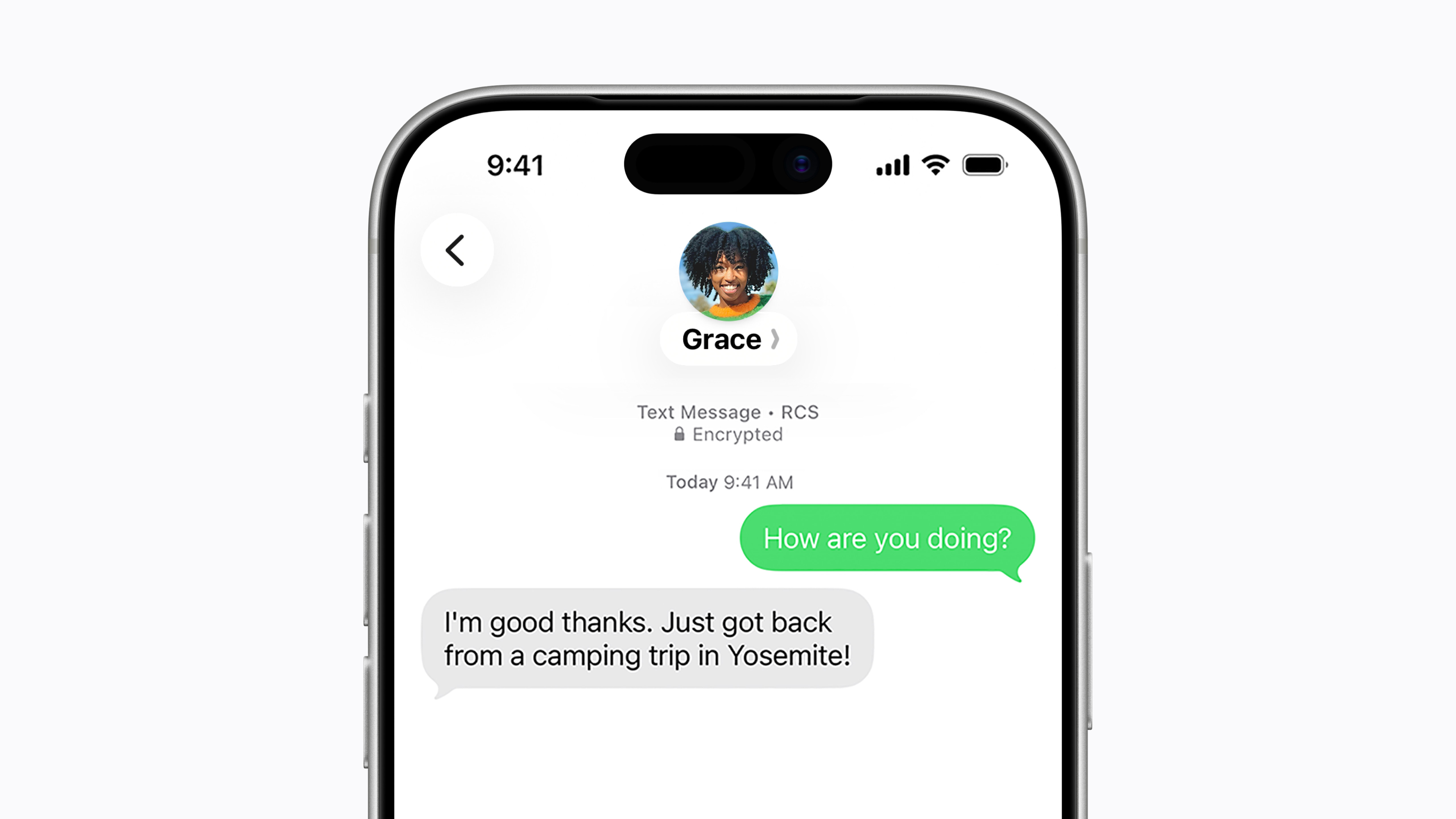
Apple and Google are starting a beta rollout of end-to-end encrypted RCS messaging for Android-to-iPhone chats, a standards move that could make ordinary cross-platform texting more private without forcing users into one company's messaging app.
Apple and Google said May 11 that end-to-end encrypted RCS messaging is beginning to roll out in beta between iPhone users running iOS 26.5 on supported carriers and Android users on the latest version of Google Messages.
The change targets one of the most familiar weak spots in mobile messaging: conversations between Android phones and iPhones. For years, many of those chats have fallen back to SMS or to RCS without cross-platform end-to-end encryption, even as iMessage and some Android-to-Android Google Messages conversations offered stronger privacy inside their own ecosystems.
The companies are not saying every Android-iPhone text is encrypted today. Apple described the feature as a beta rollout for iOS 26.5 users with supported carriers. Google said encryption is on by default and will be automatically enabled over time for new and existing RCS conversations.
What Changes For Users
The visible sign is a lock icon. Apple said iPhone users running iOS 26.5 will begin seeing a new lock icon in RCS chats when messages in that chat are end-to-end encrypted. Google said Google Messages users will see the same lock icon already used in encrypted RCS chats.
That user experience matters because cross-platform messaging has often been defined by what disappears when a chat crosses operating systems. SMS does not provide end-to-end encryption. It also lacks many modern messaging features. RCS adds richer group chats, higher-resolution media, typing indicators, read receipts and better file sharing.
The new step is not simply that RCS exists on the iPhone. Apple added RCS support earlier as a richer replacement path for SMS and MMS. The new step is interoperable end-to-end encryption for RCS conversations that move between client implementations from different providers.
In practical terms, the companies are trying to make the secure path the default path when the right software, carrier support and app versions are present. If the lock icon appears, the message contents and files should be protected from access by intermediaries between the sending and receiving clients. If the conditions are not met, users should not assume the chat has the same protection.
The Technical Mechanism
The standards layer comes from GSMA RCS Universal Profile 3.0. GSMA said the new specifications include end-to-end encryption based on Messaging Layer Security, or MLS, and define how MLS is applied in the context of RCS.
MLS is designed for encrypted group messaging. Its role here is to give multiple clients a standard way to manage cryptographic keys as people send messages, add participants, change devices or exchange files. That is different from a single vendor securing only its own app and then relying on a fallback when a message leaves that ecosystem.
GSMA called RCS the first large-scale messaging service to support interoperable end-to-end encryption between client implementations from different providers. The important word is interoperable. The privacy gain depends not only on encryption math, but on whether Apple, Google, carriers and other RCS participants implement the same specification in compatible ways.
That is why the announcement is a standards story as much as a product story. The mechanism is not Apple making iMessage available on Android, and it is not Google taking over iPhone messaging. It is a carrier-backed messaging standard gaining a shared encryption layer that two dominant mobile platforms can use.
What Still Does Not Change
The rollout does not erase the difference between iMessage, Google Messages, RCS and SMS. iMessage remains Apple's encrypted service for Apple-to-Apple chats. Google Messages has already supported end-to-end encrypted RCS for Android-to-Android conversations. SMS remains a legacy fallback and should still be treated as unencrypted.
The rollout is also carrier-dependent in beta. Apple Support's carrier feature table lists "End-to-end encrypted RCS messaging (beta)" for supported iPhone carriers, which means availability can vary by mobile network even when a user has the right iOS version.
There are security limits as well. End-to-end encryption protects message contents in transit between client endpoints, but it does not make phones immune to malware, account compromise, screenshots, backups, spam, social engineering or metadata exposure. Users still need to know who they are messaging and what device or account they are trusting.
Economic Implications
The business stakes are in control of default messaging. Messaging is not just a consumer feature; it is part of the platform layer that keeps users, devices, carriers and app ecosystems tied together. If Android-iPhone RCS becomes more secure by default, one of the historical advantages of staying inside a single messaging ecosystem becomes less decisive for routine texting.
For Apple, supporting encrypted RCS helps answer regulatory and competitive pressure around interoperability while preserving iMessage as a separate service. For Google, the rollout strengthens RCS as the SMS successor it has pushed for years and makes Google Messages more valuable as the main Android client. For carriers, it keeps the carrier-backed RCS standard relevant at a time when over-the-top messaging apps have captured much of the consumer privacy narrative.

The competition issue is subtle. Better encrypted RCS could reduce the penalty for texting across device lines, but it does not create full app parity. Platform-specific features, account systems, backups, spam controls, group-management details and social defaults still influence which messaging service people use.
Business messaging is another angle. GSMA said Universal Profile 3.0 also includes business-message deep links, audio codec improvements and easier subscription management for business messaging senders. That means the same standards update is not only about private consumer chats. It also affects the commercial channel carriers and brands use to reach customers through richer messages.
Regulators have been watching mobile ecosystems, app defaults and messaging interoperability in several markets. A functioning encrypted RCS path gives platform companies a stronger answer when critics argue that cross-platform messaging is intentionally degraded. It also gives regulators a more concrete benchmark: if interoperable encryption can work for RCS, future debates may focus on where platforms still choose not to interoperate.
What To Watch
The first thing to watch is rollout breadth. The feature depends on iOS 26.5, supported carriers and the latest Google Messages version. A standards announcement does not mean universal availability on day one.
The second is whether the lock icon becomes a reliable user signal. If consumers cannot tell when a chat is protected, the privacy value is harder to capture. Both Apple and Google are emphasizing the icon because messaging security has to be understandable at the moment a person sends a message.
The third is implementation beyond Apple and Google. GSMA's claim is about interoperable encryption between client implementations from different providers. The bigger test is whether the standard becomes routine across carriers, regions and device makers, rather than a narrow feature available only in the most current client combinations.
The fourth is the fallback path. Cross-platform users should still assume SMS is less private and should look for the encrypted RCS indicator when privacy matters. The achievement is meaningful, but it is conditional: encrypted RCS improves the default only where the whole chain supports it.
Pipeline: [[article-engine]]