Rubio Says U.S. Is Carrying Project Freedom As A Favor To The World
Washington - Secretary of State Marco Rubio said Tuesday that the United States is bearing the main operational burden for Project Freedom in the Strait of Hormuz because it is the only country able to project power in the region at the scale required, while some countries are willing to help privately.
Rubio made the remarks during a White House briefing on Project Freedom, the U.S.-led operation the administration says is designed to restore commercial transit through the Strait of Hormuz after Iran disrupted shipping. The State Department transcript and White House video show Rubio framing the mission as a global shipping, fuel, fertilizer and humanitarian-aid issue, not only a U.S. military operation.
What Happened

Rubio told reporters that multiple countries had said the situation in the strait had to be fixed, but he said capabilities were uneven. Some countries lack naval forces, he said, while others would prefer to join after the most dangerous phase is over.
The secretary said there may be value in post-closure support, but added that other governments could assist in ways he would not publicly identify. According to the State Department transcript, Rubio said some countries "are prepared to help us in certain ways, but maybe don't want that publicly disclosed."
"For no other reason than it impacted foreign policy. You could have some domestic ramifications." - Marco Rubio, U.S. secretary of state, according to the State Department transcript
Rubio then described the United States as the central actor in the mission.
"The primary responsibility for this Project Freedom is on the United States because we're the only country that can project power in that part of the world, the way we're doing now." - Marco Rubio, U.S. secretary of state, according to the State Department transcript
The U.S. Central Command release announcing support for Project Freedom said the force package includes guided-missile destroyers, more than 100 land-based and sea-based aircraft, multi-domain unmanned platforms and 15,000 service members. CENTCOM said the mission began May 4 and is intended to restore freedom of navigation for commercial shipping through the Strait of Hormuz.
Why The Strait Matters
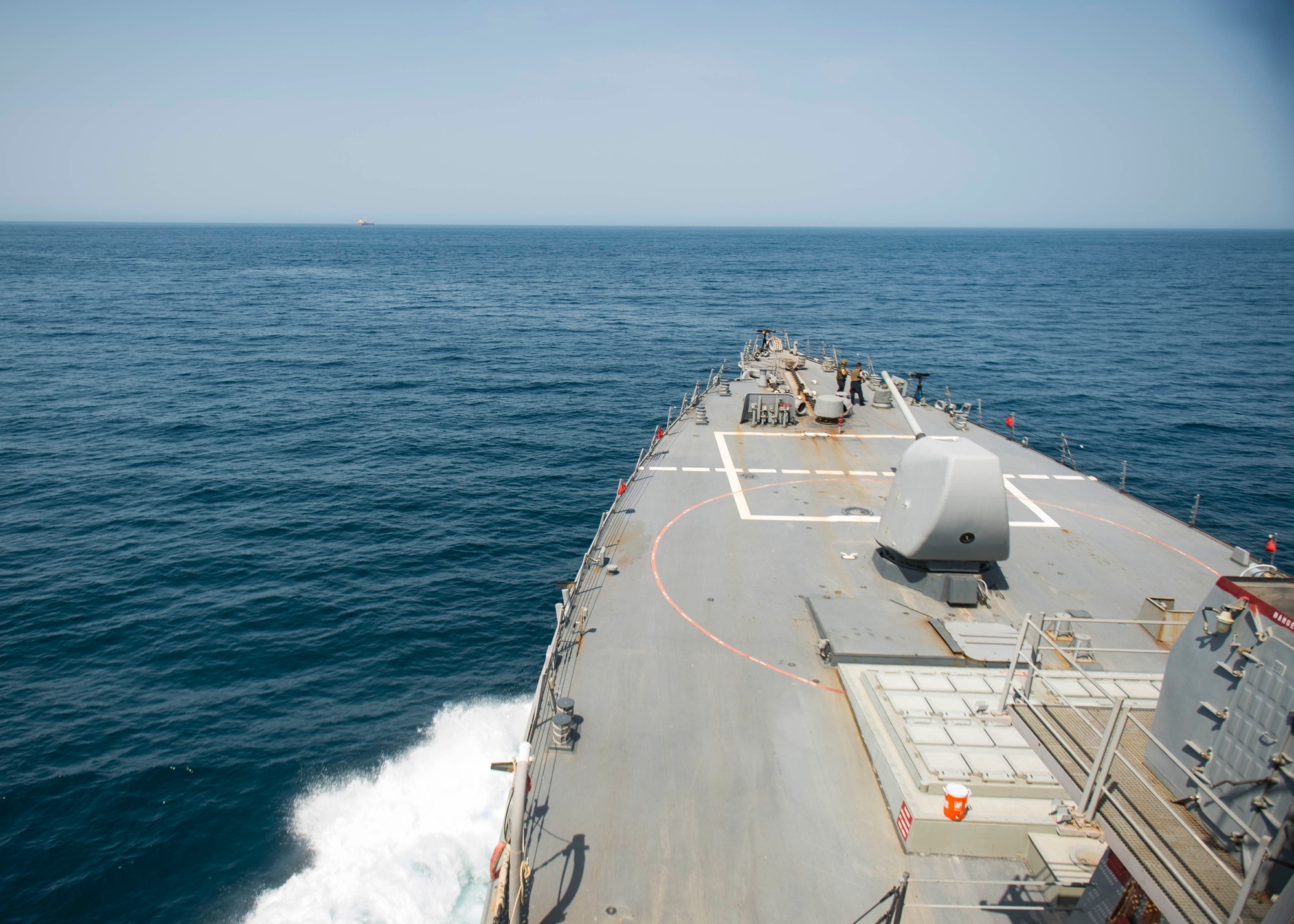
Rubio said the ships affected by the disruption include foreign vessels, fuel shipments, humanitarian aid and fertilizer needed for food and crops. The Energy Information Administration identifies the Strait of Hormuz as the world's most important oil transit chokepoint and says oil flows through it averaged 21 million barrels per day in 2022, equal to about 21 percent of global petroleum liquids consumption.
EIA data also says flows through the strait in 2022 and the first half of 2023 accounted for more than one-quarter of total global seaborne traded oil. Around one-fifth of global liquefied natural gas trade also moved through the waterway in 2022, according to the agency.
CENTCOM linked the mission to a broader Maritime Freedom Construct, which it described as a State Department and Department of War effort to improve coordination and information sharing with international partners. Adm. Brad Cooper, the CENTCOM commander, said in the release that U.S. support for the defensive mission is "essential to regional security and the global economy."
The Response
Defense officials have framed Project Freedom as limited. In a Department of War briefing, Secretary Pete Hegseth said the mission is "defensive in nature, focused in scope and temporary in duration" and has one mission, protecting innocent commercial shipping from Iranian aggression.
Hegseth also told partners and allies that the United States expects others to step up. That message tracks with Rubio's briefing-room answer, which acknowledged foreign help but made clear that the U.S. military is doing the heavy lift.
Rubio's remarks put the burden-sharing issue in the center of the Washington debate. CENTCOM describes the operation as defensive and tied to global trade, while Rubio's answer makes clear that the United States is carrying the main responsibility as some governments prefer not to disclose their assistance.
What People Are Saying
"And we're going to do it as a favor to the world. Understand this. This is a favor to the world because it's their ships that are stranded. It's their fuel supplies that are stranded." - Marco Rubio, U.S. secretary of state, according to the State Department transcript
"Our support for this defensive mission is essential to regional security and the global economy as we also maintain the naval blockade." - Adm. Brad Cooper, commander of U.S. Central Command, according to CENTCOM
"Project Freedom is defensive in nature, focused in scope and temporary in duration, with one mission: protecting innocent commercial shipping from Iranian aggression." - Pete Hegseth, secretary of war, according to a Department of War transcript
The Big Picture
The administration is presenting Project Freedom as a narrow maritime-security mission, while also describing a large U.S. military footprint around one of the world's most important energy corridors. Rubio's private-help comments show the diplomatic sensitivity around burden sharing, especially for governments that may benefit from U.S. protection but face domestic or foreign-policy costs if their role becomes public.
For Americans, the stakes are both strategic and economic. If the operation restores transit, the administration can argue that U.S. power protected shipping lanes and reduced pressure on energy, fertilizer and aid flows. If the mission stretches longer or draws fire, Rubio's own answer will sharpen the debate over how much of the world's maritime-security burden should fall on U.S. forces.
Pipeline: [[article-engine]]