
Atlantic Current Study Finds Two-Decade Slowdown With U.S. Coastal Risks
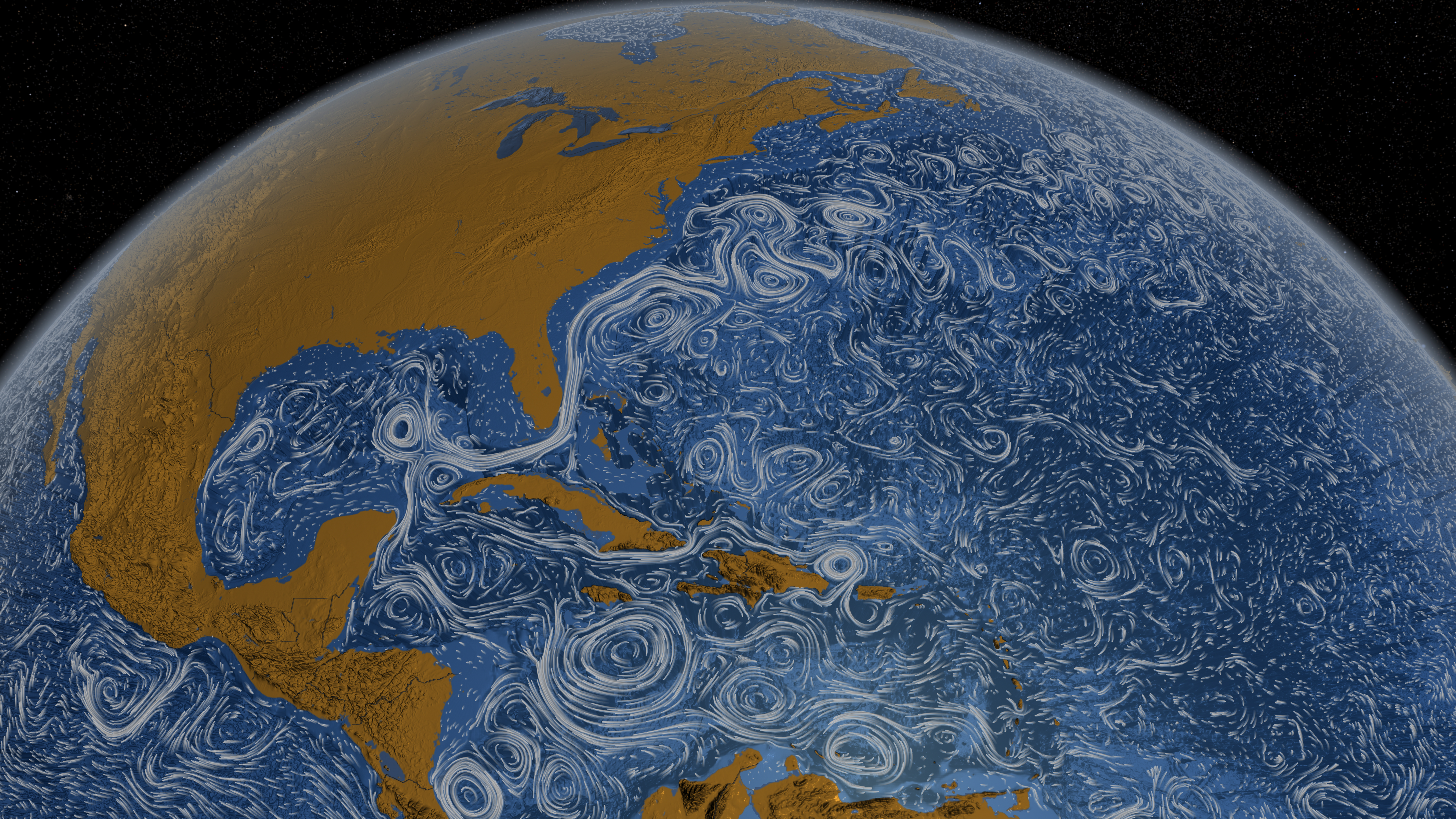
The finding does not prove an imminent collapse. It gives coastal planners a clearer observed signal in a system that helps steer sea level, storms, rainfall, and winter weather around the North Atlantic.
MIAMI. A University of Miami-led research team says four long-running North Atlantic instrument arrays show a consistent two-decade decline in a deep western-boundary part of the Atlantic Meridional Overturning Circulation, a current system tied to heat transport, sea level, storm behavior, rainfall, and winter weather.
The study, published in Science Advances, is precise about what it measured. The authors report a decline in deep western overturning transport below and relative to 1,000 meters, using mooring arrays from 16.5 degrees north to 42.5 degrees north. They do not claim that the entire circulation has collapsed.
For the United States, the practical issue is coastal risk. NOAA Ocean Service says almost 40 percent of Americans live in relatively high-population-density coastal areas where sea level affects flooding, shoreline erosion, and storm hazards. A weaker Atlantic overturning system can add another variable to planning for roads, ports, military bases, insurance, evacuation routes, drainage, and emergency management.
What The Study Found
The paper is titled "Meridionally consistent decline in the observed western boundary contribution to the Atlantic Meridional Overturning Circulation." The authors are Qianjiang Xing, Shane Elipot, William E. Johns, David A. Smeed, Ben I. Moat, and John W. Loder. Crossref metadata lists Science Advances as the journal and April 10, 2026, as the publication date.
The paper says model-based studies have long indicated a notable AMOC decline in recent decades, but long-term evidence from direct observations across multiple latitudes has remained limited. To address that gap, the team used four mooring arrays along the western boundary of the North Atlantic.
"We identify a meridionally consistent decline in deep western overturning transport across these latitudes over the past two decades." - Xing et al., Science Advances abstract
That sentence is the core news finding. It means the decline appeared across the array sites, not at one isolated instrument line. It also means the finding is about deep western overturning transport, a measured component that may indicate broader AMOC weakening.
The authors also include a caution. The abstract says the western-boundary decline may be an effective indicator of AMOC weakening "despite the partial compensatory effect of overturn strengthening at the eastern boundary." In plain terms, one side of the basin can weaken while another part offsets some of the change. That is why the study matters, but it is also why a collapse headline would overstate the paper.
How The Circulation Works
NOAA describes the AMOC as a system of Atlantic currents that moves warm water north and cold water south. It is part of the larger global conveyor of ocean circulation. Surface waters and deeper waters do not simply drift as one flat layer. Winds, temperature, salinity, density, and geography help move water through a three-dimensional circulation system.
A simplified version works like this: warm, salty water moves northward near the surface in the Atlantic. In colder northern waters, some of it cools, becomes denser, sinks, and returns southward at depth. That movement helps redistribute heat across the ocean and atmosphere.
When that circulation weakens, the effects are not limited to the open ocean. The University of Miami release said a weaker AMOC can shift weather patterns and influence sea-level rise along coastlines.
"A weaker AMOC can shift weather patterns, potentially leading to more extreme storms, changes in rainfall, or colder winters in some regions." - Shane Elipot, University of Miami Rosenstiel School
Elipot also said the circulation can influence sea-level rise along coastlines, affecting communities and infrastructure, according to the university release. That is the bridge between a physical oceanography paper and the decisions faced by local governments, port authorities, emergency managers, utilities, and property owners.
What The Instruments Measured
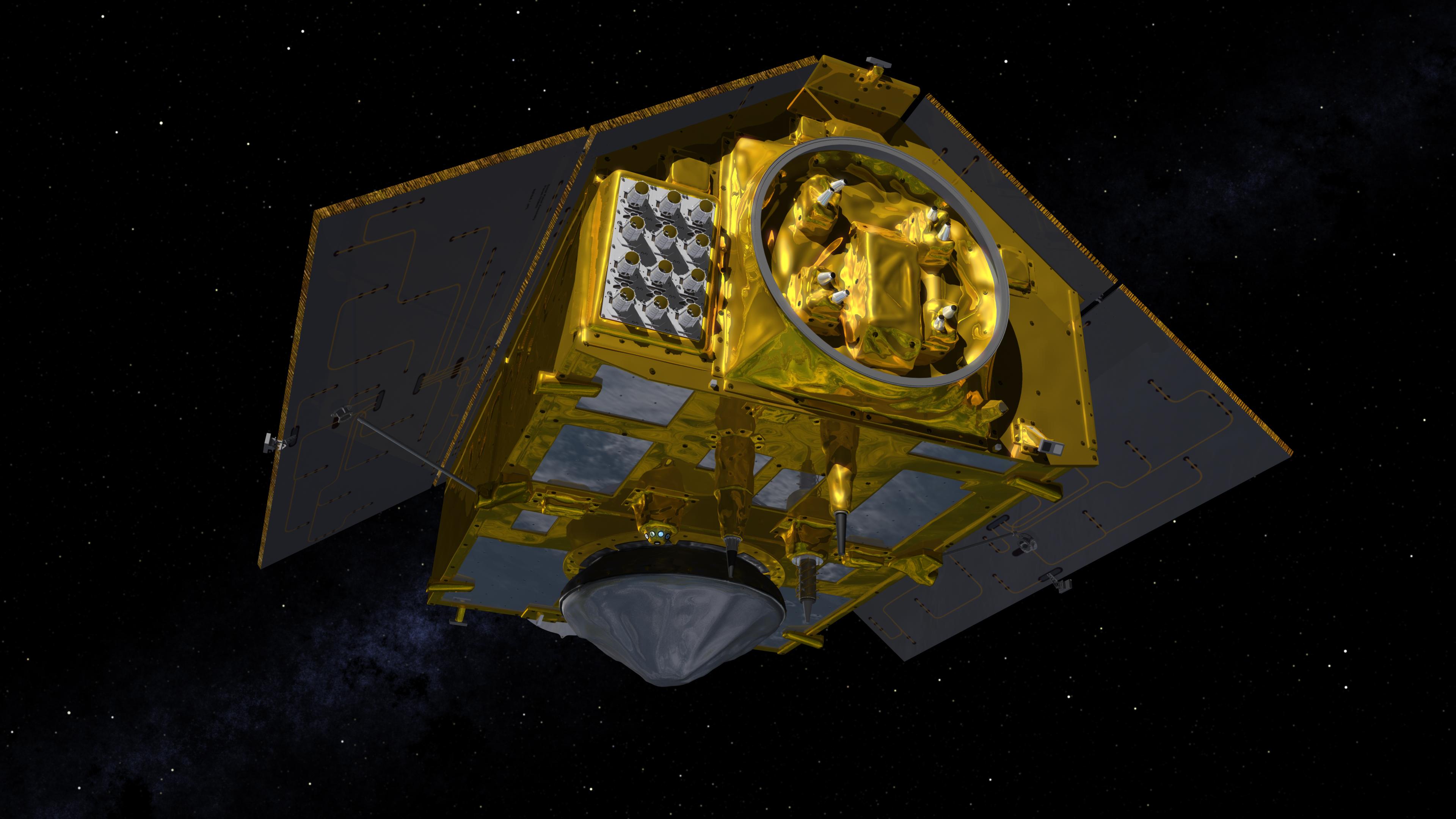
The study relied on seafloor-anchored mooring arrays. The University of Miami release says those instruments continuously record pressure, temperature, density, and currents. The paper says the authors derived deep western overturning transports from the cross-slope gradient in ocean bottom pressure or its equivalent.
That methodology matters because AMOC debates often turn on how much evidence comes from models, proxies, short records, or direct measurements. This paper adds direct, multilatitude observational evidence from four arrays across the western North Atlantic, spanning the tropics to mid-latitudes.
The latitudes matter too. A signal from 16.5 degrees north to 42.5 degrees north covers a broad portion of the basin. A one-site record can be affected by local variability, instrument changes, or regional conditions. A consistent signal across several lines is harder to dismiss as local noise.
The result is still not a one-number verdict on the full AMOC. The paper's own wording keeps the focus on the observed western boundary contribution. That restraint is important for public understanding. The finding strengthens the observational case for weakening, while leaving room for continued measurement of the full basin and the eastern-boundary compensation described by the authors.
U.S. Coastal And Economic Stakes
NOAA's sea-level explainer puts the U.S. exposure in population terms.
"In the United States, almost 40 percent of the population lives in relatively high-population-density coastal areas, where sea level plays a role in flooding, shoreline erosion, and hazards from storms." - NOAA Ocean Service
That exposure is why a current-system study belongs in a public-safety frame, not only a climate-science frame. Coastal counties already make decisions about drainage, roads, seawalls, ports, wastewater systems, naval and Coast Guard facilities, insurance maps, and evacuation capacity. Those decisions rely on assumptions about water levels, storm surge, rainfall, erosion, and the frequency of damaging events.
A weaker AMOC can affect those assumptions through several mechanisms. It can alter ocean heat transport, which influences regional climate patterns. It can change sea-level behavior along coastlines. It can interact with storm risks by changing the background conditions in which storms form, intensify, or move. It can also affect rainfall and winter conditions, according to the University of Miami release.

The economic channel is not a single flooded street caused by one paper. It is risk pricing and infrastructure planning. Ports, insurers, utilities, mortgage lenders, military planners, and municipal bond investors all deal with long-lived assets. If the probability distribution around coastal flooding, erosion, or storm impacts shifts, maintenance budgets and capital plans can shift with it.
For households, the costs can arrive through insurance premiums, taxes for drainage and flood-control projects, utility upgrades, property values, and disaster recovery. For businesses, the exposure can show up in port delays, supply-chain vulnerability, construction standards, and commercial insurance. For emergency managers, the concern is lead time: infrastructure takes years to fund and build, while risk can compound quietly until a storm tests the system.
What The Study Does Not Say
The paper does not say Americans should expect an abrupt AMOC shutdown next year. It does not assign a specific flood level to Miami, Norfolk, Charleston, New York, or Boston. It does not replace hurricane forecasts, local tide-gauge data, or regional sea-level studies.
It does say that direct observations from multiple western North Atlantic mooring arrays show a consistent decline in a deep western-boundary contribution over roughly two decades. It also says that decline may indicate broader AMOC weakening, with a partial offset from the eastern boundary.
That distinction protects the public from two mistakes. One mistake is dismissing the result because it does not prove a cinematic collapse. The other is turning a careful observational paper into a certainty claim it does not make.
The Next Data To Watch
The next question is whether continuing mooring records, satellite altimetry, hydrographic surveys, and basin-wide estimates keep pointing in the same direction. A sustained multilatitude signal would increase confidence that the circulation system is changing in ways that matter for coastlines and weather. A more mixed record would sharpen the debate over regional compensation, decadal variability, and measurement uncertainty.
For now, the practical conclusion is narrower and still serious. A peer-reviewed team has reported a two-decade observed decline in a key western-boundary part of the AMOC. NOAA says a large share of the U.S. population lives in coastal areas where sea level already shapes flooding, erosion, and storm hazards. Coastal planners do not need a collapse verdict to treat a clearer weakening signal as relevant risk information.
Pipeline: [[article-engine]]