DOJ Sues New Mexico Over Immigration Enforcement Limits
WASHINGTON - The Justice Department sued New Mexico and Albuquerque on Thursday, asking a federal judge to block state and city immigration enforcement limits that federal lawyers say unlawfully interfere with national immigration policy.
The complaint, filed in the U.S. District Court for the District of New Mexico, names the State of New Mexico, Gov. Michelle Lujan Grisham, Attorney General Raul Torrez, the City of Albuquerque and Mayor Tim Keller as defendants, according to the Justice Department.
At issue are New Mexico's House Bill 9, the Immigrant Safety Act, and Albuquerque's Ordinance O-26-15, the Safer Community Places Ordinance. DOJ says both measures cross the constitutional line between local control and federal supremacy.
The Story So Far
New Mexico's HB 9 bars public bodies from entering into agreements used to detain people for federal civil immigration enforcement, according to the bill text published by the New Mexico Legislature.
The Justice Department says the state law would end long-running voluntary partnerships between local governments and federal immigration authorities. DOJ also says the law threatens nearly 300 jobs and the economy of Otero County by blocking public entities from participating in federal immigration detention.
Albuquerque's ordinance takes a different route. The city record says the measure, sponsored by Councilors Klarissa Peña, Stephanie Telles, Joaquín Baca and Nichole Rogers, passed the City Council on March 16, was signed by Mayor Keller on March 23 and was published by the city clerk on March 25.
 Photo: Jim Bowen via Wikimedia Commons (CC BY 2.0)
The ordinance says no city-owned or operated structure or venue, including parking lots, vacant lots, garages and parks, may be used for immigration enforcement purposes, including as a staging area, processing location or operations base.
The ordinance also designates hospitals, schools, city facilities, community resource centers, shelters, courthouses, libraries and transit facilities as safer community places, according to the city record. City officials said the measure restricts voluntary access to non-public areas without a judicial warrant.
What's Happening Now
DOJ filed both a complaint and a motion for preliminary injunction, according to the department's announcement. The preliminary injunction request asks the court to stop the challenged provisions while the lawsuit proceeds.
Assistant Attorney General Brett Shumate framed the case as a federal supremacy dispute.
"New Mexico is attempting to regulate immigration policy, something the federal government is clearly and uniquely empowered by the Constitution to do," Shumate said in the DOJ announcement. "Our filings seek to halt the state's unconstitutional actions by preserving cooperation between federal, state, and local law enforcement and allowing federal immigration officials to enforce the law."
Ryan Ellison, first assistant U.S. attorney for the District of New Mexico, said DOJ believes both laws obstruct federal law enforcement.
"HB9 and the SCPO unlawfully interfere with federal immigration enforcement, illegally discriminate against federal operations, and violate constitutional protections regarding contracts and federal supremacy," Ellison said.
The lawsuit is part of a broader Trump administration push against sanctuary policies. DOJ said Attorney General Pam Bondi instructed the Civil Division on Feb. 5, 2025, to identify state and local laws that impede lawful federal immigration operations. DOJ said Albuquerque was later included on an Aug. 5, 2025 list of sanctuary jurisdictions.
The Conservative View
The conservative argument centers on federal supremacy, public safety and cooperation between agencies.
DOJ says immigration law is a federal function and that state or city rules cannot block the federal government from carrying out that function. The department argues that federal agents rely on local partnerships for investigation, transportation and detention work.
Albuquerque Councilor Dan Lewis, who represents District 5, supported DOJ's lawsuit and criticized Keller's backing of the city ordinance.
"Mayor Keller deserves to be sued for his reckless promotion of dangerous sanctuary policies that undermine cooperation between law enforcement agencies and put everyone at risk," Lewis said in a city statement. "Sanctuary laws don't protect; they create more victims."
Supporters of DOJ's position also point to Otero County. DOJ says HB 9 jeopardizes nearly 300 jobs tied to federal immigration detention, which makes the case a pocketbook issue as well as a constitutional one for that county.
The Progressive View
The progressive argument centers on local authority, privacy and access to public services.
Albuquerque's ordinance says the city may protect its property, preserve peace and preserve order under its home-rule authority. The ordinance also says immigration enforcement activity can undermine community trust and create barriers that keep residents from accessing city services.
Councilor Tammy Fiebelkorn said the measure protects residents who need medical care, city services and work.
"Our immigrant neighbors deserve to access city services, go to work, and seek medical care without fear," Fiebelkorn said after the March council vote. "This ordinance makes clear that Albuquerque will not allow city property or resources to be used as tools of federal immigration enforcement. It is the right thing to do for our community."
Council President Klarissa Peña said the ordinance makes parks and public facilities spaces of service rather than staging grounds, according to the city council statement.
Other Perspectives
Civil libertarians often separate immigration enforcement from the question of warrants and access to non-public spaces. Albuquerque's ordinance adopts that distinction by focusing on judicial warrants for non-public areas and records, according to the city record.
Local-government advocates also focus on home rule. The Albuquerque ordinance cites Article X, Section 6 of the New Mexico Constitution, which gives home-rule municipalities legislative power unless state law or the city charter denies it.
Federal officials argue that home rule cannot override federal immigration authority. DOJ's complaint says the state and city measures discriminate against federal operations and obstruct lawful federal work, according to the department's summary of the filing.
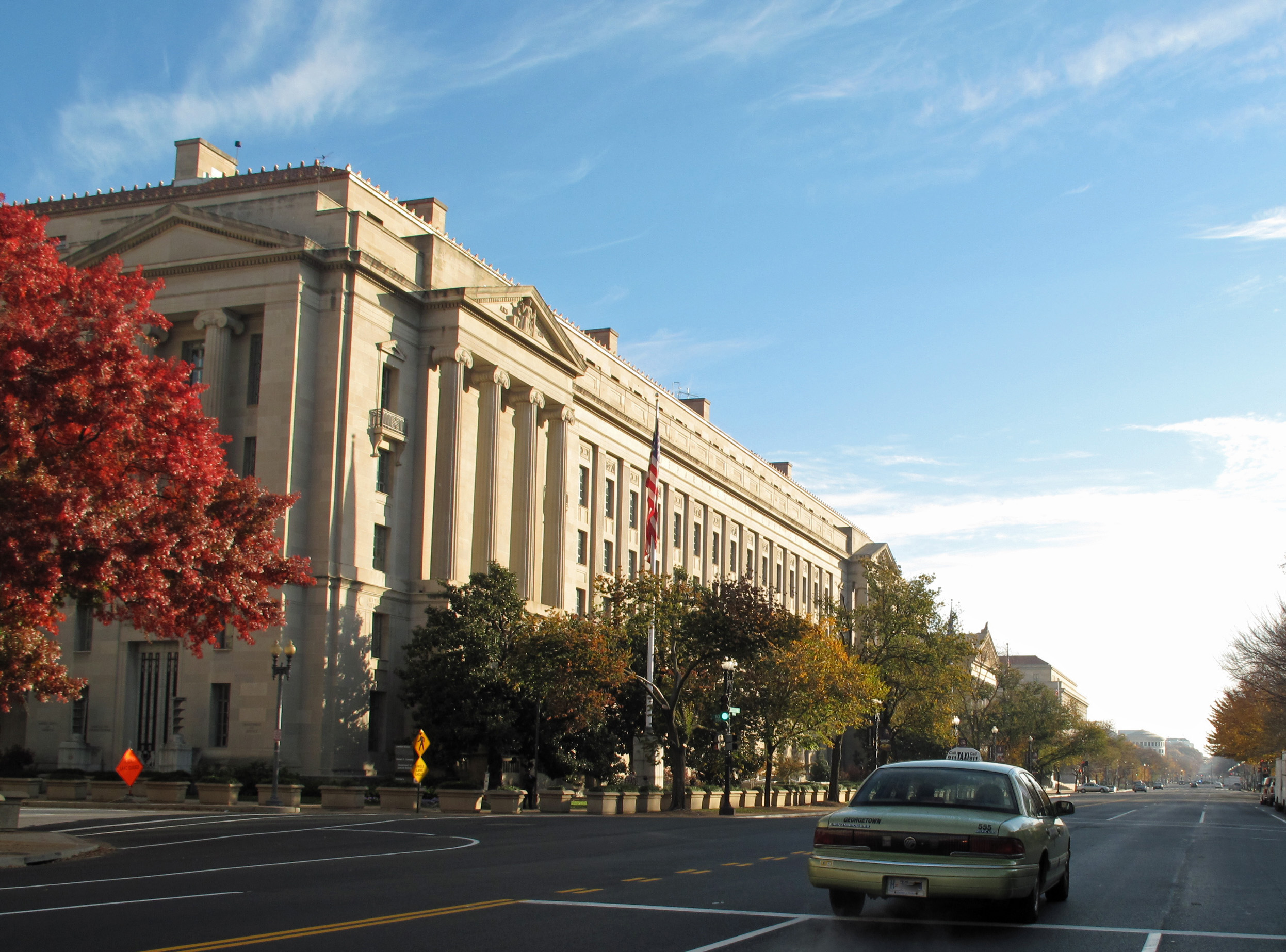
 Photo: Ken Lund via Wikimedia Commons (CC BY-SA 2.0)
Economic Implications
The clearest economic claim in the case comes from DOJ's statement that HB 9 jeopardizes nearly 300 jobs in Otero County. If the court allows HB 9 to take effect, detention-related work could shift away from public entities covered by the state law, according to DOJ's theory of the case.
That means the lawsuit could affect county employment, vendor spending and local tax receipts if detention operations change, according to DOJ's stated concern about the local economy.
The broader fiscal issue is harder to quantify at this stage. A ruling against New Mexico could preserve more local participation in federal immigration detention partnerships. A ruling for New Mexico could encourage other jurisdictions to limit their participation and force federal agencies to find other detention capacity.
Federalism Stakes
The case sets up a classic preemption fight. DOJ says the federal government has exclusive authority over immigration policy and that state and local rules cannot obstruct enforcement. New Mexico and Albuquerque are expected to argue that they are controlling their own resources and property, not regulating immigration directly.
The practical stakes extend beyond one state. If the court blocks HB 9 and Albuquerque's ordinance, DOJ could cite the ruling in future lawsuits against other cities with similar sanctuary-style limits. If the court lets the measures stand, other jurisdictions may treat New Mexico and Albuquerque as a model for limiting voluntary cooperation without directly stopping federal agents.
The mechanism is policy creep through litigation. Each ruling defines how far local governments can go before a refusal to help becomes unlawful interference. That line affects detention contracts, use of public property, access to non-public spaces and the daily working relationship between federal agents and local officials.
By the Numbers
- 1 federal lawsuit, United States v. State of New Mexico et al., No. 1:26-cv-01471, according to DOJ.
- 5 to 4 was the Albuquerque City Council vote on Ordinance O-26-15, according to the city council statement.
- Nearly 300 Otero County jobs are at risk, according to DOJ.
- March 25 was the date Albuquerque's ordinance was published by the city clerk, according to the city legislative record.
- 2 challenged measures are at the center of the case: New Mexico's HB 9 and Albuquerque's O-26-15, according to DOJ.
What People Are Saying
"New Mexico is attempting to regulate immigration policy, something the federal government is clearly and uniquely empowered by the Constitution to do," Shumate said.
"The State of New Mexico and the City of Albuquerque seek to intentionally obstruct federal law enforcement by preventing cooperation between local governments and the federal government," Ellison said.
"No City-owned and operated structure or venue, including but not limited to parking lots, vacant lots, garages, parks, or similar structures or venues, shall be used for immigration enforcement purposes," Albuquerque's ordinance states.
"This ordinance makes clear that Albuquerque will not allow city property or resources to be used as tools of federal immigration enforcement," Fiebelkorn said.
"Most people in our City agree that there is a public safety benefit when local, state and federal law enforcement work together to enforce the law and protect innocent people," Lewis said.
The Big Picture
The next step is the court's handling of DOJ's preliminary injunction request. That schedule will determine whether HB 9 and the Albuquerque ordinance can operate while the case moves forward.
The defendants had not posted official responses to the lawsuit on the governor's, attorney general's or mayor's public websites in searches conducted Saturday morning. Their court filings will show whether they defend the laws as local property rules, public safety measures, privacy protections or all three.
For now, the case asks one question with national reach: when a state or city refuses to assist federal immigration enforcement, where does local control end and obstruction of federal law begin?
Pipeline: [[article-engine]]