
Hegseth and Caine Face Senate Over Record Pentagon Budget
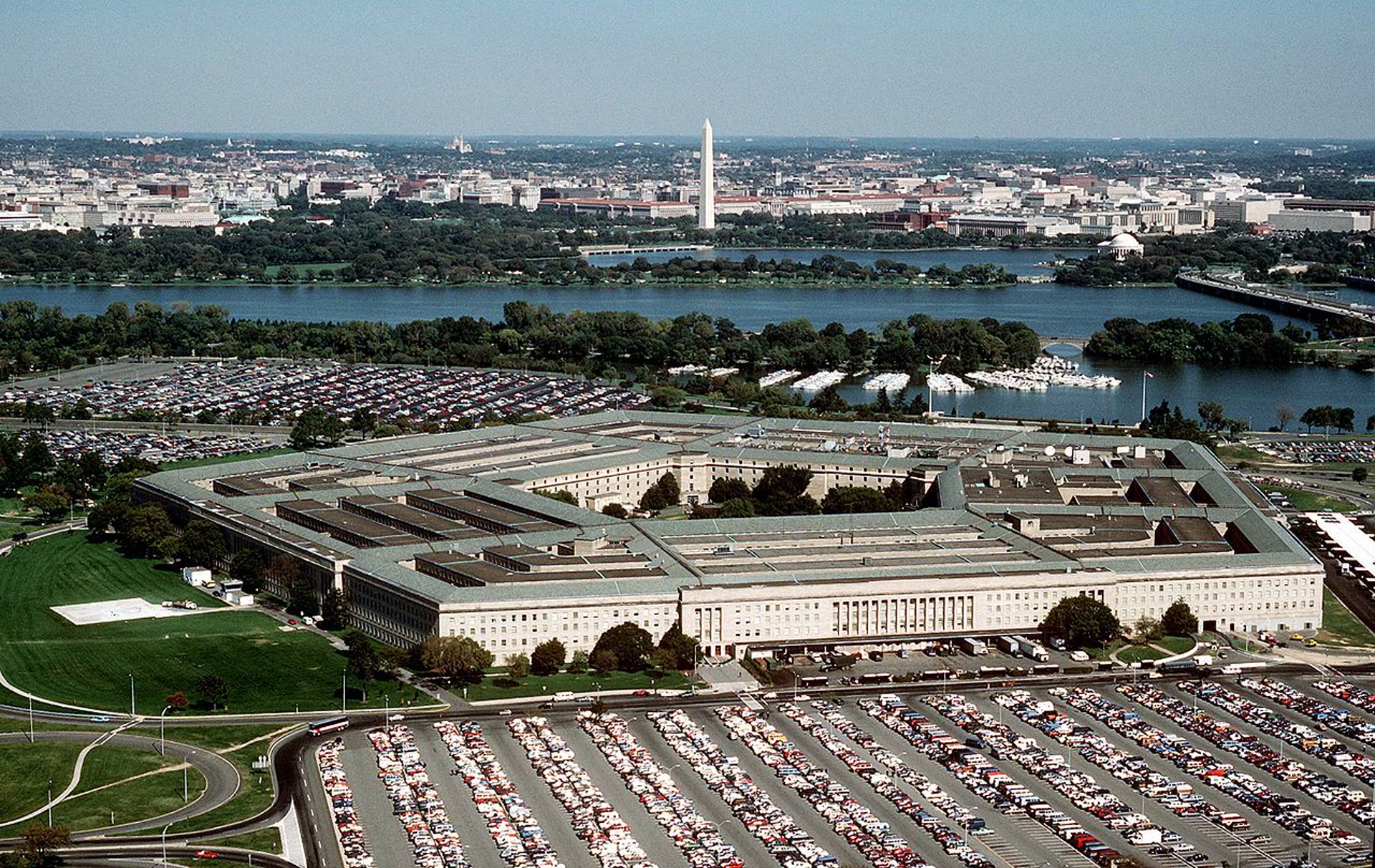
Hegseth and Caine Face Senate Over Record Pentagon Budget
The $1.5 trillion request puts weapons production, shipyards, troop pay, and Pentagon accountability before the Senate Armed Services Committee.
WASHINGTON - Defense Secretary Pete Hegseth, Pentagon comptroller Jules W. Hurst III, and Joint Chiefs Chairman Gen. J. Daniel Caine are scheduled to appear Thursday before the Senate Armed Services Committee as lawmakers open public questioning on a $1.5 trillion defense budget request.
The committee notice says the hearing will begin at 11 a.m. in SD-G50 of the Dirksen Senate Office Building. The Pentagon describes the fiscal year 2027 plan as the largest request in department history, with more than half of the money aimed at munitions, aircraft, tanks, and ships.
The hearing gives senators a direct test of two questions at once: whether the administration can sell a historic military buildup, and whether Congress believes the Pentagon can spend at that scale without repeating old procurement failures.
The Story So Far
The Senate Armed Services Committee notice says the hearing is formally titled, "To receive testimony on the Department of Defense budget request for Fiscal Year 2027 and the Future Years Defense Program." The witnesses listed by the committee are Hegseth, Hurst, and Caine.
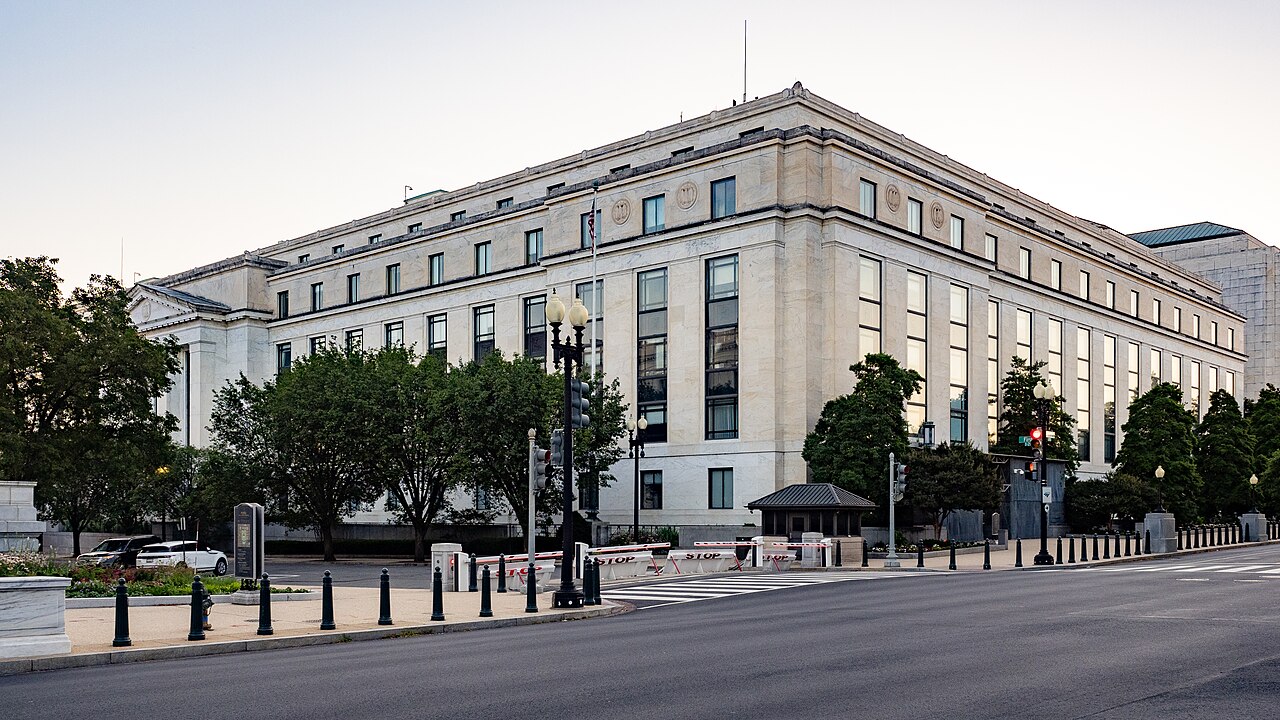 Photo by ajay_suresh, via Wikimedia Commons (CC BY 2.0)
The Pentagon release says the president's fiscal year 2027 request totals $1.5 trillion and calls it "the largest request in history." Hurst, who is performing the duties of under secretary of defense comptroller and chief financial officer, said in the release that the plan represents a 42% increase over the prior year's budget.
Hegseth framed the request as a military rebuilding plan. "We are delivering on President [Donald J.] Trump's commitment to expand American military dominance for decades to come," Hegseth said in the Pentagon release. He said the budget is meant to protect the homeland and create "peace through strength now and into the future."
What's Happening Now
The procurement line is the center of the proposal. The Pentagon release says about 52% of the full request is aimed at buying munitions, planes, tanks, and ships. Hurst said the budget allocates more than $750 billion for capability development and weapons procurement.
The Navy would receive $65.8 billion for 18 battle force ships and 16 support ships under what Space Force Lt. Gen. Steven P. Whitney called the "Golden Fleet" initiative in the Pentagon release. Whitney said another $8.7 billion would go to maritime industrial base and shipyard infrastructure, including seven private shipyards, four public shipyards, and multiple Tier 2 private shipyards.
The air and missile portions are just as large. Whitney said the request funds F-35 production at 85 aircraft, up from 47 in fiscal year 2026, and expands production capacity for Patriot, Terminal High Altitude Area Defense, precision strike missiles, and midrange capability weapons.
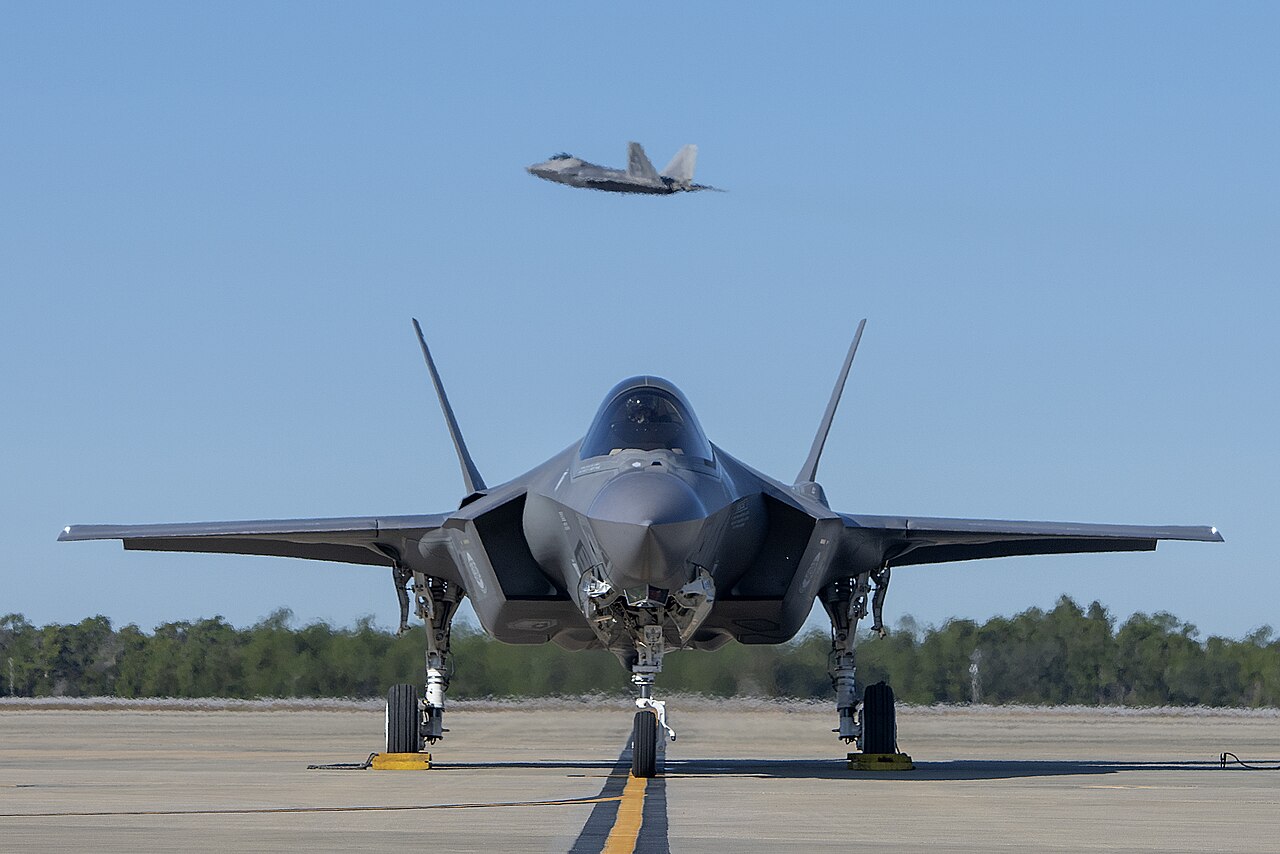 Photo by Staff Sgt. Peter Thompson, U.S. Air Force, via Wikimedia Commons (public domain)
The personnel section is politically important because it reaches military families directly. The Pentagon release says the request includes a 7% pay increase for E-5 and below, a 6% increase for E-6 through O-3, and a 5% increase for O-4 and above. Whitney said the department also seeks $57 billion for facility sustainment, restoration, and modernization, with a major focus on barracks and family housing.
The Conservative View
Supporters of the request are likely to argue that the plan addresses military readiness, deterrence, and the defense industrial base at the same time. Hegseth said in the Pentagon release that previous administrations "underinvested" while U.S. adversaries grew stronger, and he described the new request as a way to keep the United States the world's premier fighting force.
That case has a clear America-first frame. The Pentagon says the request would expand shipbuilding, missile defense, drone warfare capabilities, space capabilities, and nuclear modernization. For senators who see China, Iran, Russia, and homeland missile defense as linked threats, the budget offers a single national-security answer: buy more weapons, repair facilities, strengthen suppliers, and pay troops more.
Hurst also made the industrial argument. "Large defense firms are critical to our national security, but they rely on tens of thousands of small and medium-sized businesses to provide the parts, components and materials to larger firms," he said in the Pentagon release. He said the F-35 program alone has more than 2,100 suppliers, more than half of them American small businesses.
The Progressive View
Progressive critics are likely to press the opportunity cost of a $1.5 trillion request. The Pentagon release says the proposal is a 42% increase over the prior year, a number large enough to invite questions about domestic spending, deficits, health care, housing, and whether Congress is being asked to approve more money before it has solved long-running oversight problems.
The weapons mix will also draw scrutiny. The Pentagon says 52% of the request is for munitions, aircraft, tanks, and ships. Lawmakers who focus on waste, contractor margins, and failed acquisition timelines are likely to ask whether a procurement surge will reach troops and shipyards, or whether prime contractors will capture most of the gains.
There is also a civil-military accountability question. The committee notice places Hegseth, Hurst, and Caine at the same table. That means senators can question civilian policy choices, fiscal controls, and military requirements in a single hearing, instead of treating the budget as a technical document.
Other Perspectives
Libertarian and deficit-focused lawmakers are likely to separate defense readiness from the scale of the total request. They can support higher troop pay or specific munitions needs while opposing a broad spending increase that adds pressure to federal borrowing.
Defense workers, shipyards, and small suppliers will see the request differently. The Pentagon says the budget invests more than $100 billion in the defense industrial base and seeks longer multiyear contracts for critical munitions. Hurst said multiyear authority is meant to give smaller suppliers confidence to expand production when the department knows it will keep buying a system.
Economic Implications
This is not only a Pentagon story. It is a fiscal and industrial story that would move federal dollars through shipyards, aircraft suppliers, missile producers, construction firms, base housing contractors, and military households. The Pentagon says the request includes more than $750 billion for capability development and weapons procurement, plus $57 billion for facilities and housing.
The proposed pay raises would flow directly to service members. According to the Pentagon release, junior enlisted personnel at E-5 and below would receive 7%, midgrade enlisted and junior officers would receive 6%, and O-4 and above would receive 5%. For families near bases, the practical effect would show up in rent, grocery, child care, and local service spending.
The fiscal tradeoff is the part Congress controls. The administration can request $1.5 trillion, but appropriators decide how much becomes law and whether they offset any of it. Until Congress releases final budget and appropriations language, the clearest confirmed economic mechanism is the spending channel named by the Pentagon: procurement, suppliers, shipyards, housing, facilities, and pay.
By the Numbers
- $1.5 trillion, total fiscal year 2027 defense request, according to the U.S. Department of War.
- 42% increase over last year's budget, according to Hurst in the Pentagon release.
- 52% of the request aimed at munitions, planes, tanks, and ships, according to the Pentagon release.
- $65.8 billion for 18 battle force ships and 16 support ships, according to Whitney in the Pentagon release.
- 7% proposed pay raise for E-5 and below, according to the Pentagon release.
What People Are Saying
"We are delivering on President [Donald J.] Trump's commitment to expand American military dominance for decades to come." - Pete Hegseth, secretary of defense, in the Pentagon release
"This is a generational investment in the United States military, the arsenal of freedom." - Jules W. Hurst III, performing the duties of Pentagon comptroller, in the Pentagon release
"About 52% of the total budget request is aimed at buying munitions, planes, tanks and ships." - U.S. Department of War release summarizing Hurst's briefing
"This budget request continues a generational modernization effort across all three legs of the triad to ensure the continued effectiveness of our nuclear deterrent." - Lt. Gen. Steven P. Whitney, in the Pentagon release
"Open/Closed: To receive testimony on the Department of Defense budget request for Fiscal Year 2027 and the Future Years Defense Program." - Senate Armed Services Committee hearing notice
The Big Picture
Thursday's hearing is the first major public test of whether the administration can turn a record defense request into a durable congressional coalition. The strongest argument for the budget is that the United States needs industrial capacity, munitions stockpiles, shipbuilding, missile defense, and better troop housing before a crisis forces rushed spending.
The strongest argument against it is that a 42% jump demands unusually strict oversight. Senators can accept the need for readiness while still asking whether the Pentagon has the contracting discipline, audit controls, and production timelines needed to turn the money into usable capability.
The next markers are the committee questioning, the administration's detailed budget justifications, and the appropriations process. Those steps will show whether the headline number survives, shrinks, or gets rewritten into a narrower package focused on ships, munitions, housing, and pay.
<!-- self-critique: Added quantified procurement, housing, and pay channels; strengthened conservative, progressive, and deficit perspectives; tied the hearing to what Congress must decide next. -->