Rubio Says Cuba Is A Failed State Run By Incompetent Communists
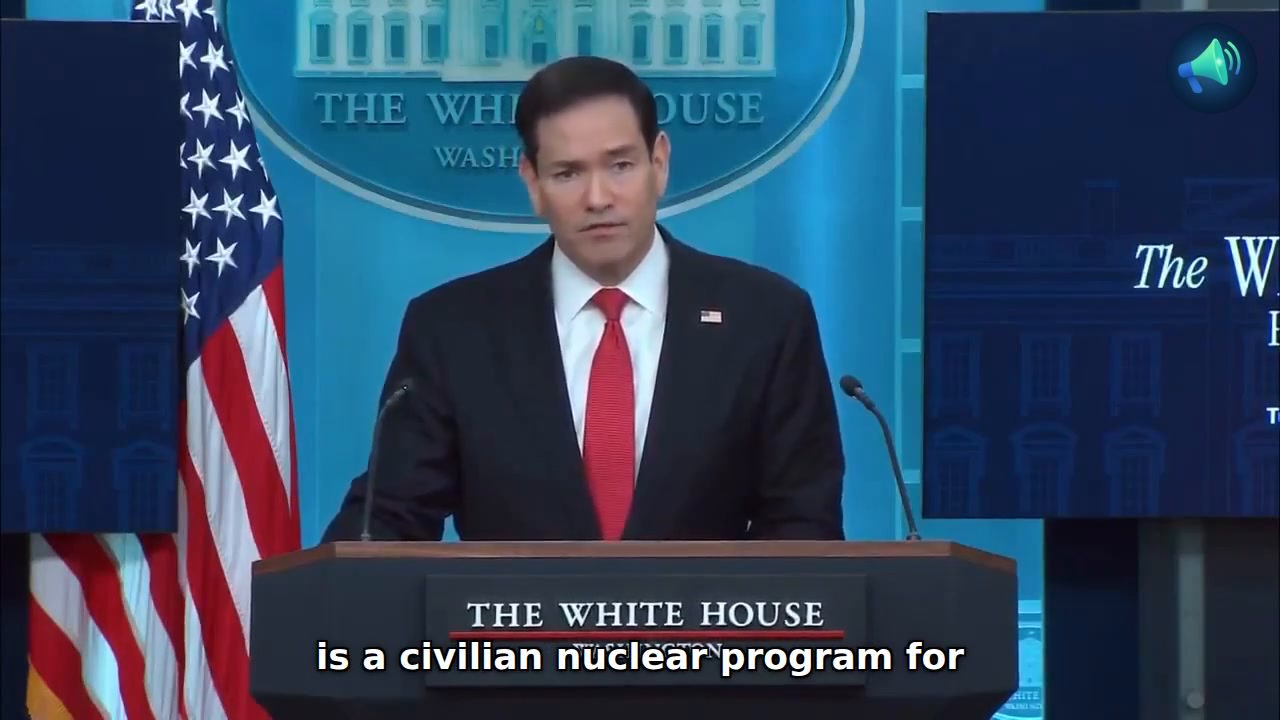
WASHINGTON. Secretary of State Marco Rubio said Cuba's crisis is not caused by a U.S. oil blockade, arguing instead that Havana is running a failed communist economy that lost the Venezuelan fuel support it once relied on.
Rubio made the remarks while answering questions from reporters about U.S. policy toward Cuba, Venezuelan oil and the island's electricity crisis. His comments put the Trump administration's Cuba pressure campaign in national-security terms, with Rubio warning that the United States has an adversary-aligned failed state 90 miles from Florida.
What Happened
Rubio rejected the framing that Washington is imposing an oil blockade on Cuba. "There's no oil blockade on Cuba per se," Rubio said, according to the local video transcript and an official State Department transcript covering the same policy argument.

Rubio said Cuba previously received free oil from Venezuela and argued that Venezuelan support had shielded Havana from the consequences of its own economic system. "Cuba used to get free oil from Venezuela," Rubio said. He added that Cuban officials would take "like 60% of that oil and resell it for cash," rather than using it to benefit the Cuban people.
The secretary's central claim was direct: Cuba's economic model, not a U.S. ban on private-sector sales, is driving the crisis. "Their economic model doesn't work, doesn't work," Rubio said in the clip. He also said "the people who are in charge can't fix it," while calling Cuba's leaders "incompetent communists."
The official State Department transcript shows Rubio making a similar argument in February, when he said it had remained legal to sell to Cuba's private sector, but not to the Cuban government or the military-owned conglomerate GAESA. Rubio said then that licenses could be canceled if private-sector sales were diverted to the regime or military companies.
The Policy Context
The White House's Cuba policy fact sheet says the administration restored and strengthened Trump-era restrictions on direct or indirect financial transactions with entities controlled by the Cuban military, including GAESA and its affiliates. The fact sheet says exceptions remain for transactions that advance U.S. policy goals or support the Cuban people.
That distinction is central to Rubio's argument. The administration says it is trying to prevent dollars and fuel from strengthening Cuba's military-controlled economy while preserving channels that support private activity and the Cuban public.
Cuban officials give a different account. Cuba's Ministry of Energy and Mines said the country's electricity system faces a complex generation situation because of problems accessing international fuels, and the official discussion blamed U.S. coercive measures for worsening the pressure.
Granma, carrying Cuban state-source material from President Miguel Diaz-Canel, quoted him saying more than three months had passed without a fuel ship entering Cuba and that the country was working under adverse conditions. The Cuban government presents those fuel shortages as part of a broader U.S. economic pressure campaign.
The Response
Rubio framed the issue as both an economic failure and a U.S. security concern. "We have 90 miles from our shores, a failed state, that also happens to be friendly territory for some of our adversaries," Rubio said. "It's an unacceptable status quo, and we'll be addressing it, but not today."
The White House has tied Cuba policy to human rights, migration, national security and the role of Cuban military-linked companies in the island's economy. Its June fact sheet says the policy is designed to advance U.S. interests and support the Cuban people while blocking benefits to Cuba's government, military, intelligence and security agencies.
Cuba's government says the same pressure deepens scarcity for ordinary citizens. The Ministry of Energy and Mines discussion said Cuba had gone four weeks with zero distributed generation available and referred to 1,300 to 1,400 megawatts of distributed-generation capacity that could not be used during peak demand.
 Photo: Marcin Konsek via Wikimedia Commons (CC BY-SA 3.0)
Economic Implications
The dispute turns on who absorbs the cost when subsidized fuel disappears and U.S. restrictions narrow the channels for oil revenue and military-linked transactions. Rubio argues that the old model depended on outside patrons, first the Soviet Union and later Venezuela, and that Cuba's state-run system failed to build a resilient energy economy.
The White House's January action on Venezuelan oil revenue defines covered funds to include money tied to Venezuela's government, central bank and Petroleos de Venezuela, S.A. The order frames Venezuelan oil revenue as a U.S. foreign-policy issue, citing American interests, Iran, Hezbollah and stability in the Western Hemisphere.
For the United States, the economic stakes are regional as much as domestic. A deeper Cuban power and fuel crisis can drive migration pressure toward Florida, strengthen illicit networks, and raise the cost of U.S. Coast Guard and diplomatic operations in the Caribbean. For Cuba, the immediate pressure falls on electricity generation, fuel availability and household living standards.
What People Are Saying
"There's no oil blockade on Cuba per se," Rubio said when asked about the island's fuel situation.
"Their economic model doesn't work, doesn't work," Rubio said in the White House briefing clip.
"We have 90 miles from our shores, a failed state, that also happens to be friendly territory for some of our adversaries," Rubio said.
Cuba's Ministry of Energy and Mines said the national electricity system faced "problemas en el acceso a los combustibles internacionales," Spanish for problems accessing international fuels.
By The Numbers
Cuba sits about 90 miles from U.S. shores, a distance Rubio cited while framing the island's crisis as a national-security issue.
Rubio said Cuban authorities had resold "like 60%" of Venezuelan oil support for cash. The percentage is attributed to Rubio, not stated as independently established.
Cuba's Ministry of Energy and Mines cited 1,300 to 1,400 megawatts of distributed-generation capacity that could not be used during peak demand.
The ministry discussion said Cuba had gone four weeks with zero distributed generation available.
The Big Picture
Rubio's comments show how the administration is connecting Cuba's energy breakdown to a wider Western Hemisphere policy: limit resources to military-linked regimes, allow narrow private-sector channels, and treat Venezuela-linked oil money as a security issue.
The next test is whether Washington can separate pressure on Cuban state institutions from hardship on Cuban households. Rubio says the administration will address what he called an unacceptable status quo. Cuban officials say U.S. pressure is making fuel access worse. The policy fight now turns on which argument shapes the next round of licenses, sanctions and humanitarian exceptions.