Rubio Says Iran's Nuclear Denials Do Not Match Its Conduct
WASHINGTON - Secretary of State Marco Rubio said Tuesday that Iran's denial that it wants a nuclear weapon does not match its conduct, pointing to underground centrifuges, missile development and uranium enriched to 60 percent.
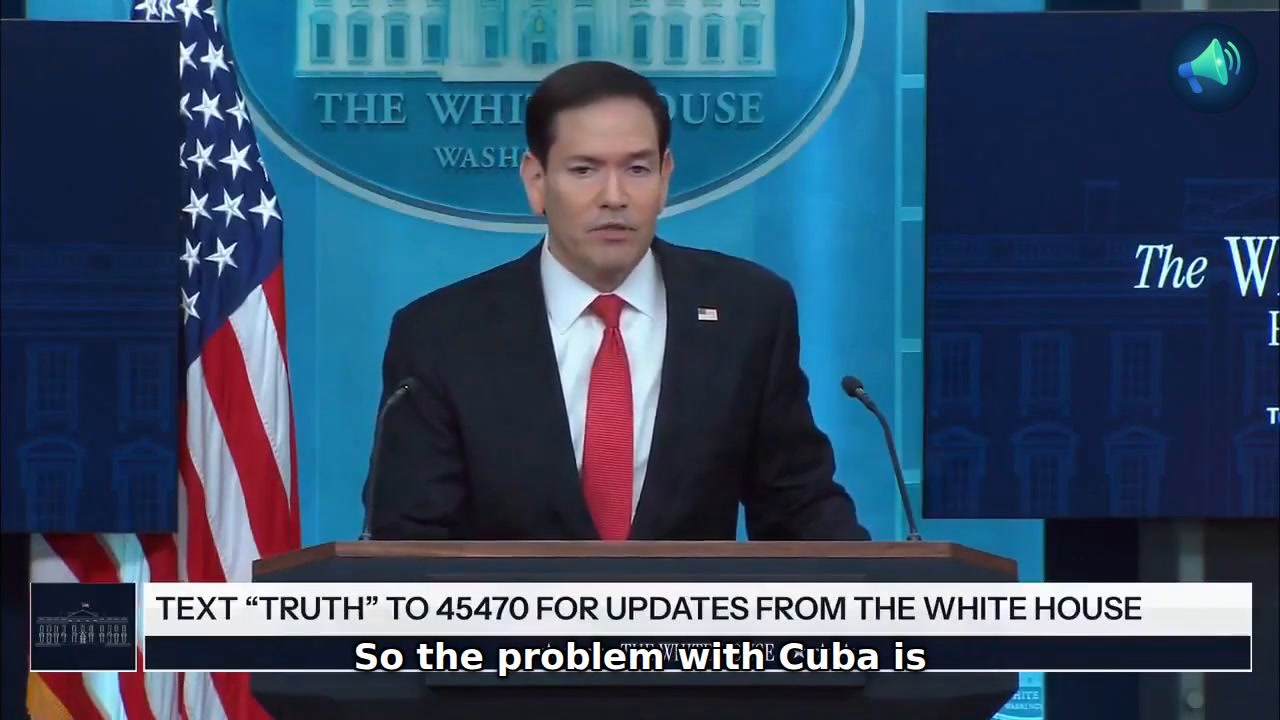
Rubio made the case during a White House briefing as the Trump administration continued to defend its Iran policy and seek a diplomatic framework after Operation Epic Fury. A local transcript of the public briefing clip captured Rubio saying Iran has long denied seeking a nuclear weapon, but he argued Tehran's behavior tells a different story.
What Happened
"They have always said they don't want a nuclear weapon," Rubio said, with the intake transcript correcting an obvious automated transcription error in the first line. "They've always said that, they just don't mean it."

Rubio said Iran has behaved like a government trying to preserve the pieces of a weapons program. He cited missile work, underground enrichment sites and secret components of Tehran's nuclear program as evidence for the administration's position.
"They build these large underground centrifuges for enrichment activity," Rubio said. "There are countries in the world that are involved in the enrichment business, but these guys do it in mountains. And in caves and in hiding."
Rubio also pointed to enriched uranium as a central part of the administration's argument. "We know for a fact that they retain highly enriched uranium at 60 percent," he said. "And that has no civilian use, not zero whatsoever."
The Nuclear Context
The International Atomic Energy Agency's February 2026 safeguards report for Iran, GOV/2026/8, is listed by the agency among its official board reports. Searchable text from the report says the agency verified 432.9 kilograms of 440.9 kilograms of uranium in UF6 enriched up to 60 percent U-235, according to the research brief prepared for this article.
The IAEA material does not say Iran had built a nuclear weapon. That distinction is central to the policy debate because enriched uranium stockpiles, missile programs and hidden enrichment facilities can support proliferation concerns without proving that a completed weapon exists.
Congressional Research Service background also places gas centrifuge enrichment at the center of U.S. proliferation concerns. A CRS report says Iran's construction of gas centrifuge uranium enrichment facilities has been the main source of concern since the early 2000s, while another CRS product says enrichment can produce both low-enriched uranium for reactors and highly enriched uranium that can be used in nuclear weapons.
 Photo: Rodolfo Quevenco, IAEA via Wikimedia Commons (CC BY-SA 2.0).
The Administration's Case
Rubio framed the issue as a test of whether Tehran is willing to accept limits that prove its program is civilian. He said a country seeking nuclear power can import enriched material rather than enrich uranium domestically.
"One thing is to say we don't want a nuclear weapon," Rubio said. "Another thing is to do the things that prove you don't want a nuclear weapon."
The White House made a similar case in an April release on Operation Epic Fury. The administration said its objectives included destroying Iran's missile capability, cutting off support for terrorist proxies and ensuring Iran never acquires a nuclear weapon.
In that release, the White House quoted Vice President JD Vance saying the President's primary objective was to make sure Iran "does not build a nuclear bomb." It also quoted administration officials describing the military campaign as focused on Iranian missiles, drones, naval assets and nuclear pathways.
The Response
Supporters of the administration's approach argue that uranium enriched to 60 percent, underground centrifuge work and missile development give Washington a narrow window to prevent a worse crisis. They contend that diplomacy has to require visible concessions from Tehran, not only repeated public denials.
Critics of broad military action against Iran usually separate the nuclear file from the question of presidential war powers. Sen. Michael Bennet, a Colorado Democrat and member of the Senate Select Committee on Intelligence, said in February that Iran "can never be allowed to acquire a nuclear weapon" but also said he had seen "no new intelligence or information" suggesting Iran's pursuit had become more imminent.
Arms control analysts often focus on the gap between capability and decision. The IAEA record documents enrichment levels and safeguards disputes, while the political argument turns on whether those facts show intent, imminent weaponization or bargaining power for negotiations.
What People Are Saying
"They have always said they don't want a nuclear weapon," Rubio said at the White House briefing. "They've always said that, they just don't mean it."
"They build these large underground centrifuges for enrichment activity," Rubio said.
"We know for a fact that they retain highly enriched uranium at 60 percent," Rubio said. "And that has no civilian use, not zero whatsoever."
"One thing is to say we don't want a nuclear weapon," Rubio said. "Another thing is to do the things that prove you don't want a nuclear weapon."
"They're acting like they want a military nuclear program," Rubio said. "That's unacceptable."
"Only Congress has the power to declare war, not the President," Bennet said in a February statement on U.S. strikes against Iran.
"Iran is a terrorist state that can never be allowed to acquire a nuclear weapon," Bennet said, while arguing that Congress and the public needed more evidence about imminence.
The Big Picture
Rubio's remarks turn the administration's Iran argument from a presidential warning into a formal diplomatic test: if Tehran wants civilian nuclear power, Washington says it should accept limits that show it is not preserving a weapons pathway.
The next marker is whether U.S. and Iranian negotiators can define those limits clearly enough to keep talks alive. Until an official White House or State Department transcript is released, the verified public record for this exchange remains the briefing clip, the local transcript attached to it and the primary-source nuclear context from the IAEA, CRS and the White House.