Rubio Calls War Powers Act Unconstitutional In Iran Fight
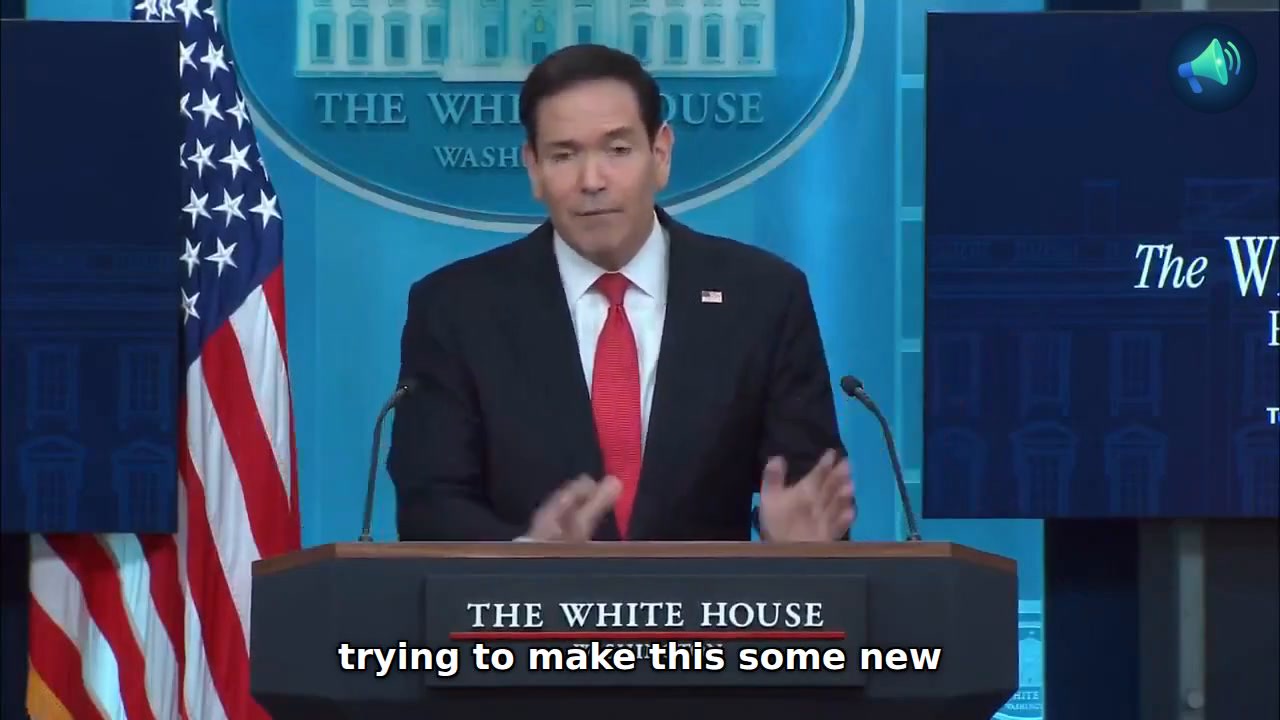
WASHINGTON, D.C. - Secretary of State Marco Rubio said Tuesday that the War Powers Act is unconstitutional, putting the Trump administration's Iran campaign inside a larger fight over whether Congress or the president controls the clock once U.S. forces enter hostilities.
"But I want to be clear on the point of the War Powers Act," Rubio said in a White House briefing clip reviewed by People's Voice Media. "It's unconstitutional. And every president and every administration is taking that position."
Rubio also said the administration wants lawmakers informed and involved. According to the local transcript, he said he had gone to Capitol Hill "four times this year" for senators, House members, intelligence committees and the Gang of Eight.
The statement matters because Congress has already tried several times this spring to force votes on withdrawing U.S. forces from hostilities in or against Iran. It also moves the dispute beyond one operation. Rubio framed the War Powers Resolution itself as a constitutional problem, while the statute says presidents must consult Congress, report covered deployments and end hostilities after 60 days unless Congress authorizes the mission or extends the period.
The Story So Far
Congress enacted the War Powers Resolution in 1973 after the Vietnam War. The law says its purpose is to ensure that "the collective judgment of both the Congress and the President" applies when U.S. armed forces are introduced into hostilities or remain there.
Section 1541 of Title 50 says the president's commander-in-chief power to introduce U.S. forces into hostilities is exercised only under a declaration of war, specific statutory authorization or a national emergency created by an attack on the United States, its territories, possessions or armed forces.
Section 1544 sets the law's central clock. It says the president must terminate a covered use of U.S. armed forces within 60 calendar days after a report is submitted or required, unless Congress declares war, passes specific authorization, extends the period by law or cannot meet because of an armed attack on the United States.
The statute also allows up to 30 additional days if the president certifies that military necessity requires more time to safely remove U.S. forces.
What's Happening Now

Rubio's remark came as the administration faces continuing questions over U.S. operations against Iran. The local clip did not include the full question that prompted Rubio's answer, so the exchange should be read as his answer on consultation and the War Powers Act, not as a transcript of the full briefing.
Rubio said the administration was maintaining contact with Congress even as it rejected the law's constitutional premise. "We want them to be involved, and we want them to be informed," he said in the local transcript.
That is the tension at the center of the argument. The administration is saying Congress should be briefed and consulted, but Rubio's statement signals that the White House does not accept Congress's statutory power to force a military cutoff on the timetable written into the War Powers Resolution.
The Justice Department's Office of Legal Counsel has long defended broad presidential authority to use armed forces abroad without a declaration of war or other statutory authorization. In an OLC opinion page on presidential power abroad, the office says the president's commander-in-chief authority, foreign-policy powers and duty to faithfully execute the laws generally empower him to deploy forces abroad without prior congressional authorization.
The same OLC page also describes the War Powers Resolution as introducing consultation, reporting and 60-day termination requirements. It identifies a more specific constitutional objection to the law's concurrent-resolution removal mechanism, saying a congressional removal measure not presented to the president is a prima facie Article I, section 7 problem.
That distinction matters. Rubio stated a broad administration position. The accessible OLC material reviewed by People's Voice Media points to a long-running executive-branch objection, but it does not turn Rubio's claim into a settled court holding that the entire statute is invalid.
Why Congress Is Pressing
Congressional records show lawmakers have already used the War Powers process to challenge the Iran campaign.
The Senate roll-call record for March 4 lists a motion to discharge S.J.Res. 104, a joint resolution to direct removal of U.S. armed forces from hostilities within or against Iran that had not been authorized by Congress. The motion failed 47 to 53.
The House Clerk's roll-call record for March 5 lists H.Con.Res. 38, a resolution directing the president under section 5(c) of the War Powers Resolution to remove U.S. forces from unauthorized hostilities in Iran. The measure failed 212 to 219.
Sen. Tammy Duckworth's office said April 15 that Senate Democrats forced another War Powers Resolution vote that would have immediately withdrawn American forces from hostilities in and against Iran. Sen. Edward Markey's office said April 22 that he voted for a fifth Iran war-powers resolution and that the vote failed 46 to 51.
Those votes show why Rubio's language has practical stakes. If the War Powers clock binds the president, Congress can try to force debate and a withdrawal deadline. If the administration treats the law as unconstitutional, the fight shifts toward political pressure, appropriations, oversight and possible court challenges.
The Conservative View
Supporters of Rubio's position argue that military operations move faster than Congress and that Article II gives the president broad power to protect U.S. forces, respond to threats and manage foreign crises.
They can point to OLC's statement that historical practice, including emergency action and congressional acquiescence, confirms some inherent presidential power to deploy forces abroad. They can also argue that Congress still has tools: hearings, funding limits, authorizations, sanctions law, confirmation power and public oversight.
From that view, Rubio's statement is not a rejection of Congress's role. It is a claim that Congress cannot use a statutory clock to command the president's battlefield decisions once he determines that U.S. interests and forces are at risk.
The Progressive View
Critics argue that Rubio's position weakens the constitutional check that Congress holds over war. They say the War Powers Resolution was written precisely to prevent presidents from turning limited deployments into extended conflicts without a public vote.
Duckworth's April statement called the Iran war "unjustified, unpopular and costly" and said the War Powers vote would have withdrawn American forces from hostilities. Markey said after a later vote that Congress must reclaim its constitutional responsibility over war decisions.
From that view, consultation is not enough. Critics argue that briefings do not substitute for authorization, and that lawmakers should have to vote on whether Americans remain in a war with Iran.
Other Perspectives
 Photo: Architect of the Capitol via Wikimedia Commons (public domain).
Civil-liberties advocates and some noninterventionist conservatives often land in a similar place for different reasons. They argue that presidents from both parties have stretched war authority and that Congress has avoided hard votes by complaining after deployments begin.
Foreign-policy hawks may agree with Rubio's practical concern while still wanting more formal authorization for a major Iran campaign. Their concern is not only constitutional. A clear authorization can signal unity to allies, adversaries and service members.
Legal scholars are also likely to separate the statute's parts. The executive branch has objected to some mechanisms for decades, but courts have often avoided direct rulings on war-powers disputes. That leaves a system driven as much by political will as by judicial clarity.
Economic Implications
The War Powers fight carries fiscal and market stakes because Iran operations require sustained deployments, munitions, naval protection, intelligence support and regional basing. Congress controls appropriations, but the administration controls many immediate operational decisions once forces are deployed.
The economic mechanism is simple: a longer campaign raises direct defense costs and increases risk premiums around oil, shipping and insurance tied to the Persian Gulf. If Congress cannot force a clear authorization vote, investors and allied governments may have less visibility into how long U.S. operations could last.
By The Numbers
- 60 days: the War Powers Resolution's termination clock after a covered report is submitted or required, according to 50 U.S.C. 1544.
- 30 additional days: the maximum safe-withdrawal extension the statute allows when the president certifies military necessity.
- 47 to 53: the March 4 Senate vote rejecting the motion to discharge an Iran war-powers resolution, according to Senate Roll Call 46.
- 212 to 219: the March 5 House vote defeating a resolution to remove U.S. forces from unauthorized hostilities in Iran, according to House Roll Call 85.
- Four times: Rubio's count of how often he said he had gone to Capitol Hill this year for Iran-related briefings, according to the local transcript.
What People Are Saying
"It's unconstitutional. And every president and every administration is taking that position," Rubio said of the War Powers Act in the local transcript.
"We want them to be involved, and we want them to be informed," Rubio said of Congress in the same clip.
The War Powers Resolution says its purpose is to ensure that "the collective judgment of both the Congress and the President" applies to introducing and continuing U.S. forces in hostilities.
The Justice Department's Office of Legal Counsel says the president's commander-in-chief and foreign-policy powers "generally empower him to deploy the armed forces abroad without a declaration of war by Congress or other congressional authorization."
Duckworth's office said Senate Democrats forced a vote on a War Powers Resolution that would have withdrawn American forces from hostilities in and against Iran.
The Big Picture
Rubio's statement sets up two fights at once. One is immediate: whether Congress can force another Iran vote and build enough support to change U.S. policy. The other is structural: whether the War Powers Resolution can meaningfully restrain presidents when administrations from both parties have disputed parts of it for decades.
The next test is whether the White House publishes a full transcript of the briefing, whether the administration sends more formal war-powers notifications and whether lawmakers keep forcing votes as the Iran operation continues.