Netanyahu Says Israel Was Exposed on 'Eighth Front' of Social Media
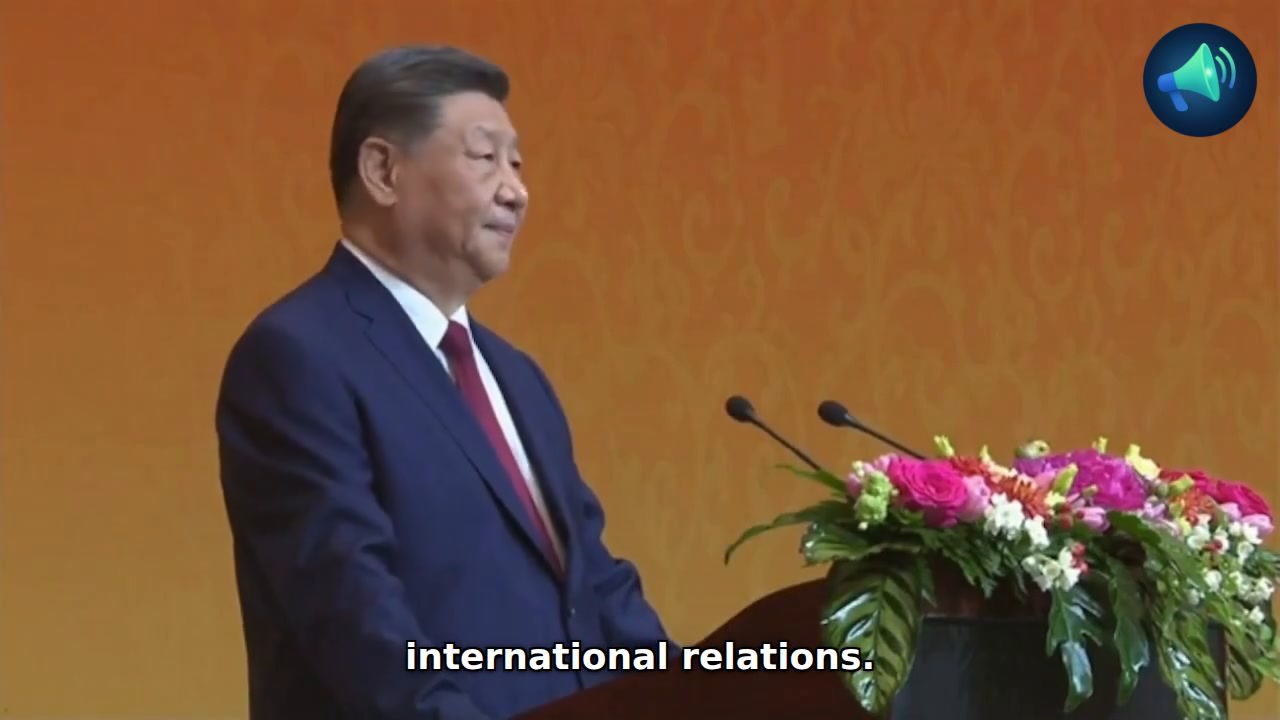
The submitted video is attached as the hero video. The X caption paraphrased Netanyahu's wording by saying Israel was "winning" on seven battlefields. The transcript says he was describing Israel "fighting" on seven battlefields while being exposed in the media and social media war, so this article uses transcript-verified wording only.
NEW YORK - Benjamin Netanyahu told 60 Minutes that Israel was "completely exposed" on what he called an eighth front, the media war and social media war, while it was fighting physical battles across the region.
The clip matters for Americans because Netanyahu framed U.S. public opinion, especially younger Americans' social-media feeds, as a strategic theater in a war involving a close U.S. ally. His answer came after CBS correspondent Major Garrett asked whether Israel was at risk of losing support among younger Americans who were seeing images from Gaza and Lebanon online.
Netanyahu did not treat the issue as a normal public-relations problem. He described it as a front where Israel had fallen behind hostile actors and said democratic governments needed to find ways to compete without copying authoritarian censorship.
What Netanyahu Said
The full 60 Minutes transcript records Garrett asking Netanyahu about younger Americans, Republican and Democrat, who had hardened against Israel after scrolling through images from Gaza and Lebanon. Garrett asked whether Israel was losing the social-media space.
"While we were fighting the physical, military battle on seven battlefields, seven front of war, we were completely exposed on the eighth front, the media war and really the social media war."
Benjamin Netanyahu, 60 Minutes interview transcript
Netanyahu said hostile actors were using online accounts to damage Israel's standing. He described tracing one apparently American anti-Israel message to an address outside the United States and used that example to argue that foreign information operations had hurt Israel.
"We have a problem. I recognize it. And we have to get our act together."
Benjamin Netanyahu, 60 Minutes interview transcript
He also said Israel needed to compete "not by censorship" but through methods "applicable to democracies," according to the transcript. That phrase is central to the U.S. debate because American lawmakers, courts, and civil-liberties groups continue to argue over how governments should respond to online propaganda without pressuring platforms to suppress lawful speech.
The U.S. Audience Netanyahu Was Talking About

Garrett's question focused on American youth opinion rather than Israeli domestic politics. He referred to young Americans seeing images that led them to describe conduct in Gaza and Lebanon as uncivilized or barbaric. Netanyahu answered by defending Israeli military practices and then shifting to the information war.
Polling gives that exchange a measurable backdrop. Gallup reported in March 2025 that 55 percent of U.S. adults disapproved of Israel's military action in Gaza, while 36 percent approved. Gallup said Democratic approval was especially low and that younger adults were less supportive than older adults.
Those numbers matter because the United States supplies diplomatic backing and military assistance to Israel. The Congressional Research Service has described Israel as the largest cumulative recipient of U.S. foreign assistance since World War II, and U.S. officials have repeatedly said Israel's security is a central American policy interest. If younger voters move sharply against Israel, the pressure eventually reaches Congress, presidential campaigns, campus politics, and weapons-transfer debates.
The Information-War Argument
Netanyahu's comparison was blunt. He said Israel had been attacked with the "equivalent of F-35" while trying to respond with "a Polish cavalry," according to the transcript. The point of the metaphor was not hardware. It was speed, scale, and asymmetry.
Supporters of Netanyahu's position argue that governments aligned with the United States cannot ignore foreign influence campaigns on major platforms. U.S. intelligence agencies have repeatedly warned that foreign actors use fake accounts, manipulated narratives, and coordinated amplification to shape American opinion. From that perspective, Israeli officials see the online battlefield as part of the same strategic environment as missiles, proxies, and diplomacy.
Critics answer that the most damaging images online are not always fake or foreign-made. Human-rights groups, Gaza residents, aid agencies, journalists, and Israeli critics have documented civilian suffering during the war. From that perspective, Israel's problem with younger Americans is driven by the underlying conduct of the war and the humanitarian toll, not merely by hostile messaging.
Civil-liberties advocates add a separate warning. When governments talk about fighting information wars on social platforms, the line between countering foreign manipulation and pressuring speech platforms can become contested. Netanyahu's own wording acknowledged that constraint by saying Israel could not do what authoritarian regimes do.
The American Policy Stakes
For Washington, the social-media front intersects with three policy questions. The first is military aid. U.S. lawmakers who support Israel argue that the alliance deters Iran and its proxies, protects an important Middle East partner, and supports American regional strategy. Lawmakers who criticize continued transfers argue that U.S. weapons should not be provided without stricter conditions tied to civilian protection and humanitarian access.
The second question is campus and domestic security. American universities have seen protests, counterprotests, discrimination complaints, and police responses tied to the Israel-Hamas war. Netanyahu's focus on younger Americans shows that Israeli leaders understand campuses and youth platforms as political territory that may shape future U.S. policy.
The third question is platform governance. If allied governments ask U.S.-based platforms to address foreign manipulation, companies must distinguish coordinated inauthentic behavior from lawful political criticism. That distinction is difficult in wartime because real images, propaganda, activist messaging, and foreign influence campaigns can circulate through the same feeds.
What People Are Saying

"Do you believe Israel is at risk of losing this war on that social media front?"
Major Garrett, 60 Minutes interview transcript
"We can't do what these authoritarian regimes do, but finding ways to fight the battle for the hearts and minds of young Americans on the social media."
Benjamin Netanyahu, 60 Minutes interview transcript
"Majority in U.S. Now Disapprove of Israeli Action in Gaza."
Gallup headline on its March 2025 survey release
The Big Picture
Netanyahu's answer shows that Israeli leaders now see American social-media opinion as a strategic vulnerability, not a side issue. The clip also shows why the fight over Gaza, Iran, antisemitism, free speech, and platform manipulation keeps spilling into U.S. politics.
The next measure will not be another viral clip. It will be whether Israel, U.S. officials, and social platforms can separate foreign manipulation from real criticism while voters continue judging the war through images, casualty claims, hostage updates, aid reports, and official statements. Netanyahu said Israel had to "get our act together." American policymakers now have to decide what support for that effort looks like under U.S. free-speech norms.