Xi Tells Trump China And U.S. Should Be Partners, Not Rivals, After Beijing Talks
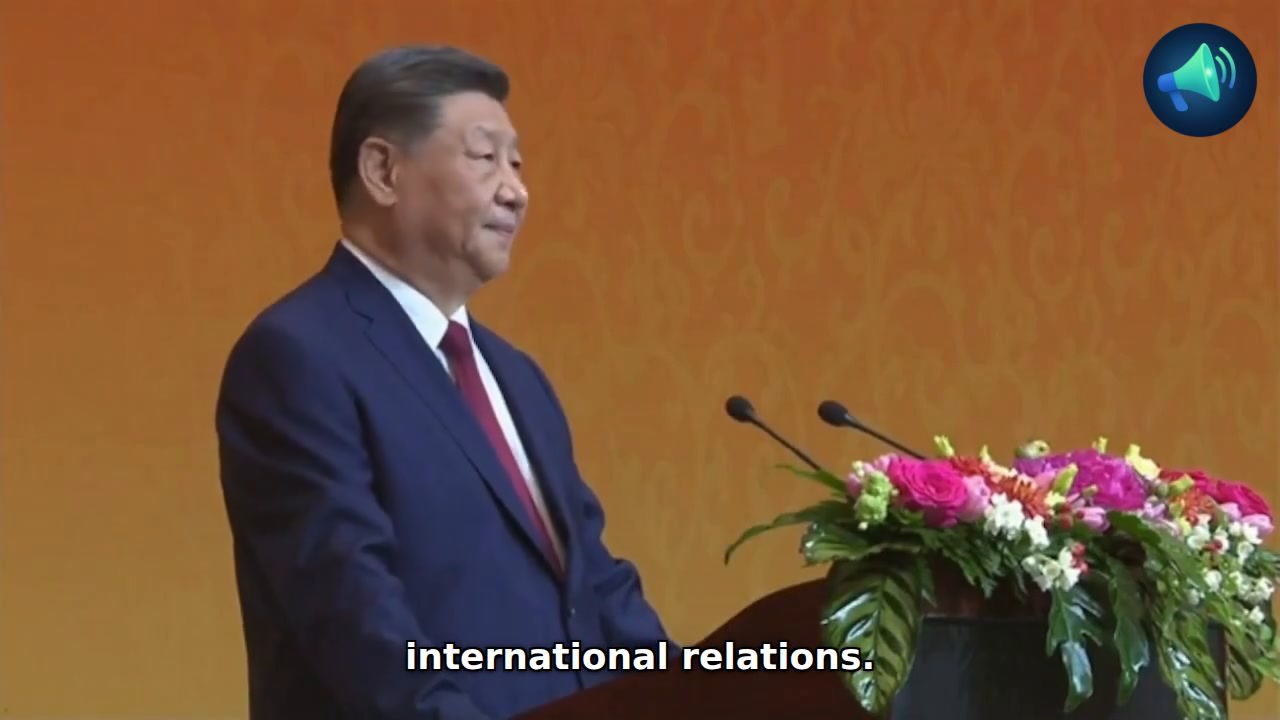
Xi Jinping told President Donald Trump that China and the United States should be "partners, rather than rivals," using formal remarks in Beijing to frame cooperation between the two powers as a global necessity after a high-stakes bilateral meeting.
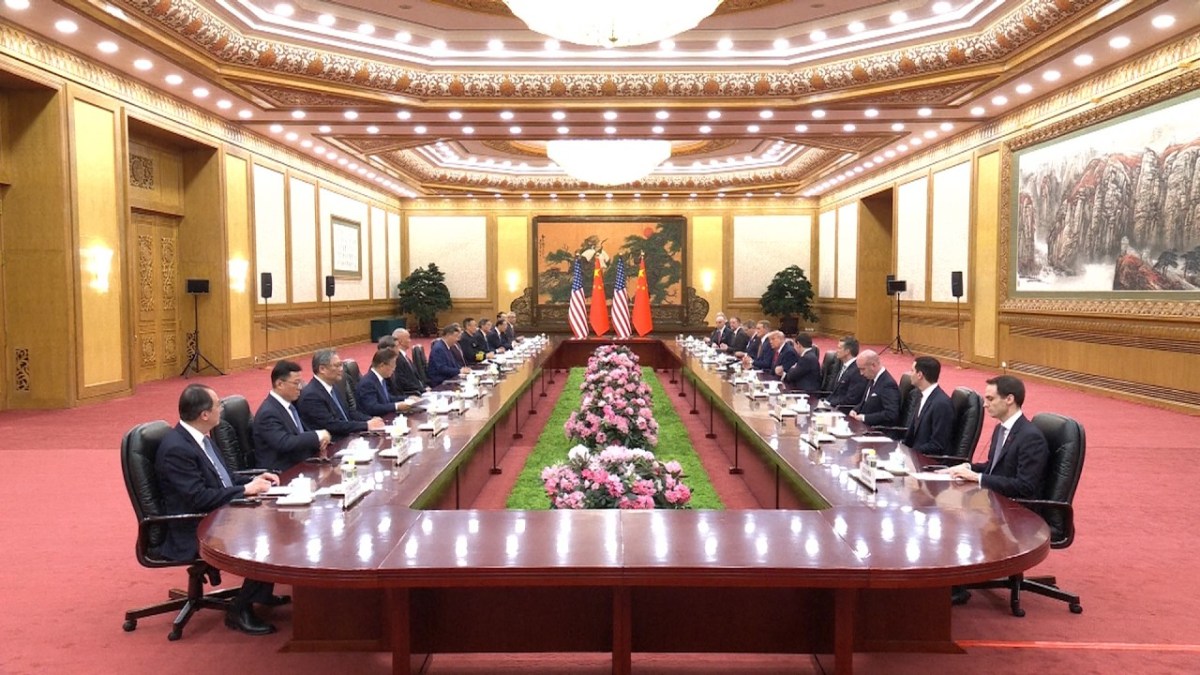
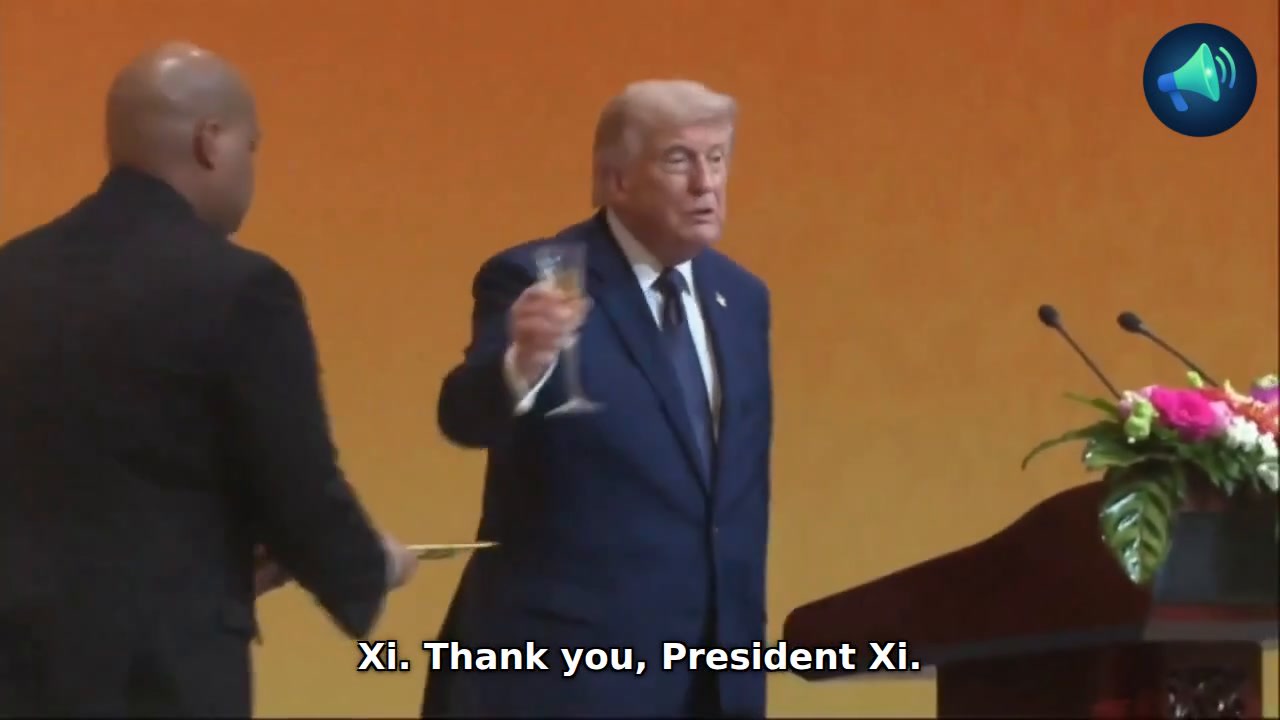
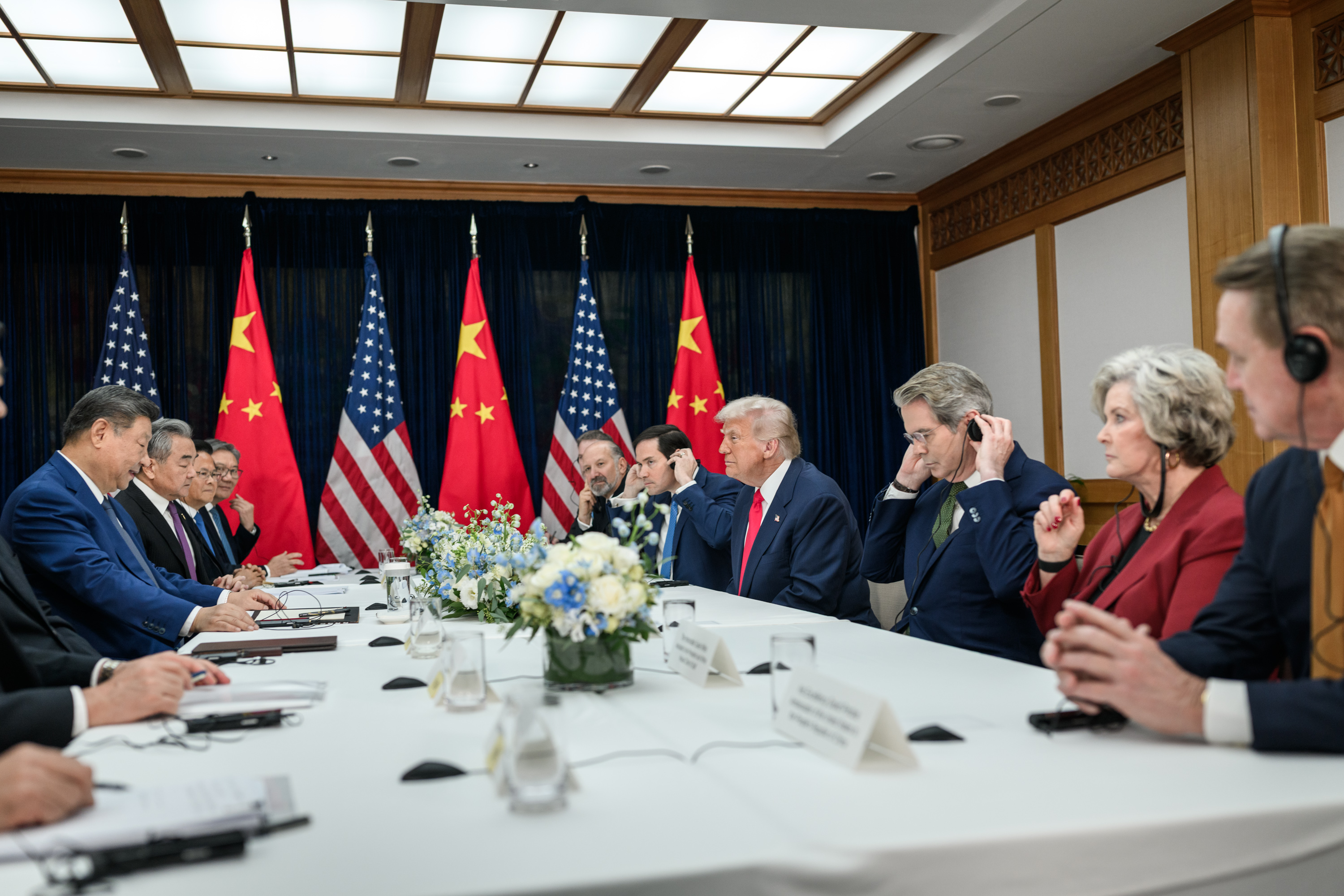
The Chinese president made the statement during a welcoming banquet for Trump at the Great Hall of the People, according to an official English-language readout from China's Ministry of Foreign Affairs. The same day, Trump participated in a bilateral meeting with Xi in Beijing, a White House video page confirmed.
"Both China and the United States stand to gain from cooperation and lose from confrontation. Our two countries should be partners rather than rivals." - Xi Jinping, president of China
The line was more than ceremonial language. The Chinese readout said Xi and Trump had agreed to pursue what Beijing described as a "constructive China-U.S. relationship of strategic stability," a phrase Chinese officials used throughout the day to describe the desired frame for managing trade, military channels, regional crises and the Taiwan issue.
For Washington, the remarks landed at the center of a foreign-policy test that stretches well beyond optics. The United States is trying to manage economic dependence, military risk in the Indo-Pacific, competition over technology, the future of Taiwan, and global pressure points from Ukraine to the Middle East without letting the relationship slide into open confrontation.
A Banquet Message With Strategic Weight
The banquet readout said Xi described the relationship as "the most important bilateral relationship in the world" and said the two countries "must make it work, and never mess it up." He also said the relationship affects more than 1.7 billion people in China and the United States and the interests of more than 8 billion people worldwide.
That language was designed to place the meeting above one-off disputes. It framed the relationship as a structural question for the international system, not merely a negotiation between two presidents.
The submitted clip shows Xi at a lectern saying that China and the United States gain from cooperation and lose from confrontation. A transcript generated from the source video matches the quoted language in the X post and closely tracks the official Chinese banquet readout.
The White House did not appear, in the accessible material reviewed before publication, to have posted a full written transcript of the bilateral meeting. It did publish an official video page titled "President Trump Participates in a Bilateral Meeting with the President of China," with the location listed as Beijing, China, and an official gallery of the meeting.
Taiwan Was The Hardest Edge In The Readout
The softer banquet language sat beside a much sharper policy readout from the formal talks. China's Foreign Ministry said Xi called Taiwan "the most important issue in China-U.S. relations" and warned that if the issue is handled improperly, the two countries could have "clashes and even conflicts."
Xi also said, according to the Chinese readout, that "Taiwan independence" and cross-Strait peace are "as irreconcilable as fire and water." He said the United States "must exercise extra caution" on Taiwan.
Those lines are the real risk marker behind the public smiles. Beijing has long treated Taiwan as a core sovereignty issue, while Washington maintains unofficial ties with Taipei and has continued arms sales and security cooperation under the Taiwan Relations Act. The Chinese readout did not frame Taiwan as one item among many. It put Taiwan at the center of whether the two governments can keep competition below the threshold of crisis.
At a regular press conference later Thursday, Chinese Foreign Ministry spokesperson Guo Jiakun repeated that Taiwan is the most important issue in the relationship. Asked about U.S. arms sales to Taiwan, Guo said China's opposition is "consistent and clear," while referring reporters back to the official readout of the leaders' meeting.
Trade Talks Got A Positive But Cautious Frame
The economic language was less confrontational, but still careful. The Chinese readout said Xi described China-U.S. economic and trade ties as "mutually beneficial and win-win." He said disagreements and frictions should be handled through "equal-footed consultation."
The same readout said the two countries' economic and trade teams had produced "generally balanced and positive outcomes" the previous day. It did not list a detailed public agreement in the text reviewed before publication, but it did connect the leaders' meeting to continuing trade-team work.
Trump, according to the Chinese readout, said he had brought U.S. business leaders with him and encouraged expanded cooperation with China. The readout said he described the summit as a major event watched by the world and said he would work with Xi to strengthen communication, cooperate where possible and handle differences.
That formulation leaves plenty of unresolved questions. U.S. companies want market access and supply-chain stability. American officials have national-security concerns over advanced technology, strategic manufacturing and data. Beijing wants investment, tariff relief, export certainty and less pressure on Chinese firms. The official language suggested an attempt to keep the economic channel open even as the security channel remains tense.
Military Channels And Global Flashpoints Were On The Table
The Chinese talks readout said Xi called for using political, diplomatic and military-to-military communication channels. That point matters because the most dangerous U.S.-China scenarios often begin with miscalculation, not a formal decision to escalate.
Ships and aircraft from the two countries operate near each other in the Western Pacific. A crisis around Taiwan, the South China Sea or another regional flashpoint could move quickly if commanders lack reliable lines of communication. Keeping military channels active does not solve the underlying disputes, but it can reduce the chance that an incident becomes a larger confrontation.
The readout also said the presidents exchanged views on the Middle East, the Ukraine crisis and the Korean Peninsula. Those issues give the relationship a global dimension. China has economic and diplomatic leverage with Russia, ties across the Middle East, and a central role in any pressure architecture involving North Korea. The United States has treaty allies, military deployments and sanctions tools across each theater.
The leaders also agreed to support each other in hosting this year's APEC Economic Leaders' Meeting and G20 Summit, according to the Chinese readout. That detail points to a practical diplomatic calendar after the Beijing meeting, with both sides signaling that the relationship will continue through multilateral forums rather than only bilateral leader-level contact.
The Public Message Was Stability, Not Trust
The key distinction in the official language is that neither side described a relationship built on trust. The operative word was stability.
China's Foreign Ministry defined the phrase "constructive strategic stability" as a relationship with cooperation as the mainstay, competition within proper limits, manageable differences and expectable peace. That is a guarded framework. It acknowledges that the rivalry continues, but argues that rivalry should be bounded.
For Trump, the political test is whether engagement with Xi can produce visible gains without being portrayed as concession. For Xi, the test is whether China can reduce economic pressure and strategic encirclement without yielding on Taiwan or accepting a U.S.-led order in Asia.
The clip's significance is that Xi chose to make the cooperation-versus-confrontation line publicly, in formal remarks after private talks. It gave both governments a phrase they can use if they want to keep negotiating. It also gave both governments a benchmark they can be judged against if the relationship deteriorates.
The next test will be whether the official language produces concrete movement in trade, military communication and crisis management, or whether the banquet line becomes another diplomatic phrase overtaken by the same disputes it was meant to contain.