Trump Invites Xi to White House During Beijing Toast
The invitation turns a Beijing dinner toast into the next test of whether Washington and Beijing can manage trade, Taiwan, Iran, and fentanyl disputes without letting diplomatic ceremony substitute for measurable concessions.
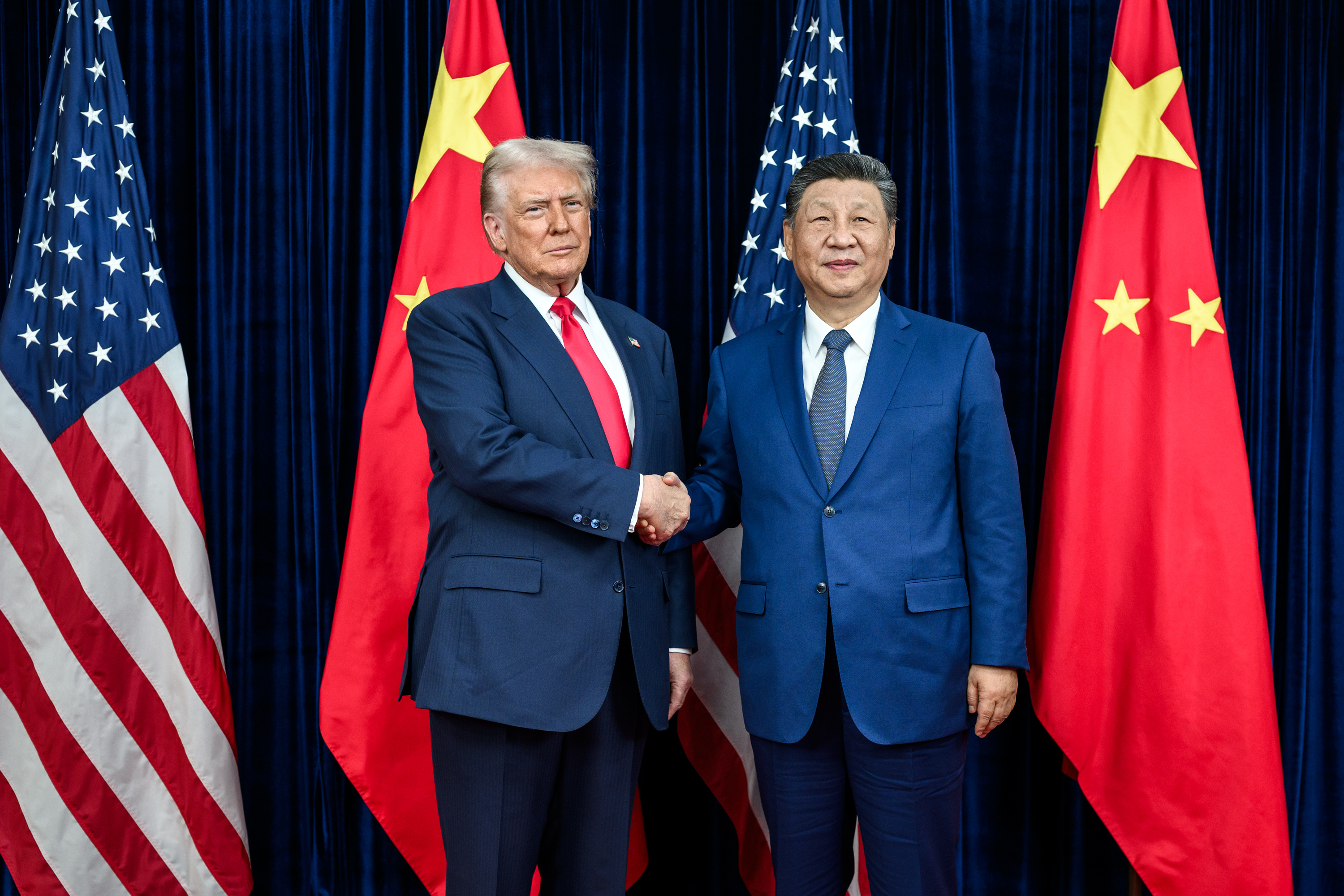
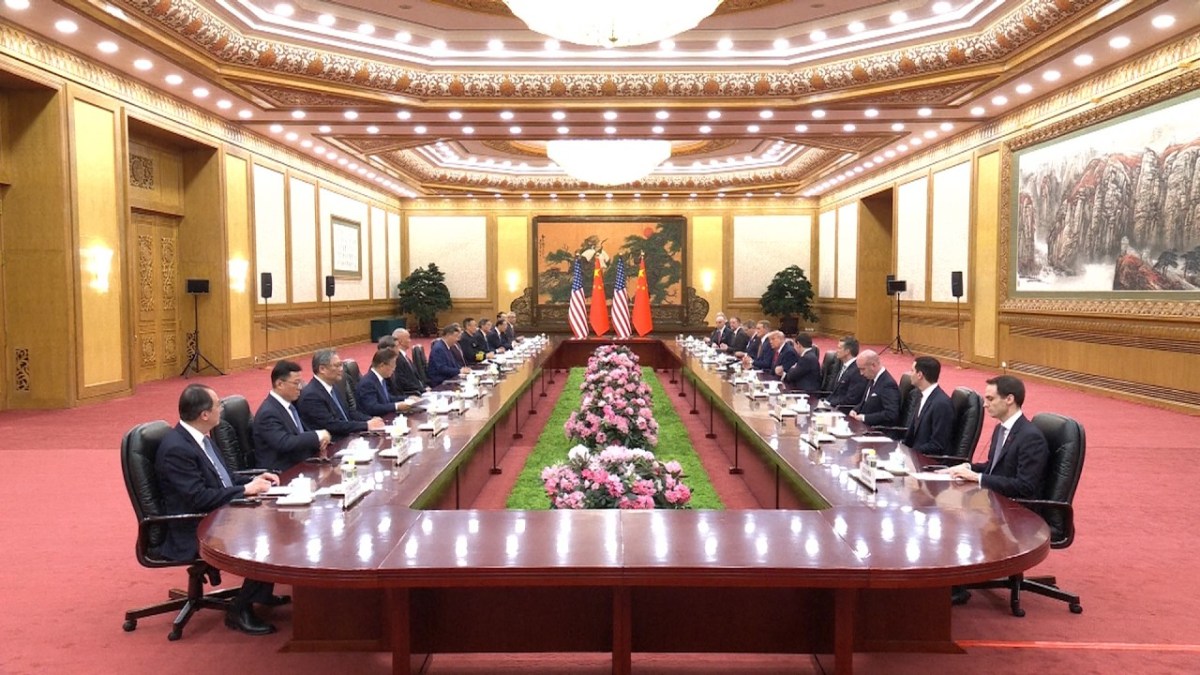
BEIJING - President Donald Trump used a formal toast in Beijing on Thursday to invite Chinese President Xi Jinping and Madame Peng to visit the White House on September 24, adding a Washington follow-up to a summit already loaded with trade, Taiwan, Iran, fentanyl, and supply chain pressure.
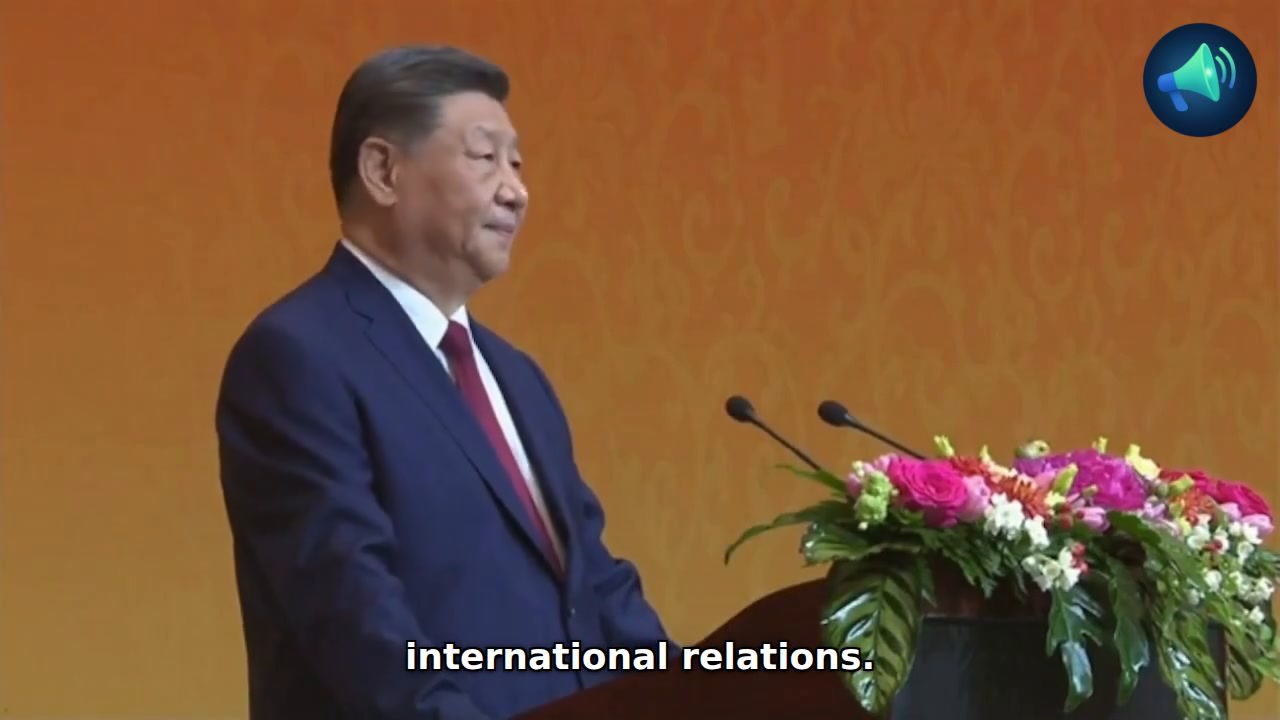
The submitted video shows Trump standing at a podium and thanking Xi for what he called a "beautiful welcome." Trump said it was his honor to extend the White House invitation, then raised a glass to what he called "the rich and enduring ties between the American and Chinese people."
"Tonight it is my honor to extend an invitation to you and Madame Peng to visit us at the White House, the September 24th." - President Donald Trump, according to the submitted video transcript.
Trump then framed the toast around people to people ties rather than tariffs, military posture, or Taiwan.
"I'd now like to raise a glass and propose a toast to the rich and enduring ties between the American and Chinese people." - President Donald Trump, according to the submitted video transcript.
The diplomatic language matters because the same Beijing meeting has already been framed by China's own public readout as a warning about Taiwan and by U.S. officials as a test of whether the relationship can be managed without surrendering American leverage. A White House visit in September would give both governments a second deadline for whether Thursday's words become policy deliverables.
What Trump Put on the Calendar
Trump's invitation gives the summit a concrete next step. A September 24 White House visit would move the relationship from Beijing's ceremonial setting to Washington's political stage, where any agreement would face a very different audience: U.S. lawmakers, industry groups, national security officials, farmers, manufacturers, and voters who have lived with years of tariffs and supply chain shocks.
The clip does not show a detailed policy announcement. It shows the public close of a diplomatic encounter, with Trump using banquet language to signal that he wants the channel to stay open. That is still newsworthy because leader visits are not symbolic in isolation. They create staff level deadlines, interagency negotiating tracks, and pressure on both sides to produce something that can be presented as progress.

For the United States, the immediate question is what Washington wants out of the September date. The State Department has already put Taiwan stability, China trade, intellectual property, fentanyl precursor enforcement, and Chinese support for Iran inside the same diplomatic frame. A White House visit can either sharpen those demands or soften them into process.
For Beijing, the invitation offers prestige and access. A visit to the White House lets Xi appear as a peer negotiating directly with the U.S. president. It also gives Beijing a chance to push for tariff relief, export control concessions, and language that reduces pressure on Taiwan. That is why the September meeting should be judged by the concessions and guardrails around it, not by the optics of the toast.
Taiwan and Trade Sit Behind the Toast
China's Foreign Ministry readout of the summit put Taiwan at the center of the relationship. The ministry said Xi described Taiwan as the most important issue in China-U.S. relations and warned that mishandling it could jeopardize the entire relationship.
"President Xi stressed that the Taiwan question is the most important issue in China-U.S. relations. If it is handled properly, the bilateral relationship will enjoy overall stability. Otherwise, the two countries will have clashes and even conflicts, putting the entire relationship in great jeopardy." - Ministry of Foreign Affairs of the People's Republic of China, May 14 readout.
That warning sits uneasily beside the banquet tone in Trump's toast. Diplomatic meals often emphasize continuity, friendship, and shared history. But the policy dispute underneath this one is hard. Beijing wants Washington to limit support for Taiwan and lower economic pressure. Washington wants to deter a forced change in the Taiwan Strait while reducing dependence on Chinese supply chains.
Secretary of State Marco Rubio's State Department transcript before the summit described China as a relationship that must be managed to avoid catastrophe, not a problem that can be wished away. Rubio said forced change in the Indo-Pacific status quo would be against everyone's interest and said stability around Taiwan remains important.
Those two public frames explain why Trump's invitation is more than a social gesture. If Xi comes to Washington in September, the central test will be whether Trump can keep the channel open while avoiding an agreement that trades away deterrence, export control leverage, or pressure on China's support networks for Iran.
The Economic Stakes
The U.S.-China relationship is not a distant diplomatic file. It is embedded in American prices, factory inputs, farm exports, shipping lanes, technology supply chains, and defense planning. USTR says U.S. goods trade with China totaled an estimated $414.7 billion in 2025, with $106.3 billion in exports, $308.4 billion in imports, and a $202.1 billion goods deficit.
That trade exposure gives both sides leverage and both sides vulnerability. If talks improve, U.S. exporters can get clearer market access and importers can plan around a less chaotic tariff path. If talks collapse, companies face higher landed costs, delayed shipments, compliance uncertainty, and renewed pressure to move production before replacement capacity is ready.
The Taiwan channel raises the stakes further. U.S. Census data shows goods trade with Taiwan reached $256.1 billion in 2025 when exports and imports are combined. Taiwan's role in advanced semiconductors means any security shock in the Taiwan Strait would hit electronics, autos, defense systems, data centers, consumer devices, and manufacturing equipment.

The mechanism is straightforward. If Taiwan risk rises, insurers charge more, shippers adjust routes, firms build more inventory, and companies pay for redundant suppliers. If Washington increases tariffs or export controls, importers and manufacturers absorb costs before domestic or allied suppliers can fill every gap. If Beijing retaliates with export restrictions or informal pressure, U.S. firms face delay risk and replacement costs.
Iran adds another economic channel. U.S. officials have warned that Chinese support for Tehran can undermine sanctions pressure. Any dispute over Iran can spill into oil markets, shipping insurance, banking compliance, and defense spending. That means a September White House visit would not be only a trade meeting. It would be a test of whether the administration can link sanctions enforcement, energy stability, and China policy without creating a broader shock.
What Each Side Wants From September
Trump wants visible proof that personal diplomacy can produce results. A White House visit would let him argue that direct leader talks are keeping a dangerous relationship from sliding into open confrontation. The strongest version of that argument would include concrete deliverables: fentanyl precursor enforcement, farm purchases or market access, intellectual property commitments, reduced support for Iran, and language that avoids weakening Taiwan deterrence.
Xi wants a meeting that confirms China's status and reduces U.S. pressure. Beijing's public language emphasizes stability and consultation, but its Taiwan warning shows the red line it wants Washington to respect. China also wants relief from tariffs, export controls, technology restrictions, and investment barriers that have become central to U.S. economic security policy.
The risk for Washington is that ceremony becomes the deliverable. A state style visit can create images of cooperation without changing behavior. The risk for Beijing is that a White House meeting gives Trump a public deadline to demand concessions and claim leverage if China refuses.
The September date also creates a domestic U.S. clock. Lawmakers skeptical of China will press the administration to explain what it is seeking. Business groups will want predictability. Defense hawks will watch Taiwan language. Border and public health officials will watch fentanyl commitments. Energy and sanctions officials will watch Iran.
What People Are Saying
"It's a very special relationship, and I want to thank you again. And this has been an amazing period of time." - President Donald Trump, according to the submitted video transcript.
"China-U.S. economic and trade ties are mutually beneficial and win-win in nature. Where disagreements and frictions exist, equal-footed consultation is the only right choice." - Ministry of Foreign Affairs of the People's Republic of China, May 14 readout.
"In the case of the Indo-Pacific, Taiwan, and so forth, it's not in China's interest or anyone's interest for there to be any sort of forced change in the status quo. I think stability there is very important."
Secretary of State Marco Rubio, according to the State Department transcript cited in prior summit materials.
What to Watch Next
The first question is whether the White House confirms the September 24 visit with a formal announcement and agenda. If the agenda names Taiwan, fentanyl, trade access, export controls, Iran, and supply chains, the visit will look like a high stakes negotiation. If the agenda stays vague, it will look more like an attempt to preserve atmosphere after a tense summit.
The second question is whether Beijing changes behavior before September. Watch for enforcement moves on fentanyl precursor networks, military activity around Taiwan, tariff or procurement signals, and any public statement on Chinese entities tied to Iran. Those will show whether the toast was paired with pressure.
The third question is how U.S. businesses respond. Companies exposed to China and Taiwan will treat September as a planning date. They will not wait for the leaders to shake hands before modeling tariff paths, inventory risk, sanctions exposure, and supply chain alternatives.
Trump's toast gave the relationship a warmer public note. The September invitation gives it a testable next deadline.