Xi Warns Trump on Taiwan as Trade and Iran Risks Collide

The Beijing meeting put America's Taiwan deterrence, China trade exposure, Iran pressure, and supply chain independence in the same diplomatic frame.
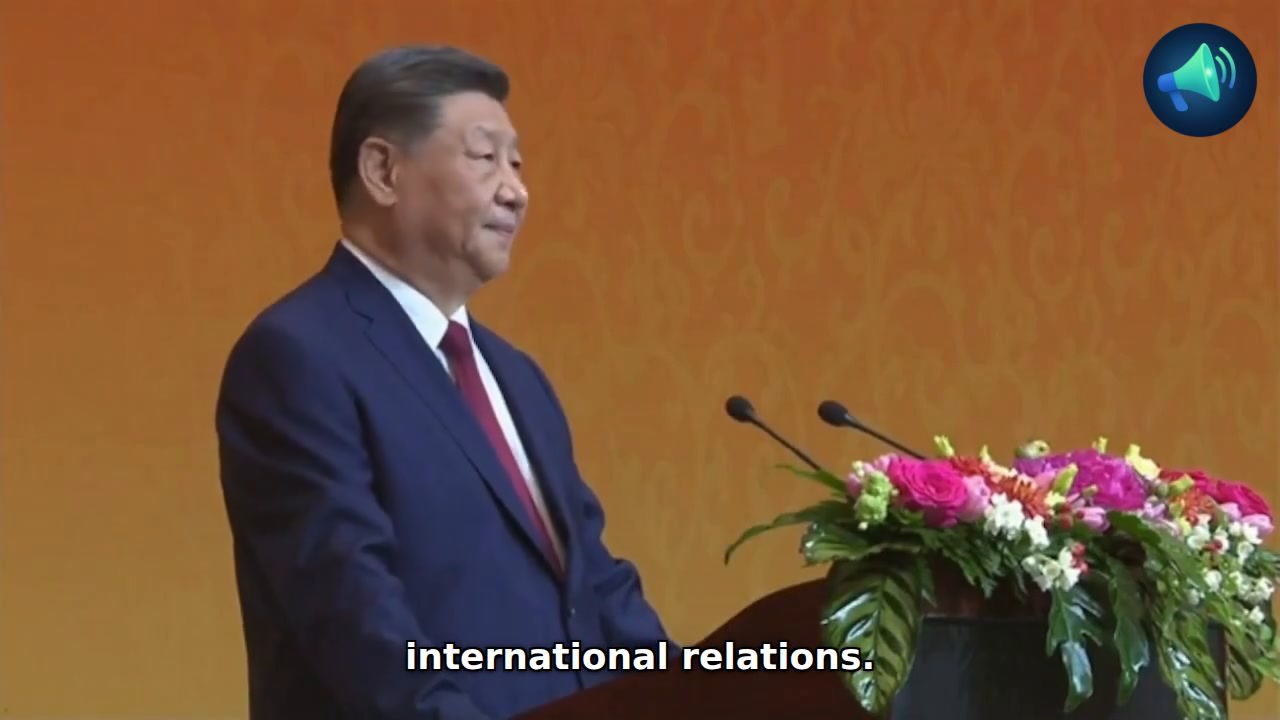
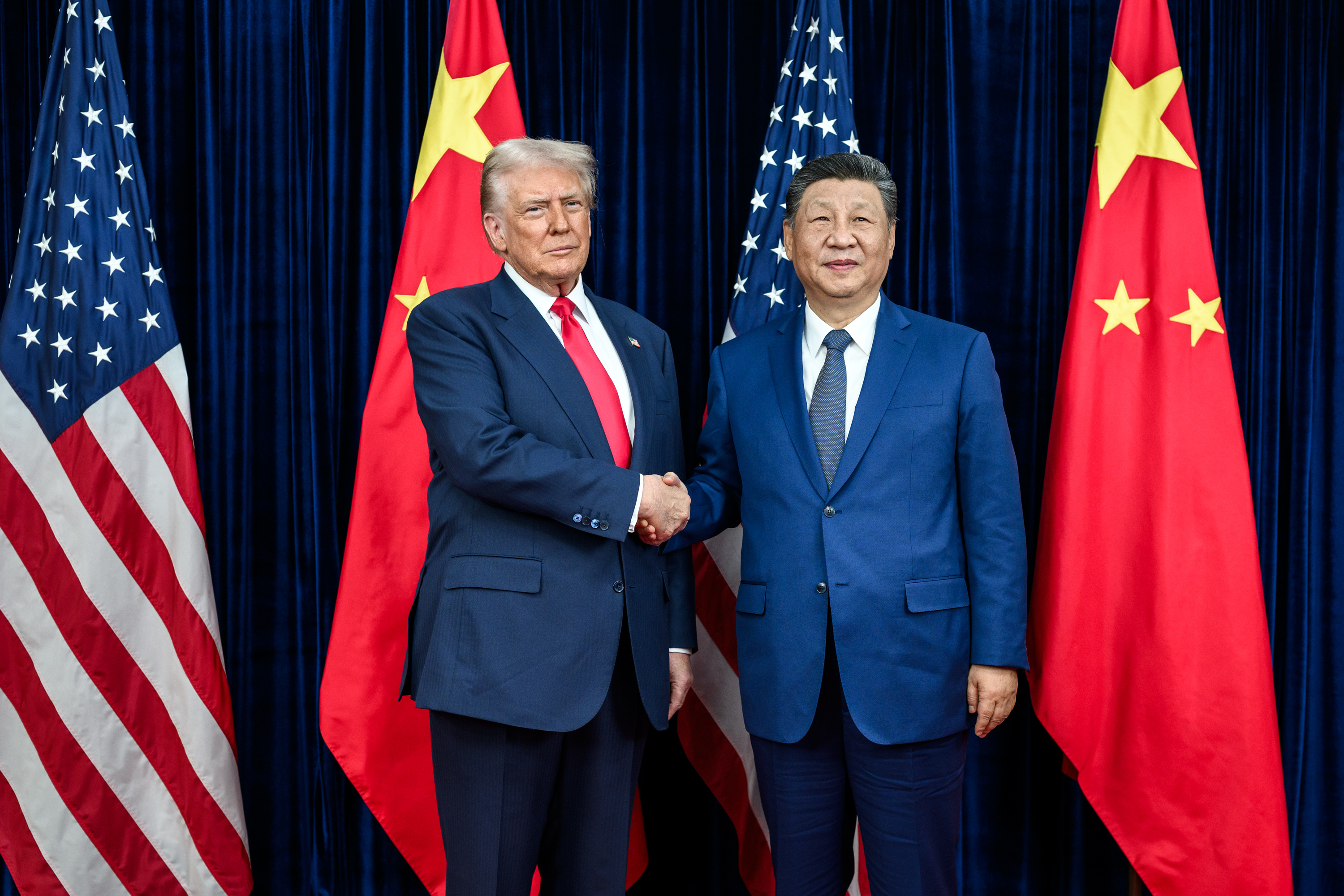
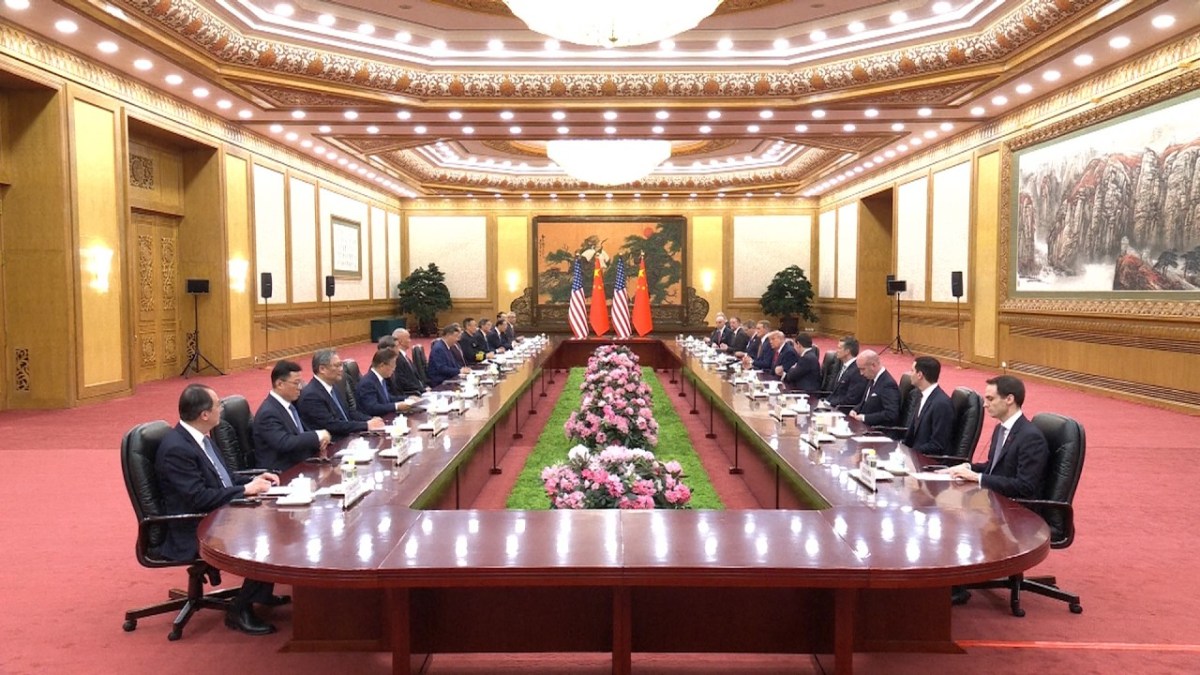
BEIJING - President Donald Trump and Chinese President Xi Jinping met in Beijing on May 14 with Xi's own government readout putting Taiwan at the center of the relationship and warning that mishandling the issue could push the two countries toward direct conflict.
For Americans, the stakes go well beyond diplomatic language. The meeting touches the security of a democratic partner in the Western Pacific, U.S. dependence on Chinese manufacturing, the flow of fentanyl precursors, Chinese support for Iran, and the economic shock that would follow any rupture between the world's two largest economies.
The Chinese Foreign Ministry said Xi called Taiwan "the most important issue" in China-U.S. relations. The State Department transcript from Secretary of State Marco Rubio's pre-summit interview said the U.S. side would press China on Taiwan, trade, intellectual property, fentanyl precursor enforcement, and support for Iran.
What Happened in Beijing
China's readout described the meeting as a test of whether Washington and Beijing can keep strategic competition from spilling into crisis. According to the Chinese Foreign Ministry, Xi told Trump that the two countries should "enhance strategic communication," expand cooperation on trade, health, agriculture, tourism, people to people ties, and law enforcement, and manage friction through consultation.
The sharpest line was on Taiwan. Beijing's statement said Xi warned that Taiwan is the decisive issue in the relationship and linked the island directly to the possibility of conflict.
"President Xi stressed that the Taiwan question is the most important issue in China-U.S. relations. If it is handled properly, the bilateral relationship will enjoy overall stability. Otherwise, the two countries will have clashes and even conflicts, putting the entire relationship in great jeopardy."
Ministry of Foreign Affairs of the People's Republic of China, May 14 readout.
The same Chinese statement said Xi described China-U.S. trade as "mutually beneficial and win-win" and said disagreements should be addressed through "equal-footed consultation." That language signals Beijing's effort to separate economic talks from U.S. pressure on Taiwan, Iran, fentanyl, and intellectual property.
Rubio's State Department transcript showed the U.S. frame before the meeting. Rubio called China both the top geopolitical challenge and a relationship that must be managed to avoid war. He said the U.S. could not depend on China or any single country for everything it needs.
"In the case of the Indo-Pacific, Taiwan, and so forth, it's not in China's interest or anyone's interest for there to be any sort of forced change in the status quo. I think stability there is very important."
Secretary of State Marco Rubio, according to the State Department transcript cited in the research brief.
Rubio also said the administration had made clear that support for Iran would damage the relationship. That makes the summit a two theater test for Washington: deter a Taiwan crisis in the Indo-Pacific while trying to limit China's support for Tehran at a time when Iran policy can affect U.S. forces, allies, sanctions enforcement, and energy prices.
The American Stake

The America First question is not whether Washington and Beijing can produce polite summit language. It is whether the United States can protect its own security and economic base without drifting into a conflict that would punish American workers, taxpayers, consumers, and service members.
On Taiwan, the U.S. interest is deterrence. A forced change in the Taiwan Strait would test U.S. credibility with Asian allies, disrupt sea lanes, strain the defense industrial base, and put American forces in the region under pressure. Rubio's quoted warning against any forced change in the status quo reflects that baseline.
On trade, the U.S. interest is leverage and resilience. The Office of the United States Trade Representative says U.S. goods trade with China totaled an estimated $414.7 billion in 2025. USTR says U.S. goods exports to China were $106.3 billion, imports from China were $308.4 billion, and the goods deficit was $202.1 billion.
Those figures explain why Taiwan and trade cannot be fully separated. Any crisis involving China would not hit a distant market first. It would hit U.S. retailers, manufacturers, farmers, ports, electronics supply chains, and consumers who still rely on Chinese production even after years of tariff fights and supply chain warnings.
On fentanyl, the U.S. interest is domestic security. Rubio's transcript ties the trip to precursor chemicals, which U.S. officials have repeatedly linked to synthetic opioid supply chains. That makes law enforcement cooperation with China a direct American public safety issue, not a side topic.
On Iran, the U.S. interest is pressure without wider war. If Chinese entities provide economic or material support that helps Tehran blunt U.S. sanctions, Washington's Iran policy becomes harder to enforce. Rubio's warning that support for Iran would be detrimental to the relationship places Beijing on notice that Middle East policy is part of the U.S.-China ledger.
What Each Side Wants
Beijing's public message is stability on its own terms. The Chinese Foreign Ministry's readout uses cooperation language on trade and people to people ties while drawing a hard red line on Taiwan. The phrase "clashes and even conflicts" is not routine boilerplate. It is a direct warning that Beijing sees Taiwan as the issue most likely to break the relationship.
Washington's public message is managed competition. Rubio's transcript said the United States should not depend on China for everything it needs, but it also said a war between the two countries would be catastrophic. That is the central tension in the administration's approach: reduce dependency while keeping channels open.
The State Department's APEC media note adds the trade policy backdrop. It said U.S. officials were participating in the second APEC 2026 Senior Officials' Meetings and Ministerial Meetings in Shanghai and Suzhou from May 11 to May 23 to advance America First foreign, trade, and investment policies. The note listed trade and investment, digitalization and telecommunications, food safety, and the automotive industry as areas of engagement.
Progressive critics of confrontation with China usually argue that crisis management, climate cooperation, public health coordination, and commercial stability require regular dialogue. Conservative China hawks usually argue that Beijing uses dialogue to buy time while increasing military pressure around Taiwan, subsidizing strategic industries, and extracting concessions. A more libertarian view often focuses on avoiding war while reducing the U.S. government's ability to entangle American businesses in opaque geopolitical bargains.
The summit forces all three arguments into the same frame. A diplomatic channel can reduce the risk of accidental escalation. But if diplomacy leaves U.S. supply chains exposed, Taiwan less secure, or Iran sanctions easier to evade, critics will argue that the appearance of stability came at a strategic cost.
Economic Implications
The numbers show why this story belongs on the business page as much as the foreign desk. U.S. Census Bureau data shows U.S. goods exports to China totaled $106.3 billion in 2025, while imports from China totaled $308.4 billion, leaving a $202.1 billion goods deficit. Census data also shows U.S. goods trade with Taiwan reached $256.1 billion in 2025, with $54.7 billion in exports, $201.4 billion in imports, and a $146.8 billion deficit.
Those two trade lanes define the economic risk. China is still a major source of U.S. consumer goods, industrial components, electronics, machinery, chemicals, and intermediate inputs. Taiwan is central to advanced chip supply chains. A military shock in the Taiwan Strait would pressure semiconductor supplies, insurance rates, shipping routes, defense spending, and inventory planning at U.S. firms.
The mechanism is straightforward. If risk rises in the Taiwan Strait, companies pay more to insure cargo, reroute shipments, build redundant inventory, or shift production. Those costs flow into prices or margins. If Beijing responds to U.S. pressure with export controls or informal restrictions, American companies that rely on Chinese inputs face delays and higher replacement costs. If Washington responds with tariffs or sanctions, importers can face higher landed costs before domestic suppliers are ready to fill the gap.

The Iran piece adds an energy and sanctions channel. If U.S. officials judge that Chinese support helps Iran absorb pressure, Washington can increase sanctions enforcement or tariff threats. That can affect oil traders, shipping companies, insurers, banks, and manufacturers exposed to fuel costs. Even without a direct military escalation, sanctions uncertainty can raise compliance costs and delay cross border transactions.
The APEC note points to another economic layer: digitalization, telecommunications, food safety, and autos. Those sectors are not abstract policy categories. They cover data flows, network equipment, connected vehicles, farm exports, and consumer safety rules. If the summit produces follow-on working groups, those are the areas where U.S. companies will watch for practical relief or new friction.
By the Numbers
- $414.7 billion: Estimated U.S. goods trade with China in 2025, according to USTR.
- $202.1 billion: U.S. goods trade deficit with China in 2025, according to USTR and Census data.
- $256.1 billion: U.S. goods trade with Taiwan in 2025, calculated from Census exports and imports.
- $146.8 billion: U.S. goods trade deficit with Taiwan in 2025, according to Census data.
- May 11 to May 23: Dates for the APEC 2026 meetings in Shanghai and Suzhou cited by the State Department.
What People Are Saying
"President Xi stressed that the Taiwan question is the most important issue in China-U.S. relations. If it is handled properly, the bilateral relationship will enjoy overall stability. Otherwise, the two countries will have clashes and even conflicts, putting the entire relationship in great jeopardy."
Ministry of Foreign Affairs of the People's Republic of China, May 14 readout.
"China-U.S. economic and trade ties are mutually beneficial and win-win in nature. Where disagreements and frictions exist, equal-footed consultation is the only right choice."
Ministry of Foreign Affairs of the People's Republic of China, May 14 readout.
"In the case of the Indo-Pacific, Taiwan, and so forth, it's not in China's interest or anyone's interest for there to be any sort of forced change in the status quo. I think stability there is very important."
Secretary of State Marco Rubio, according to the State Department transcript cited in the research brief.
"The United States is sending a delegation to the second APEC 2026 Senior Officials' Meetings and Ministerial Meetings in Shanghai and Suzhou, China on May 11-23 to continue advancing America First foreign, trade, and investment policies."
U.S. Department of State APEC media note cited in the research brief.
What to Watch Next
The next test is whether the White House issues a detailed readout matching or rebutting Beijing's version of the meeting. If Washington emphasizes Taiwan, fentanyl, Iran, and supply chain security, the summit will look less like a reset and more like a managed confrontation. If the readout emphasizes trade process and working groups, markets may treat the meeting as a short term de-escalation.
Taiwan's response also matters. A public statement from Taipei can clarify whether officials there see the meeting as reassurance, risk, or both. Defense activity around the Taiwan Strait in the days after the summit will be another signal, especially if Beijing pairs diplomatic warnings with military demonstrations.
The economic follow through will be measurable. Watch for tariff announcements, export control changes, sanctions actions tied to Iran, fentanyl precursor enforcement steps, and APEC deliverables in autos, telecom, food safety, and digital trade. The summit's real meaning will come from those actions, not from the handshake.